
FAMU School of Nursing Graduates Largest Cohort of Graduate Students in Recent History
Women’s Health and Adult Gerontology Primary Care Nurse Practitioners align with state and national workforce demands
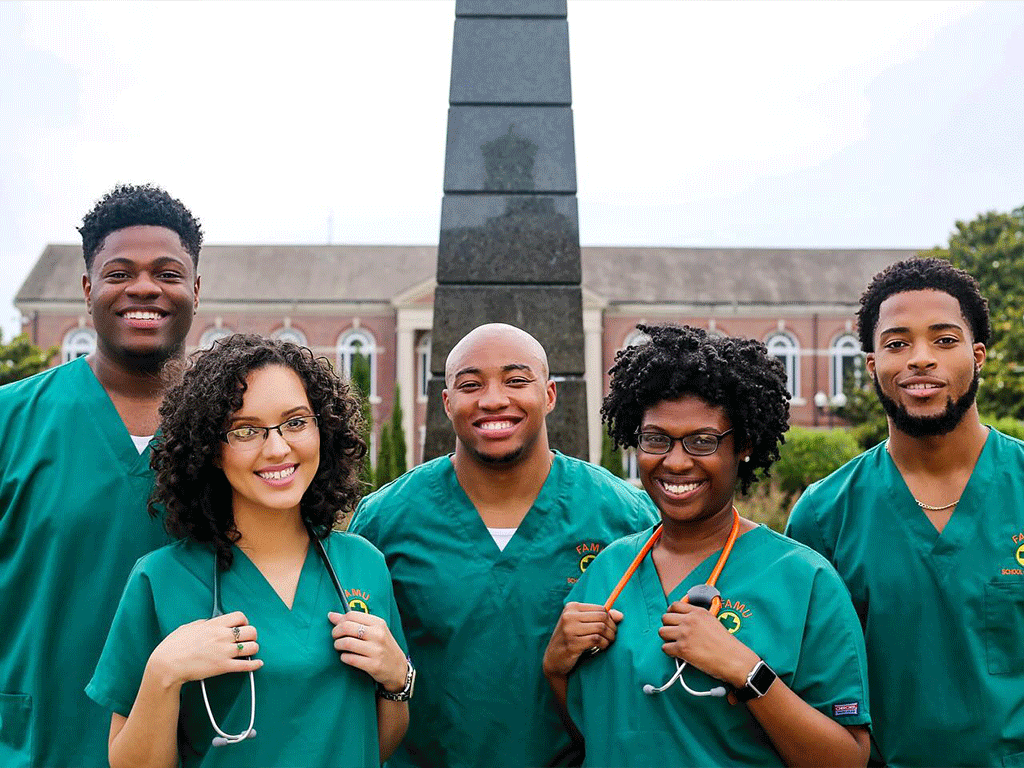
TALLAHASSEE, Fla.— Florida A&M University’s (FAMU) School of Nursing (SON) is advancing healthcare delivery across the state and the nation with the latest graduation of 26 Master of Science in Nursing (MSN) students—the largest cohort in recent program history. The graduating class includes 13 Women’s Health Nurse Practitioners (WHNP) and 13 Adult Gerontology Primary Care Nurse Practitioners (AGPCNP), reflecting the school’s strategic focus on workforce areas experiencing critical shortages.
The graduates have completed a rigorous curriculum rooted in evidence-based practice, advanced clinical training, and service to underserved communities. Their achievement demonstrates steady growth within FAMU’s advanced practice programs and the university’s broader commitment to strengthening workforce pipelines in healthcare.
Florida Faces Significant Primary Care Shortages
Florida is projected to experience one of the nation’s most severe shortages of primary care providers in the next decade. According to the Florida Agency for Health Care Administration’s Graduate Medical Education report released in July the state is expected to face a shortfall of nearly 18,000 physicians by 2035, with overall physician supply meeting only about 77 percent of projected demand. Primary care specialties, including adult gerontology, are central to this gap.
“These projections illuminate the essential role advanced practice nurses will play in maintaining access to care,” said Shannon Smith, Ph.D., DNP, dean of FAMU’s School of Nursing. “FAMU’s MSN graduates are prepared to meet critical workforce shortages, particularly in rural and underserved communities where gaps in primary care and maternal health contribute to preventable complications and adverse outcomes for mothers and infants.”
National Data Show Widespread Gaps in Women’s Health Access
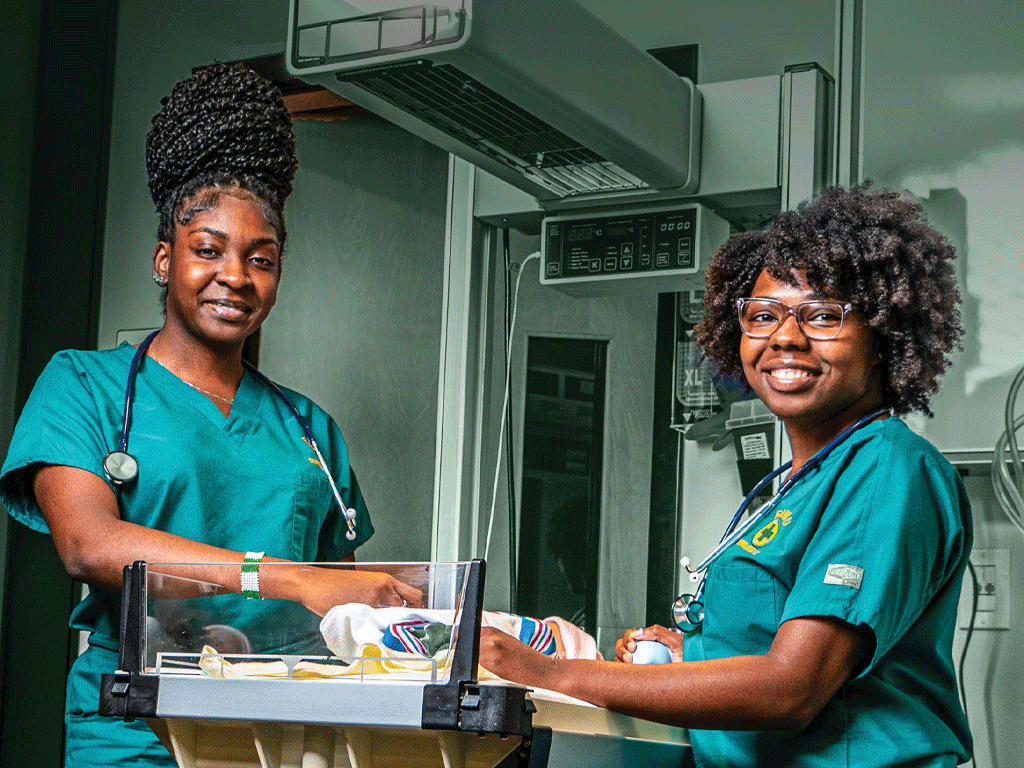
In addition to primary care shortages, access to women’s health providers remains a national concern. Released in September 2024, the March of Dimes Maternity Care Desert report finds that more than one-third of U.S. counties lack adequate maternity care resources. KFF similarly reports that nearly half of U.S. counties have no practicing OB-GYN. These shortages contribute to persistent gaps in maternal health outcomes and preventative care.
FAMU’s cohort of 13 WHNP graduates will help mitigate these shortages, particularly in medically underserved and rural communities.
Provost Watson: “A Legacy of Nursing Excellence with Community Impact”
Provost Allyson L. Watson, Ph.D., said the achievement of the MSN cohort reflects the strength and consistency of FAMU’s nursing education.
“These graduates enter the profession prepared to assume advanced clinical roles at a critical moment for healthcare,” Watson said. “Their training reflects the rigor, discipline, and purpose that define FAMU’s approach to graduate education.”
Graduate Perspective: Prepared to Lead and Serve
Members of the graduating class say the program provided rigorous preparation, mentorship, and community engagement experiences required for modern-day nurse practitioners.
“This program challenged me to grow as both a clinician and a leader,” said Katherine Harris, AGPCNP, an MSN graduate who plans to work as a nurse practitioner in geriatric care. “FAMU prepared me to serve communities that need compassionate, evidence-based care, and I am ready to make a meaningful difference.”
Harris is pursuing opportunities with local hospitals and the Veterans Affairs medical system. She is interested in specializing in dermatology, wound care, or diabetic care.

Continuing a Longstanding Tradition of Workforce Impact
Founded in 1904, the FAMU School of Nursing became the first baccalaureate program in Florida in 1936 and is one of the most respected nursing programs in the state. SON continues to expand academic pathways into advanced practice roles and contributes to FAMU’s broader goals in research, graduate education, and community impact.
Graduates of the SON MSN program will continue their careers in hospitals, women’s health practices, primary care settings, community clinics, and specialty practices across Florida and the United States.
For more information about the FAMU School of Nursing, visit nursing.famu.edu.
Media Contact
Rachel James-Terry
Senior Director of Strategic Communications
rachel.jamesterry@famu.edu
Deidre Williams
Director of Communications
Office of the Provost
deidre.williams@famu.edu