
After Google HBCU RISE Summit, FAMU Students Put AI Skills to Work
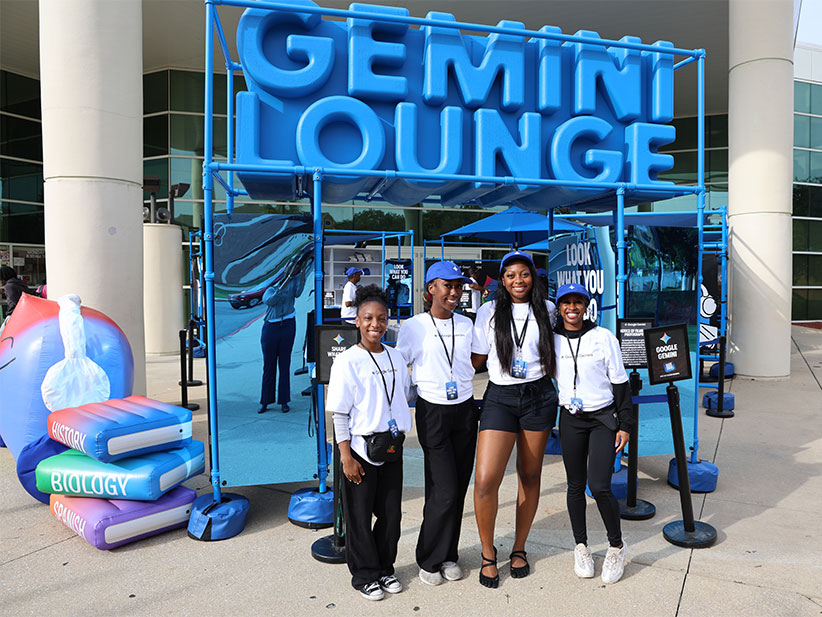
TALLAHASSEE, Fla. — After attending the Google HBCU Rise Summit at Florida A&M University, Natalie Henderson put what she learned to work in her microbiology course, using artificial intelligence to better understand DNA structure.
The second-year pre-nursing student used Google Gemini to explore how the components connect, then checked its explanations against course videos and assignments.
Her approach illustrates a central theme of the Oct summit: helping students use AI to support their learning while maintaining independent thinking.
“While learning about DNA structure, Gemini helped me better understand how the sugars, phosphate groups, and nitrogen bases connect. The visual breakdown made the information easier to understand,” Henderson said.
For journalism student Lyiah Burke, using AI effectively also means knowing where to draw the line.
“I feel like knowing how to tell AI what to do is kind of like my role in it and not letting AI tell me what to do,” Burke said.
“I can’t have AI write for me, but when it comes to layouts and critiquing, I use it to help revise what I’m already doing, not take away my ideas, but help reiterate and use it kind of like a tool and a tutor in a sense.”
Burke’s perspective reflects a broader conversation among FAMU students about learning to use artificial intelligence as a tool for academic growth while maintaining independent thinking.
That conversation was explored during the summit, where students and faculty had opportunities
to examine how AI tools could support learning and future careers.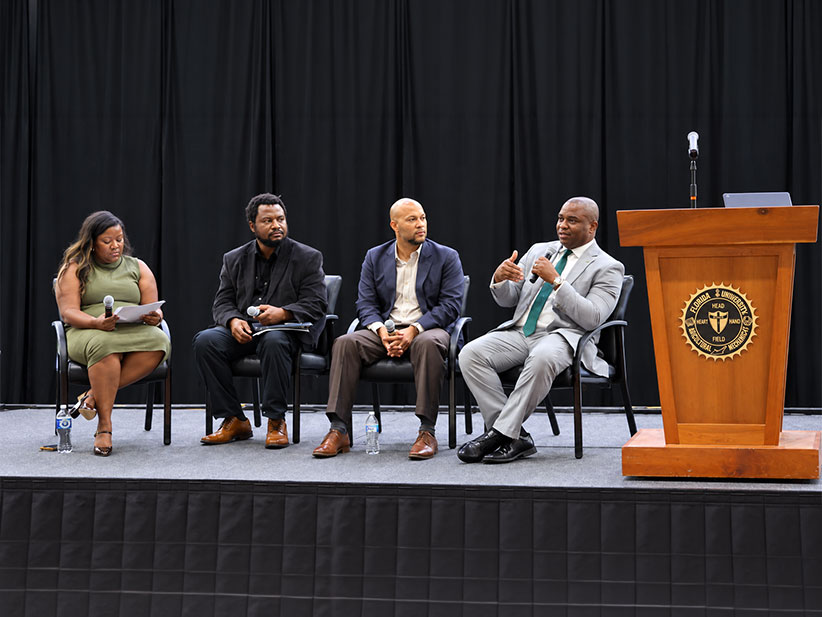 During the Google HBCU Rise Summit at FAMU, the “Innovating Responsibly in the AI
Era” panel was composed of (from left), Tiffany Nealy, community engagement manager
at Google; Edem Wornyo, program manager at Google; Anwar Miller, head of MSI strategy
at Google; and Darryl Scriven, executive director of FAMU Centers and Institutes,
who discussed algorithmic bias, sustainability and strategies for using AI to advance
human creativity. (Photo special to FAMU)
Google’s head of Minority Serving Institution Strategy and creator of the RISE Summit, Anwar Miller, said the initiative was created to ensure students at historically Black colleges and universities have access to tools that prepare them for a future shaped by AI.
“I come from an HBCU, and I realize that we cultivate some of the best and brightest talent. AI is the beginning of the next industrial revolution, and we want the next generation of leaders to be at the forefront of it and help shape it,” Miller said. “We wanted to ensure HBCU students have the right tools for a future shaped by AI.”
As students explore these tools, faculty members also have a role in establishing how AI should be used in academic settings. Helping students make those judgements also requires guidance from faculty.
Reginald Perry, Ph.D., FAMU’s associate provost of faculty and academic affairs, said instructors must consider how AI can support learning without weakening critical thinking.
“Faculty play a critical role in helping students use AI thoughtfully and responsibly.”
“That starts with examining how these tools can support our teaching while keeping critical thinking and independent inquiry at the center of learning," Perry said. “Opportunities like the summit give faculty and students space to explore practical applications and consider what works best in their disciplines.”
Beyond the classroom, AI proficiency can affect students’ career prospects, said Darryl Scriven, FAMU’s executive director of centers and institutes and a panelist in the summit’s “Innovating with Technology” discussion.
“If employers expect mastery of this technology and our students don’t have it, we’re going to have a job problem,” Scriven said.
He added that universities must ensure graduates are prepared to meet those expectations.
“To finish a degree program but be told you’re not qualified because you haven’t been exposed to certain AI tools is unacceptable. We have to make sure our students are prepared to be competitive and thrive when they graduate,” he said.
Students and faculty can continue developing their AI skills at Gemini for Students
Media Contact
Rachel James-Terry
Senior Director of Strategic Communications
rachel.jamesterry@famu.edu