
“Be an Insider”: Emmy-winner Jacque Reid shares advice for future journalists
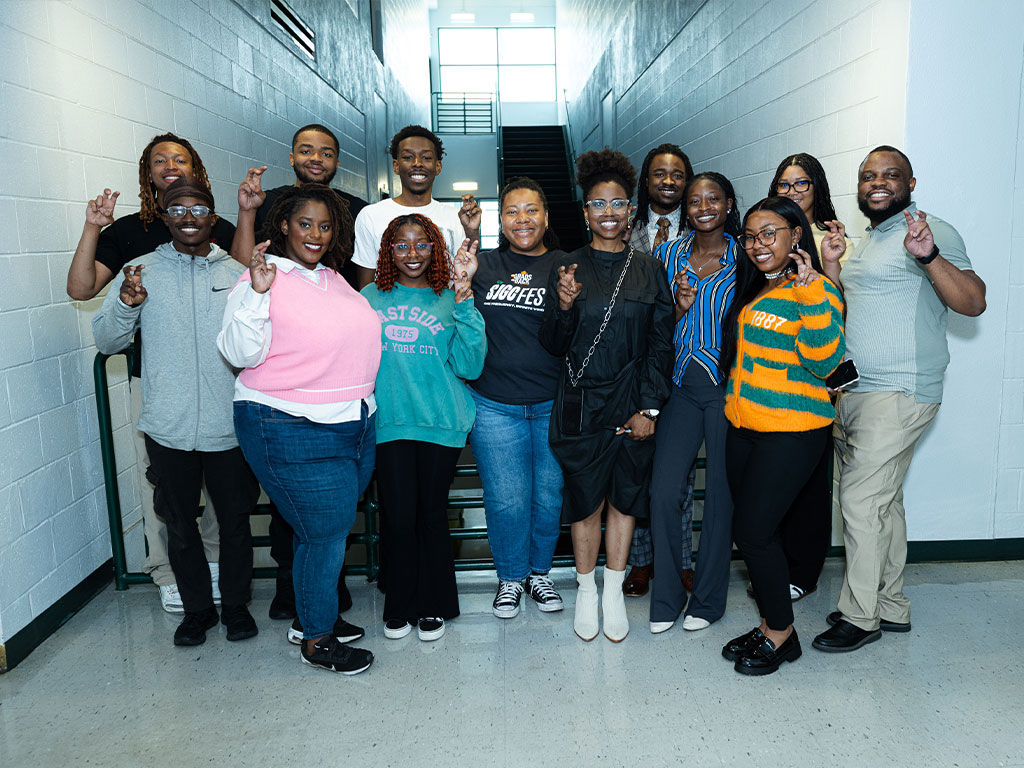
The quickly changing media world is nothing new to renowned journalist Jacque Reid. Reid has worked in radio, television and digital media for decades, and she has seen firsthand how the industry has changed. She recently spoke with student journalists at Florida A&M University, giving them guidance as they prepare to graduate, as well as insight into the realities of working in the media.
Reid underlined that there are both opportunities and difficulties in the media sector
today. She pointed out that there has been a decrease in public confidence in the
media in recent years, making it more difficult for new journalists to enter the industry.
As a result, she urged students to stay up to date on changes in media organizations
and industry advancements.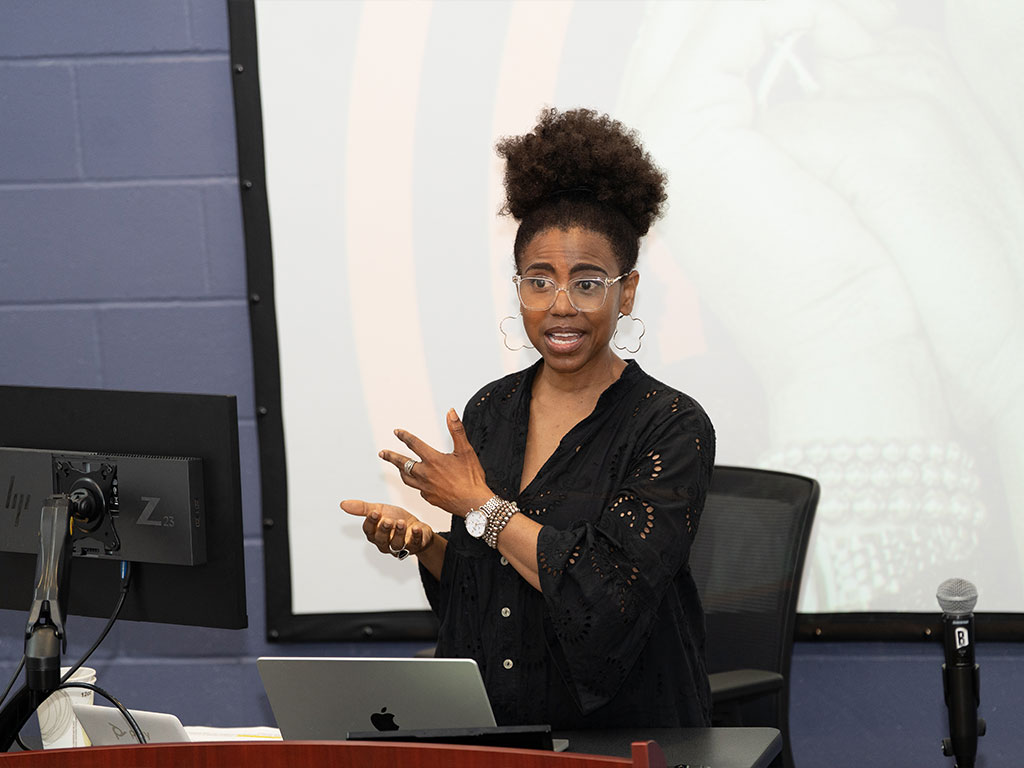 Emmy-winning journalist Jacque Reid enlightened a select group of FAMU journalism
students with her years of industry acquired knowledge. (Photo by by Justyn Thomas/SJGC)
Emmy-winning journalist Jacque Reid enlightened a select group of FAMU journalism
students with her years of industry acquired knowledge. (Photo by by Justyn Thomas/SJGC)
“The way the industry is now, I think I see a lot of people not trusting the media anymore, which is also making it harder to get in the industry,” Reid said.
Reid also touched on the important topic of adaptability. Reid believes that in order to be competitive, modern journalists need to have a variety of abilities. She emphasized that today’s journalists are frequently required to work across various platforms, even though excellent writing and research are still fundamental to the industry.
“Be an industry insider, learn as many skills as you can, because that will take you through your years in this business. Knowing how to do credible research and storytelling is essential in this business,” Reid said. “Learn how to write but also learn how to be on camera. Learn how to produce, edit and shoot. The more abilities you possess, the more opportunities you will generate for yourself.”
Reid also discussed the media industry’s increasing reliance on digital tools and artificial intelligence. She underlined that fundamental reporting abilities cannot be replaced, even as technology continues to transform media. Building credibility and trust with audiences still requires good research skills, writing and critical thinking.
“You better know how to write without AI. You should know how to write off the top of your head, how to tell a story, because that will work in your favor,” Reid said.
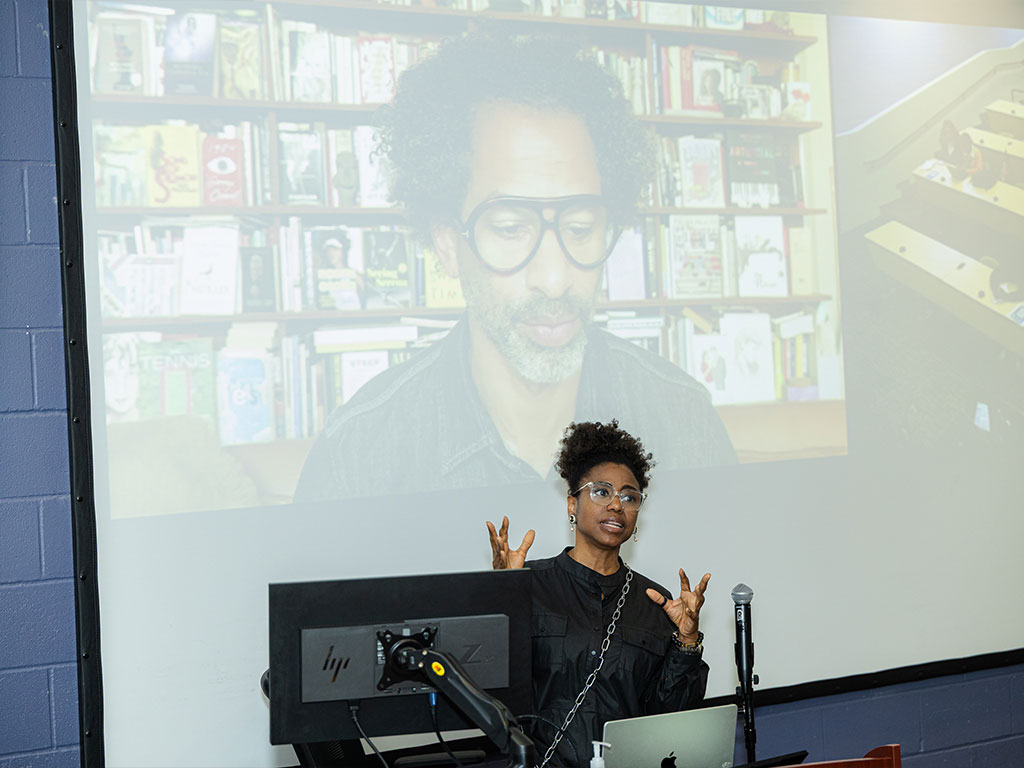 Jacque Reid virtually welcomed writer and music journlist Touré during her masterclass
series at FAMU. Touré is also a cultural critic and co-host of the TV show "The Cycle"
on MSNBC. (Photo by Justyn Thomas/SJGC)
Jacque Reid virtually welcomed writer and music journlist Touré during her masterclass
series at FAMU. Touré is also a cultural critic and co-host of the TV show "The Cycle"
on MSNBC. (Photo by Justyn Thomas/SJGC)
Beyond technical expertise, Reid urged students to think about working on independent projects as a means of developing their own platforms and gaining experience. She highlighted that as media professionals look for new ways to engage with audiences and convey information, independent journalism has grown in significance.
Reid said that creating a standalone project, like a podcast, digital news platform or media brand, can assist young journalists in finding their voice and expanding their readership. She did stress, though, that money, preparation and regular audience participation are necessary for independent media endeavors to be successful.
“Start building your audience now,” she suggested, pointing out that metrics like subscribers and followers might support future fundraising initiatives through sponsorships, grants and advertising.
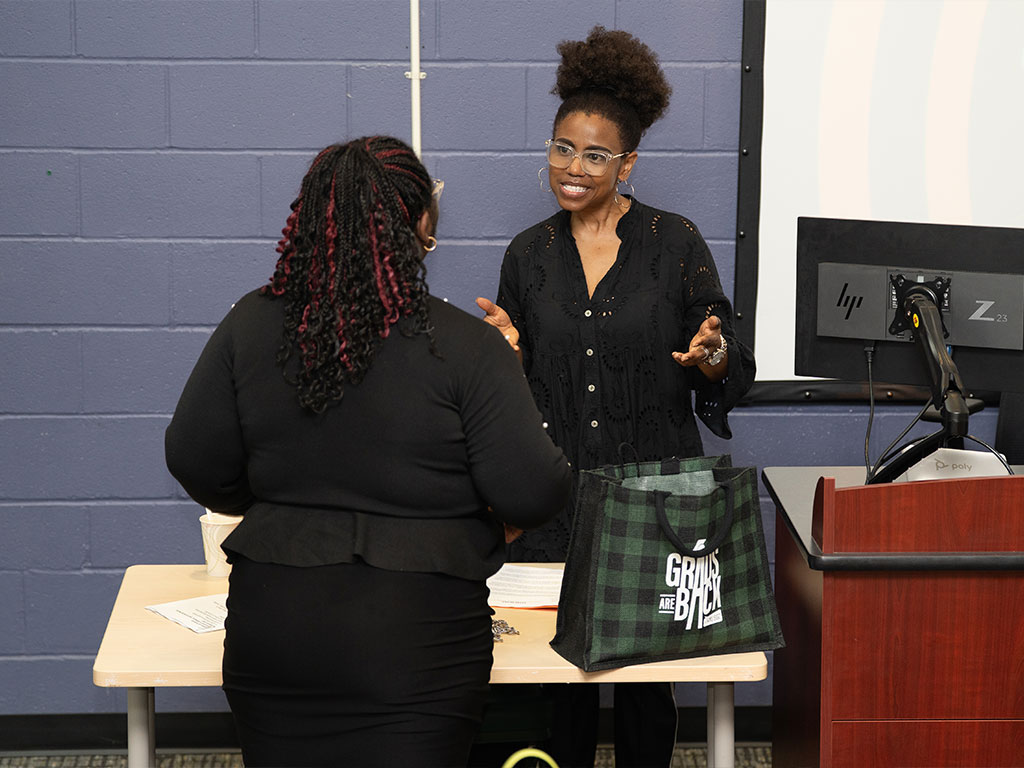 Jacque Reid pouring into one of the students attending her masterclass. (Photo by
by Justyn Thomas/SJGC)
Jacque Reid pouring into one of the students attending her masterclass. (Photo by
by Justyn Thomas/SJGC)
Reid additionally highlighted the value of industry networking. Developing connections with editors, producers and other journalists might lead to possibilities for collaboration. She urged students to be involved in the media community and to make active connections with industry experts.
Throughout the conversation, Reid emphasized the importance of personal integrity. She discussed her experiences with professional expectations and the challenges journalists can encounter to fit in as a Black woman who has worked in the media for many years.
Reid advised young journalists to stay true to themselves and firmly rooted in their values rather than forfeiting their moral principles. Before joining the industry, she urged students to take some time to consider their objectives, priorities and sense of identity.
Reid said, “Know who you are and what you stand for. That will direct the choices you make in your professional life.”
Reid’s message was clear as students get ready to graduate and confront a competitive media landscape: success in journalism demands flexibility, honesty and a dedication to developing outstanding skills. Future journalists can put themselves in a position to handle the difficulties of a constantly evolving field by remaining informed, forming connections and embracing adaptability.
Media contact:
Rachel James-Terry
Senior Director of Strategic Communications
rachel.jamesterry@famu.edu