
FAMU Acquires Historic Brickler Property, Extending Legacy of Health Care and Service
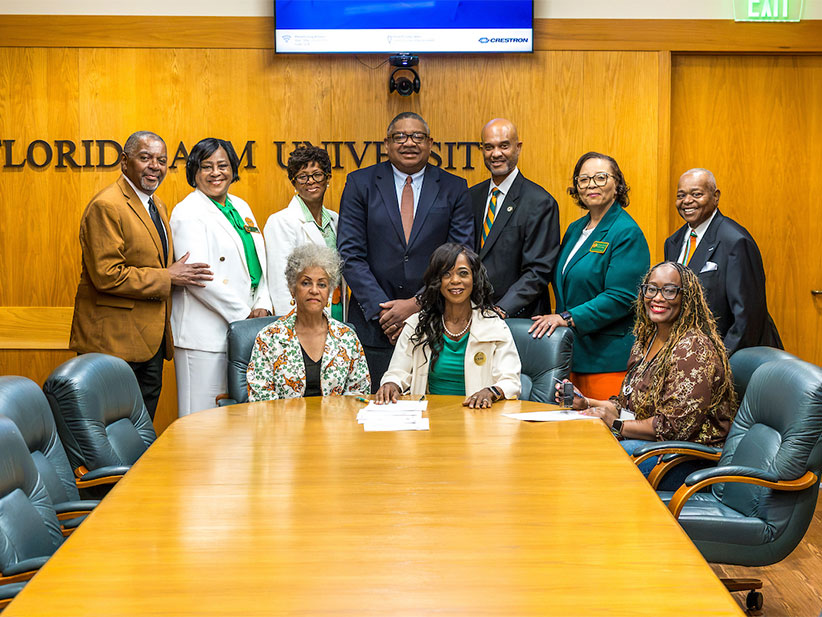
TALLAHASSEE, Fla. – A property where generations of Black physicians cared for Tallahassee families will begin a new chapter under Florida A&M University, continuing a legacy of health care, education and community service that stretches back nearly 70 years.
On Friday, July 7, FAMU acquired approximately 0.94 acres of contiguous property along South Adams Street, directly across from the University's main campus. The acquisition includes three parcels at 1619, 1705 and 1747 S. Adams St., encompassing existing office and community-use buildings, paved areas and on-site parking.
For decades, the property was home to a medical practice connected to two pioneering Black physicians, Dr. Russell L. Anderson and his son-in-law, Dr. Alexander D. "A.D." Brickler, whose work was intertwined with the former FAMU Hospital and the health of Tallahassee's Black community.
Now, FAMU plans to build upon that legacy by transforming the property into a hub
for health sciences education, experiential learning, research and community engagement.
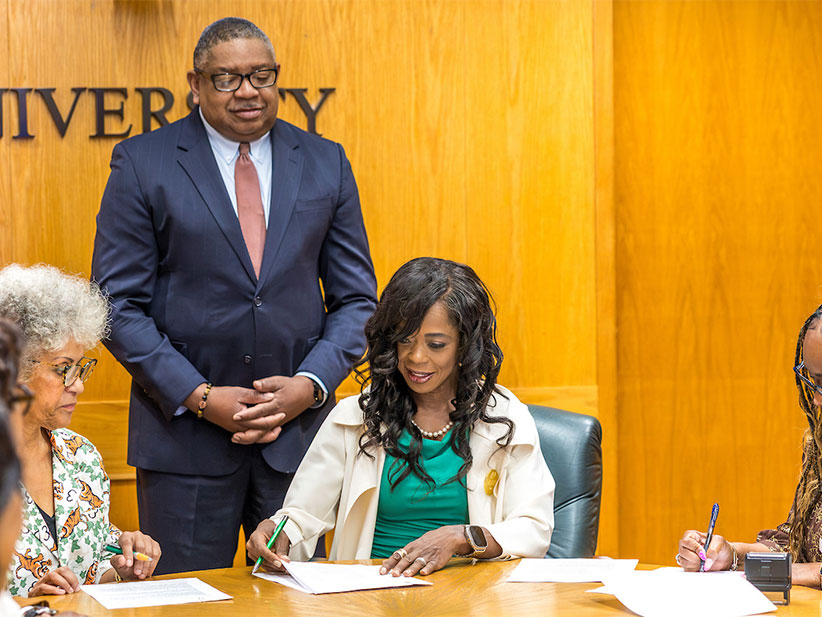 President Marva B. Johnson, J.D., sits with Celeste Hart, daughter and granddaughter
of the two noted doctors whose medical practice was housed in the Brickler building,
as she signs the documents giving FAMU ownership of the historic site. (Photo by Jeff
Adams/FAMU)
President Marva B. Johnson, J.D., sits with Celeste Hart, daughter and granddaughter
of the two noted doctors whose medical practice was housed in the Brickler building,
as she signs the documents giving FAMU ownership of the historic site. (Photo by Jeff
Adams/FAMU)
“This is a very special opportunity to bring this historic property into the FAMUly while honoring those whose scholarship, medical practice and impact helped shape our University and this community,” said President Marva B. Johnson, J.D. “The era of Dr. Russell Anderson, Dr. Alexander Brickler and Foote-Hilyer remind us that education and health care have always been deeply connected to FAMU’s mission. We accept the responsibility of carrying that history forward and being good stewards of the Brickler and Foote-Hilyer legacy. We are committed to preserving its significance while creating new opportunities for our students, faculty and community to advance health and knowledge for generations to come.”
A Family Rooted in FAMU
Celeste Brickler Hart knows the property's history intimately.
Her grandfather, Anderson, was recruited to FAMU in 1946 after graduating from Howard University College of Medicine. He taught biology and served as medical director of the former FAMU Hospital. In 1957, Hart's father, Brickler, moved his family to Tallahassee and joined Anderson in medical practice.
Brickler also practiced at FAMU Hospital and served as team physician for the FAMU Rattlers. When FAMU Hospital merged with Tallahassee Memorial Hospital in 1971, Anderson and Brickler became the first Black physicians on the medical staff at Tallahassee Memorial.
Their South Adams Street practice was part of a larger Black medical community that developed around FAMU Hospital, Hart recalled. Medical and dental offices, pharmacies and other health care services clustered in the area, providing care to Black residents at a time when segregation severely limited their access elsewhere.
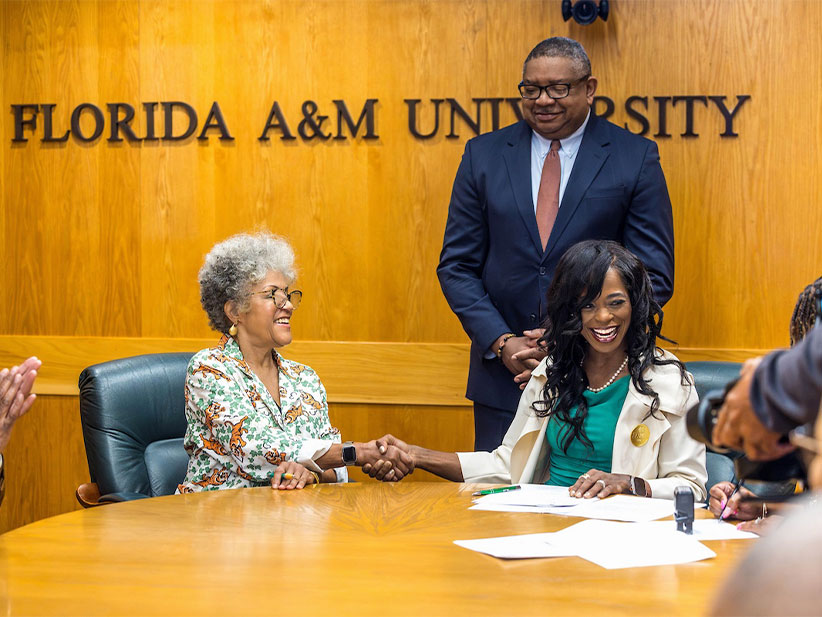 Celeste Hart and President Marva B. Johnson, J.D., share a handshake and laughs after
the document signing that will allow the HBCU to expand its Health Sciences Enterprise.
(Photo by Jeff Adams/FAMU)
Celeste Hart and President Marva B. Johnson, J.D., share a handshake and laughs after
the document signing that will allow the HBCU to expand its Health Sciences Enterprise.
(Photo by Jeff Adams/FAMU)
"It was a real Black medical community," Hart said. "In addition to the care that was provided that wasn't available in North Florida, not just Tallahassee, but the surrounding area, it was a training venue."
Hart said that history remains especially important because the former FAMU Hospital, now the Foote-Hilyer Administration Center, was built with support from the community and provided professional opportunities for Black Tallahassee residents as well as clinical training for FAMU nursing and pharmacy students.
"The history and legacy are so important because we continue to have health care challenges," Hart said. "It's a lesson that we can meet them on our own."
Hart followed in her family's footsteps, practicing medicine in Tallahassee for 35 years, including decades as an endocrinologist in the same South Adams Street building where her father and grandfather practiced. She also established the Anderson Brickler Gallery on the property, named in honor of Anderson and Brickler and dedicated to African diaspora art, arts education and historical reflection.
As Hart approached retirement and considered the future of the property, she said having FAMU acquire it was the outcome she hoped for.
"That was my dream," Hart said.
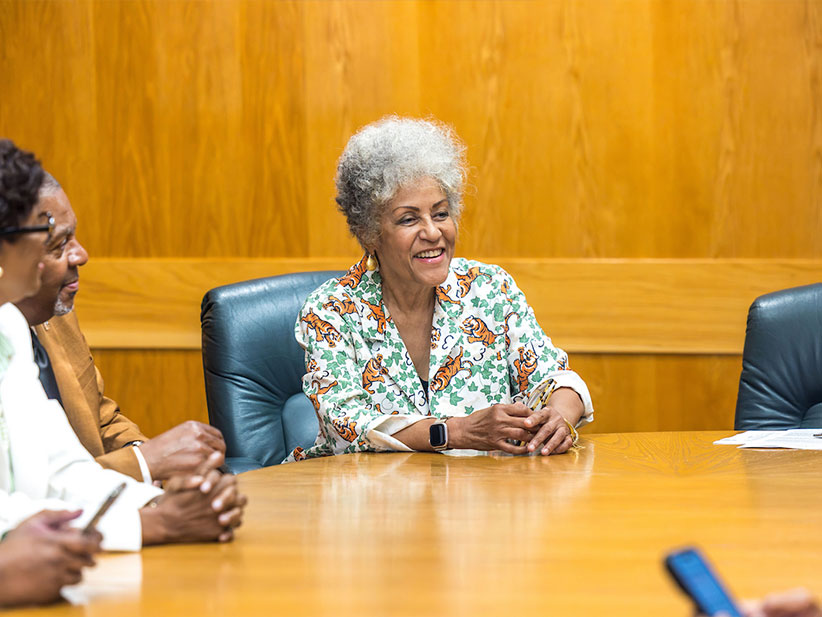 Celeste Hart expressed her joy that FAMU will carry her family's legacy forward through
medical education and community outreach. (Photo by Jeff Adams/FAMU)
Celeste Hart expressed her joy that FAMU will carry her family's legacy forward through
medical education and community outreach. (Photo by Jeff Adams/FAMU)
She said she believes her father and grandfather would be pleased that the property will continue serving the community they devoted their careers to.
"I think they would be elated to see that their legacy has persisted," Hart said. "I'd like to think that they would be elated to see that this is going to continue to serve the Tallahassee community that they loved so much."
Hart even left pieces of the family's history behind for the property's next chapter, including her father's physician's bag and photographs of her father and grandfather.
"I wanted to be sure I left a little piece of that DNA," she said.
Building FAMU's Health Sciences Enterprise
The acquisition will allow the University to connect the property's historic health care mission with FAMU's growing Health Sciences Enterprise and Research Innovation division.
Executive Vice President Donald Palm, Ph.D., who oversees the enterprise, called the addition a significant step toward bringing FAMU's health sciences programs together in a more collaborative environment.
"This is a remarkable, historical day," Palm said. "This building and really connecting with this building is going to provide an opportunity for our nursing students, our pharmacy students and our allied health students, as well as our public health students, to really work together in a synergistic way to not only learn, research, but also have impact in the community for improving health outcomes in this city."
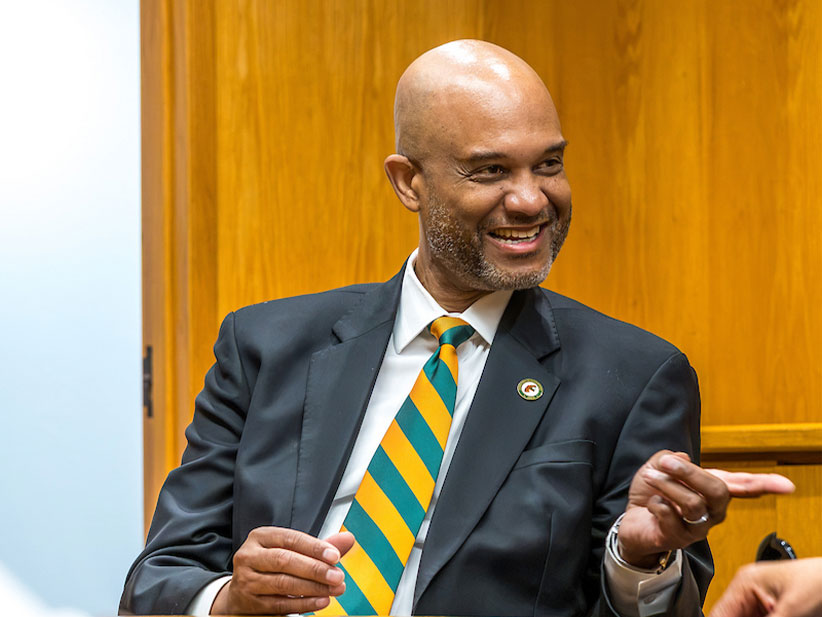 Donald Palm, Ph.D., executive vice president of Health Sciences Enterprise and Research
Innovation. (Photo by Jeff Adams/FAMU)
Donald Palm, Ph.D., executive vice president of Health Sciences Enterprise and Research
Innovation. (Photo by Jeff Adams/FAMU)
The University is developing plans for a cardiometabolic center at the property that would focus on conditions including diabetes, kidney disease and obesity.
Palm emphasized that FAMU does not intend for the center to duplicate services already offered by community health providers. Instead, the University wants to collaborate with federally qualified health centers and other organizations to address gaps in care.
"We don't want to compete. We want to fill the gap," Palm said. "We want to work together in order to really improve health outcomes in the city, in the region, in rural communities as well."
Otis Kirksey, PharmD, executive director of strategic priorities, clinical trials and community engagement in the Health Sciences Enterprise and Research Innovation division, will work with Palm on developing the initiative.
Kirksey said the vision is to approach FAMU's health sciences programs as an interconnected enterprise rather than separate academic silos.
"The opportunity for providing a training hub for our nursing students and our Pharm.D. students right here across the street" is significant, Kirksey said, particularly given the Brickler family's longstanding role in providing health care to the community.
Kirksey said the center could eventually provide specialty management for cardiometabolic conditions such as diabetes, hypertension, hyperlipidemia and obesity, complementing the primary care already available through community providers.
He also sees opportunities to leverage relationships with organizations such as the
American Diabetes Association to pursue grants, workforce development opportunities
and connections with pharmaceutical and technology companies.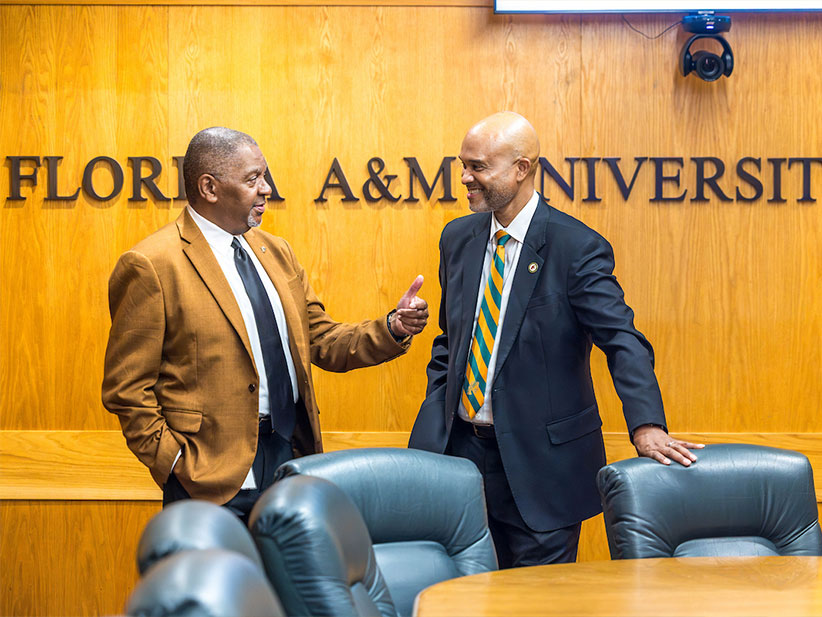 Eric Akins, Ph.D., serves as principal investigator of a U.S. Department of Education
grant that helped aquire the Bickler property for the University. (Photo by Jeff Adams/FAMU)
Eric Akins, Ph.D., serves as principal investigator of a U.S. Department of Education
grant that helped aquire the Bickler property for the University. (Photo by Jeff Adams/FAMU)
Investment Helps Make it Possible
The acquisition was supported through supplemental funding from the U.S. Department of Education, according to Eric Akins, Ph.D., executive director of FAMU's Office of Title III and principal investigator for the supplemental funding.
"I think it's a milestone for the University," he said. "Anytime we're able to purchase property that will benefit not only the University and the community, but it’s also a win-win situation for us."
Akins estimated renovations could take approximately six months to a year before programs are able to occupy the property, although the final timeline will depend on the scope of work and required evaluations.
Delores Glover, special projects coordinator for Title III programs, played a key role in coordinating the acquisition.
“This represents a full-circle moment for Florida A&M University,” she said. “The original owners were part of the establishment of our nursing program, and now our nursing program will be a direct beneficiary of this historic property.”
More than 50 years ago, as a woman in her 20s, Glover received health care at the
facility. Now, she watched as President Johnson signed the documents sealing a historical
moment in time.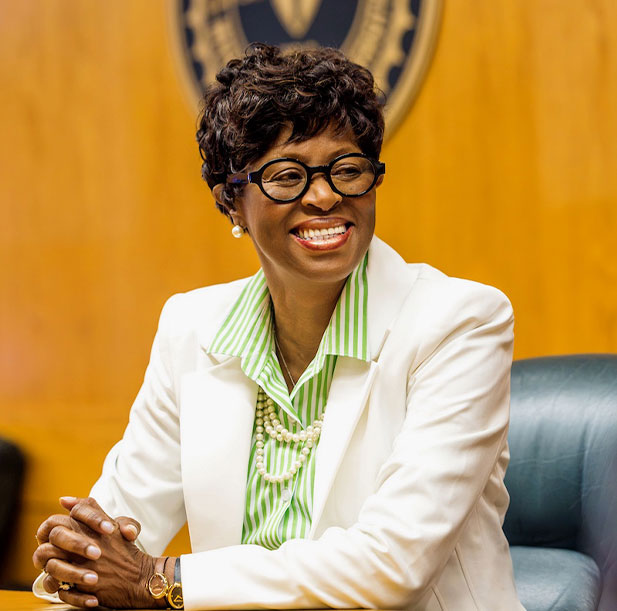 Deloris Glover, special projects coordinator for Title III programs at FAMU, played
a critical role in the Bickler property acquisition. (Photo by Jeff Adams/FAMU)
Deloris Glover, special projects coordinator for Title III programs at FAMU, played
a critical role in the Bickler property acquisition. (Photo by Jeff Adams/FAMU)
“I was a bit teary about it,” Glover said. “It was a very emotional moment for me to see the University take on this historic property, knowing that our School of Nursing will continue serving the community, while our students and faculty will have opportunities to be involved in research. My heart was full.”
Palm credited the Department of Education, FAMU's Title III program, Akins and other University leaders with helping turn the concept into reality. He also pointed to Johnson's support of the initiative.
"I want to thank the Department of Education and our Title III, Dr. Akins and Delores Glover, but also President Johnson for her bold vision to buy into this idea," Palm said. "She understands the impact it's going to have for FAMU and the history of FAMU as we move forward into the next phase."
Media Contact:
Rachel James-Terry
Senior Director of Strategic Communications
rachel.jamesterry@famu.edu