
FAMU Advisors Earn National Spotlight with Presentations at 2025 NACADA Conference
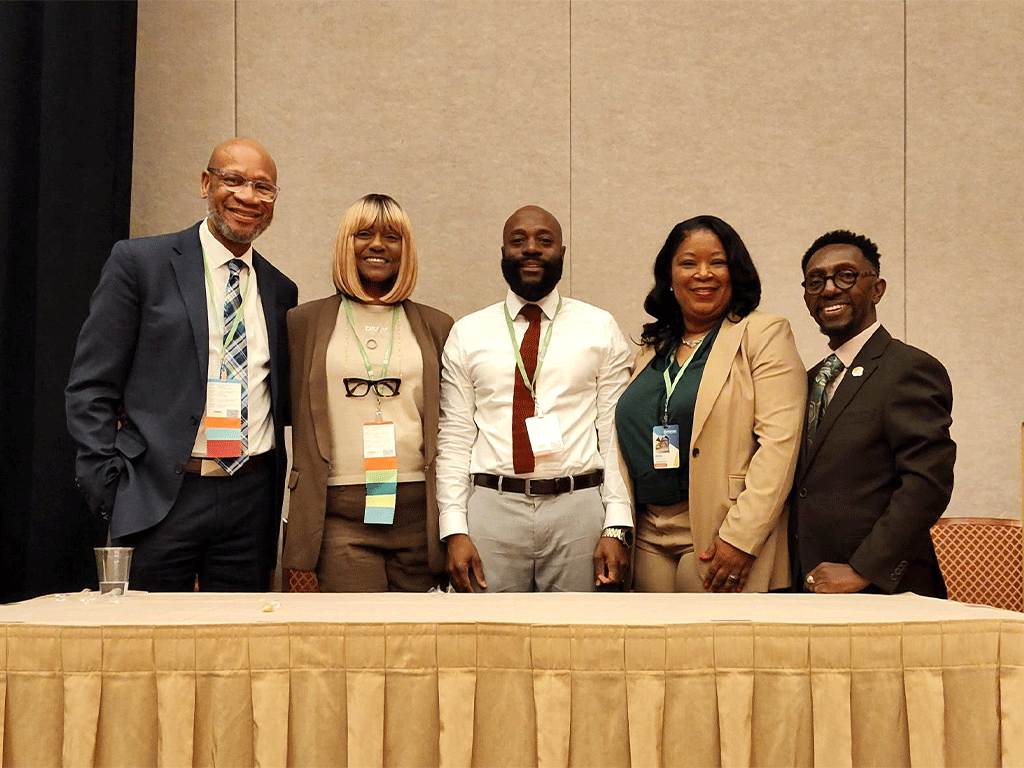
TALLAHASSEE, Fla. — Florida A&M University (FAMU) is celebrating a significant achievement as several members of its academic advising team were selected to present at the 2025 National Academic Advising Association (NACADA): The Global Community for Academic Advising National Conference. This national recognition underscores FAMU’s leadership in shaping the future of academic advising and advancing student success, particularly at Historically Black Colleges and Universities (HBCUs).
“Conferences such as NCADA not only serve as a platform for sharing knowledge but
also as a catalyst for innovative leadership. Engaging with peers inspires us to challenge
the status quo and empowers us to lead with vision and purpose,” said Errick Farmer,
Ph.D., associate dean and associate professor of the School of Allied Health Sciences.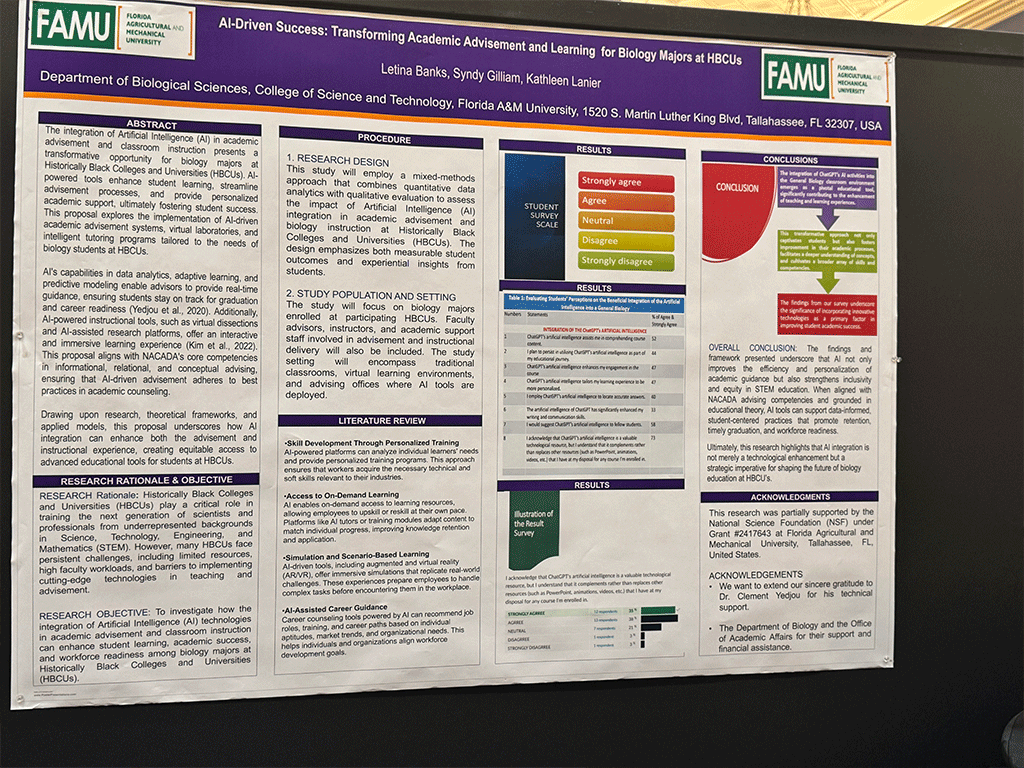
FAMU’s advisors showcased innovative strategies, research, and best practices designed to improve academic advising and strengthen institutional effectiveness. Their work addressed challenges unique to HBCUs and introduced new frameworks for equity, communication, and student-centered approaches across higher education.
The presentation “Bridging the Gap: Enhancing Communication Between Leadership and Academic Advisors at HBCUs” earned the prestigious Community Sponsored designation, one of NACADA’s highest honors.
The panel—Syndy Gilliam-Ulee, Adriene Hampton-Webster, Michael Huggins, and Dr. Errick
Farmer of FAMU, along with Bernard Shuford of Florida State University—emphasized
the need for structured communication between university leadership and frontline
advisors. Their research found that excluding advisors from decision-making processes
can lead to decreased morale and missed opportunities for enhanced student support.
The team advocated for transparent, collaborative communication models to strengthen
advisor engagement and improve student outcomes.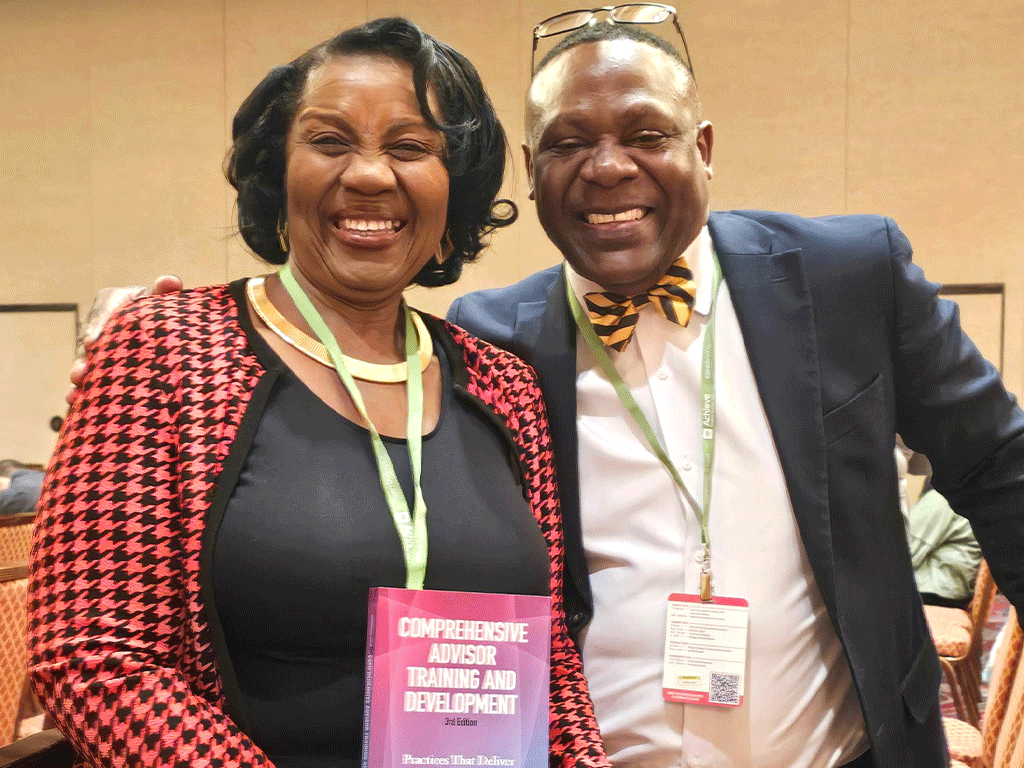
The presenters emphasized the critical role academic advisors play in student success and the need for more intentional, transparent communication between advisors and institutional leadership at HBCUs. The presentation underscores how elevating advisors’ voices can strengthen advising culture, improve morale, and ultimately lead to better student outcomes. Recognition from NACADA affirms both the relevance and urgency of this work and its potential to drive meaningful, nationwide change.
“This recognition from the National Academic Advising Association (NACADA) affirms that this conversation is not only relevant but urgently needed. Strengthening communication between leadership and advisors is essential to improving the student experience, advisor morale, and overall institutional effectiveness. I am grateful that NACADA sees the value in this work, and I am hopeful that it will spark meaningful change across HBCUs nationwide.,” said Syndy Gilliam-Ulee, lead presenter, advisor, College of Science and Technology.
Another notable presentation, “Thriving in a Unique Environment: Cultivating Specialized Advising at HBCUs,” addressed the critical issue of advisor burnout and presented a more sustainable, culturally responsive advising model. The session was led by Teresa L. Berger, Michael Huggins, and Adriene Hampton-Webster.
The presenters highlighted that academic advisors at HBCUs often shoulder an unsustainable “jack of all trades” expectation. Beyond academic guidance, advisors frequently serve as mentors and cultural navigators—particularly for first-generation students or those managing academic, financial, mental, and housing challenges. This broad scope often leads to burnout and diminished effectiveness.
The solution: a reframed model that emphasizes specialized expertise and intentional
collaboration with campus and community support services. The initiative, titled the
HBCU Village, replaces the overextended model with a collaborative network designed to support
both advisors and students.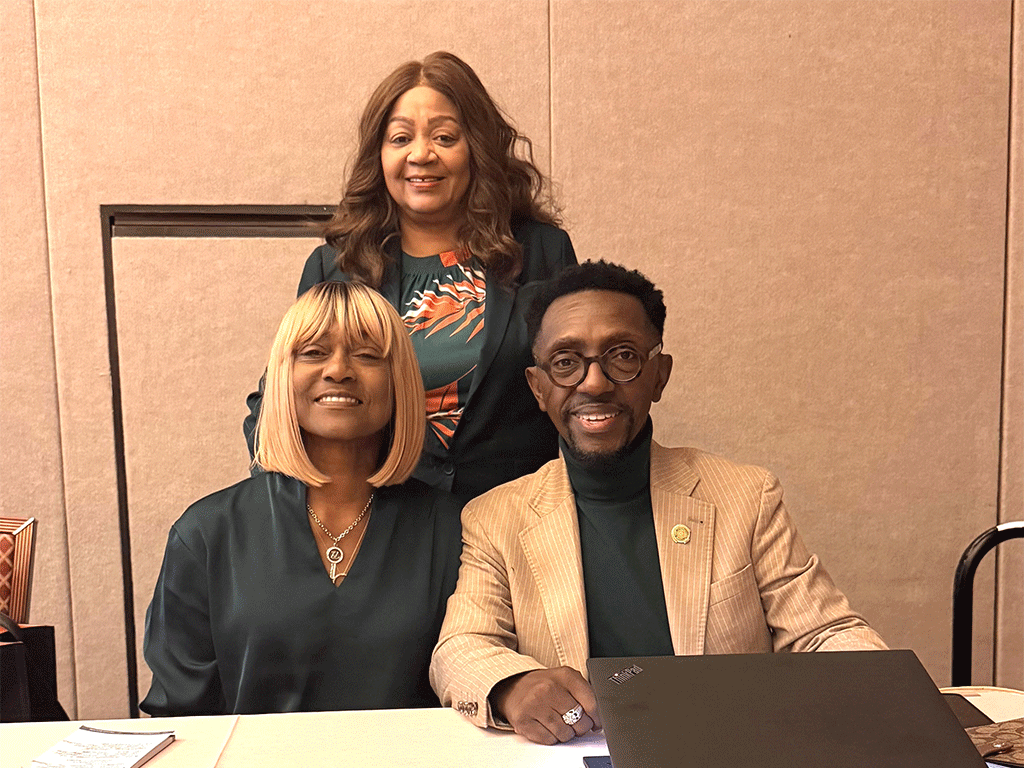
“The ‘jack of all trades’ expectation placed on academic advisors at HBCUs is simply unsustainable, driving high rates of advisor turnover and burnout. When advisors are tasked not only with academic guidance but also with serving as cultural navigators for students managing complex challenges, we must move past generalized advising and implement a specialized, culturally responsive model that decreases or eliminates this stress and maximizes effectiveness,” said Teresa L. Berger, academic advisor for FAMU/FSU College of Engineering
FAMU’s commitment to innovation was also reflected in the research poster “AI-Driven Success: Transforming Academic Advisement and Learning for Biology Majors at HBCUs.” Presented by Letina Banks, Ph.D., Syndy Gilliam-Ulee, and Kathleen Lanier, the project demonstrated how AI-powered tools can streamline advisement and deliver personalized academic support to STEM students.
“The opportunity to present our work on AI-driven academic support for STEM students
was truly inspiring,” said Letina Banks, Ph.D. “Our research shows that artificial intelligence can radically transform the advising
experience making it more personalized, more efficient, and more responsive to the
unique needs of biology majors at HBCUs. I am proud of the innovative collaboration
among our team, as we work to develop tools that empower both students and advisors.
This project represents the future of academic support, and we are excited to continue
advancing technology-driven solutions that help our students thrive.”
Media Contact
Rachel James-Terry
Senior Director of Strategic Communications
rachel.jamesterry@famu.edu