
FAMU Black Masks magazine exhibit honors the legacy of Dr. Beth Turner and her groundbreaking contributions to Black theater
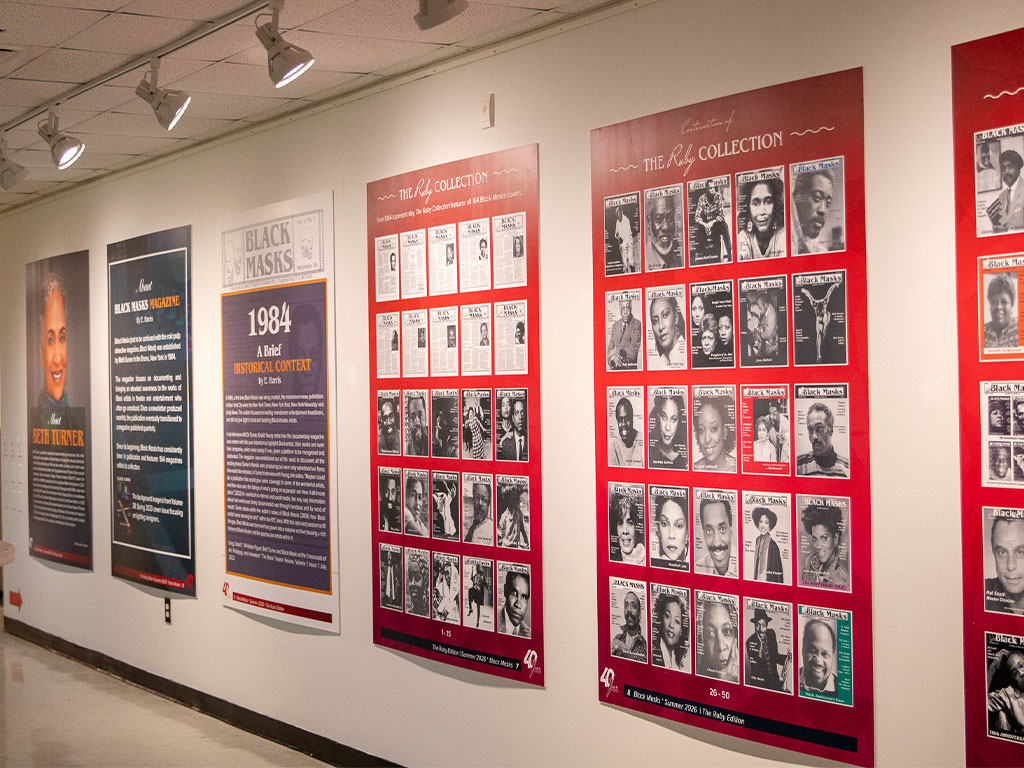
TALLAHASSEE, Fla. — For more than four decades, Black Masks magazine has documented the stories, achievements and artistry of Black theater professionals across the nation. Now, Florida A&M University is celebrating that legacy through a larger-than-life-sized exhibition honoring the publication's founder, publisher and editor, Beth Turner, Ph.D.
Curated and produced by Evelyn Harris, associate professor of theater in the Essential Theatre Program, “The Black Masks Exhibition: A 40-Year Celebration!” transforms the Foster-Tanner Fine Arts Gallery into what Harris describes as a "larger-than-life-sized magazine," immersing visitors in the history and impact of one of the nation's longest-running publications dedicated to Black theater.
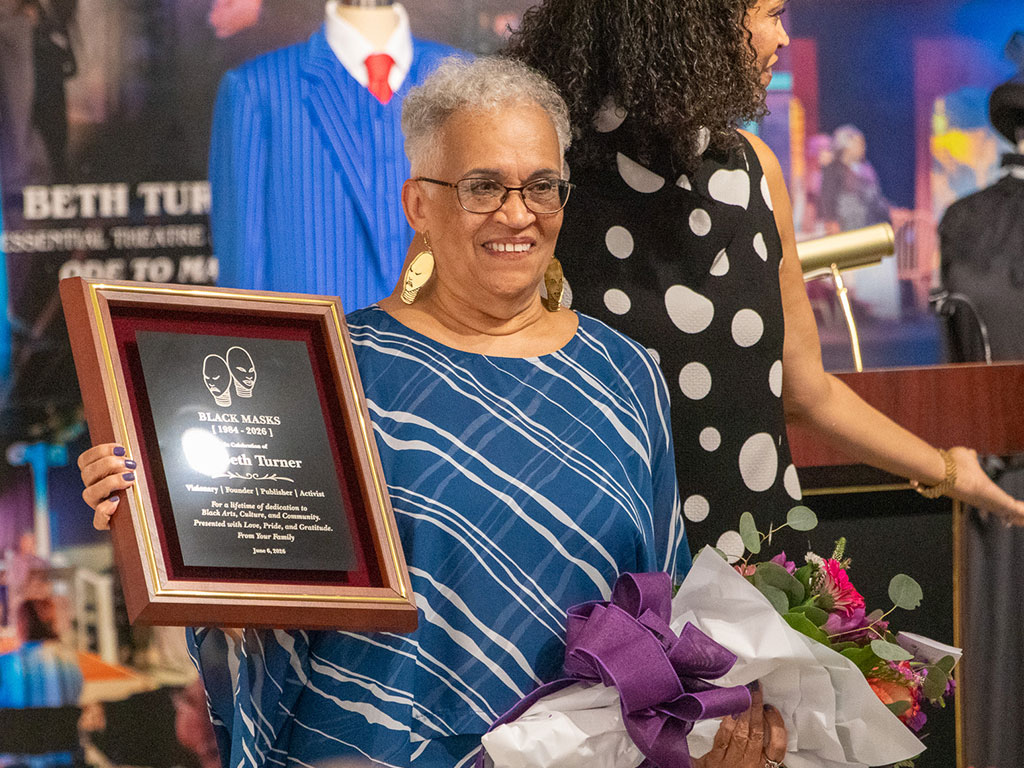 Beth Turner Ph.D., founder and publisher of Black Masks magazine, holds a commemorative
plaque and bouquet during a ceremony recognizing her decades of contributions to Black
arts, culture and journalism. The recognition was presented as part of the Black Masks exhibition at Florida A&M University’s Foster-Tanner Fine Arts Gallery, which celebrates the magazine’s 41-year legacy. (Photo courtesy of FAMU Essential Theatre.)
Beth Turner Ph.D., founder and publisher of Black Masks magazine, holds a commemorative
plaque and bouquet during a ceremony recognizing her decades of contributions to Black
arts, culture and journalism. The recognition was presented as part of the Black Masks exhibition at Florida A&M University’s Foster-Tanner Fine Arts Gallery, which celebrates the magazine’s 41-year legacy. (Photo courtesy of FAMU Essential Theatre.)
"This exhibition honors Dr. Turner and her hard work that she has dedicated over 40 years to Black Masks magazine," Harris said. "She is the publisher, founder and editor of the publication, since its existence, which was established in 1984. This exhibition culminates years of dedication and celebrates a remarkable legacy."
The exhibition features oversized magazine-style pages displayed throughout the gallery, showcasing archival photographs, publication covers, historical milestones and personal stories that highlight Turner's contributions to the arts.
"We wanted to celebrate her work within a larger-than-life-sized magazine format," Harris said. "The subject is Dr. Turner and, of course, Black Masks. Every panel represents a page of the magazine and tells part of her story."
Founded in 1984, Black Masks magazine became a pioneering publication dedicated to documenting Black theater artists, productions and cultural contributions. According to Harris, no other publication has successfully replicated what Turner set out to accomplish more than 40 years ago.
"There is no other publication like Black Masks in its existence," Harris said. "What Dr. Turner set out to do in 1984, no one followed behind her. She has been successful in highlighting Black talent, and I wanted to turn the page and put the spotlight on her because no one has done that."
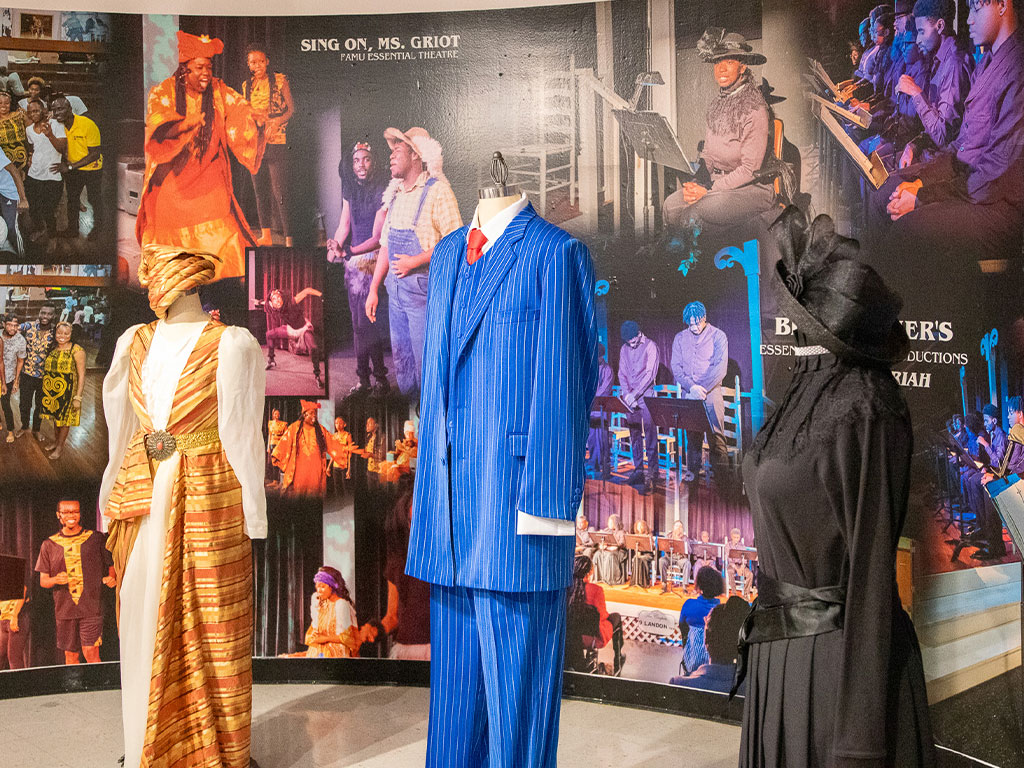 Costumes from FAMU Essential Theatre productions are displayed alongside archival
imagery in the “Black Masks” exhibition at Florida A&M University’s Foster-Tanner
Fine Arts Gallery. (Photo courtesy of FAMU Essential Theatre.)
Costumes from FAMU Essential Theatre productions are displayed alongside archival
imagery in the “Black Masks” exhibition at Florida A&M University’s Foster-Tanner
Fine Arts Gallery. (Photo courtesy of FAMU Essential Theatre.)
Bringing the exhibition to life required months of planning, collaboration and design work. Marketing Director, Willis Fedd worked closely with Harris to transform her vision into a visual experience that captures the breadth of Turner's career.
"What makes this special for me was being able to work with Mrs. Harris and fulfill her vision," Feddsaid. "She gave me the concept of what she wanted for Black Masks, and I was able to design what she envisioned for Dr. Turner and honoring her 40 years with the magazine."
The exhibition traces the publication's journey from its first issue to its final edition, highlighting notable actors, playwrights and theater professionals featured throughout its history.
"It gives you a backstory to everything she's done, why she did it, the impact she made and why it's so important to highlight these individuals and what they mean to the Black theater community," Feddsaid.
While many know Turner as a professor within FAMU's theater program, the exhibition also highlights her accomplishments as an award-winning playwright. Visitors can learn about her nationally recognized works, including Sweet Mama Stringbean and Sing On, Ms. Griot, which earned recognition from the Kennedy Center.
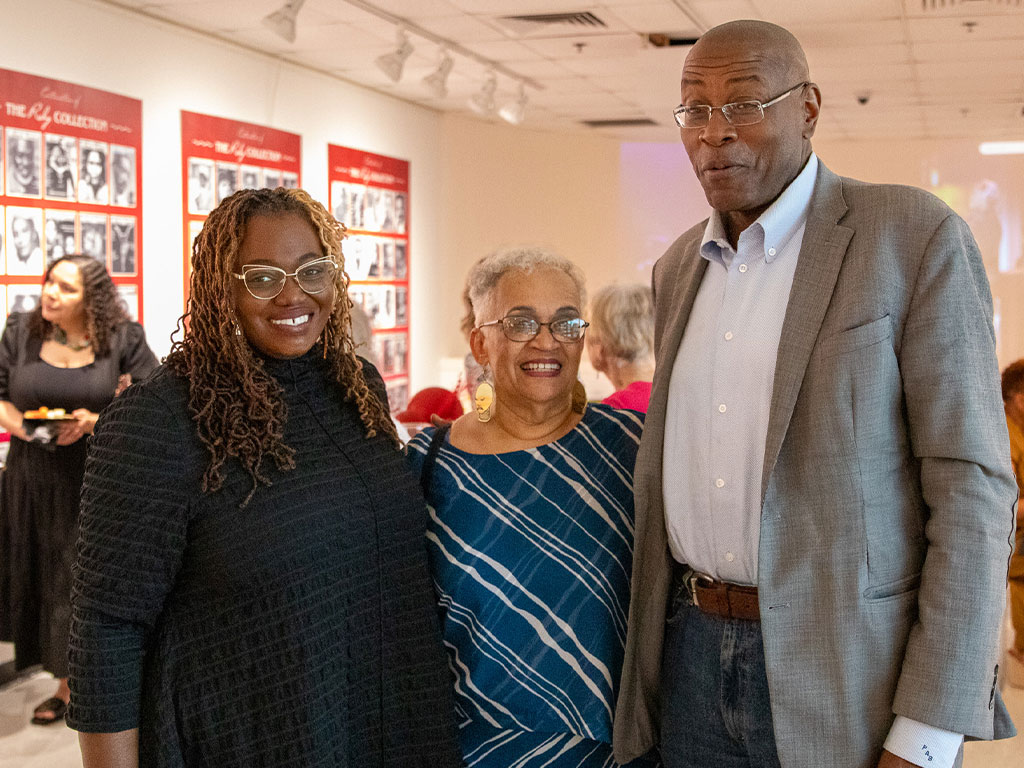 From left to right, Evelyn Harris, Beth Turner, Ph.D., and Patrick Bradford pose at the opening reception of “The Black Masks Exhibition: A 40-Year Celebration!” recognizing Turner’s decades-long commitment to amplifying Black voices through journalism, arts advocacy and cultural preservation. (Photo courtesy of FAMU Essential Theatre.)
"Very few people know about Dr. Turner being here at FAMU and all the work that she has done," Harris said. "We're making history here."
For FAMU's Essential Theatre Program, the exhibition serves as both a celebration and a thank-you to Turner for her years of service, mentorship and artistic contributions.
"We have produced many of her plays here at the Charles Winter Wood Theatre," Fedd said. "This was a swan song for everything she's done and everything she's produced here. It's our way of giving back to her."
Although Black Masks magazine has published its final issue, Harris says Turner's influence will continue through the next generation of artists and storytellers.
"Her legacy will continue," Harris said. "It may not continue under the Black Masks header, but she has influenced so many people who will carry her vision forward."
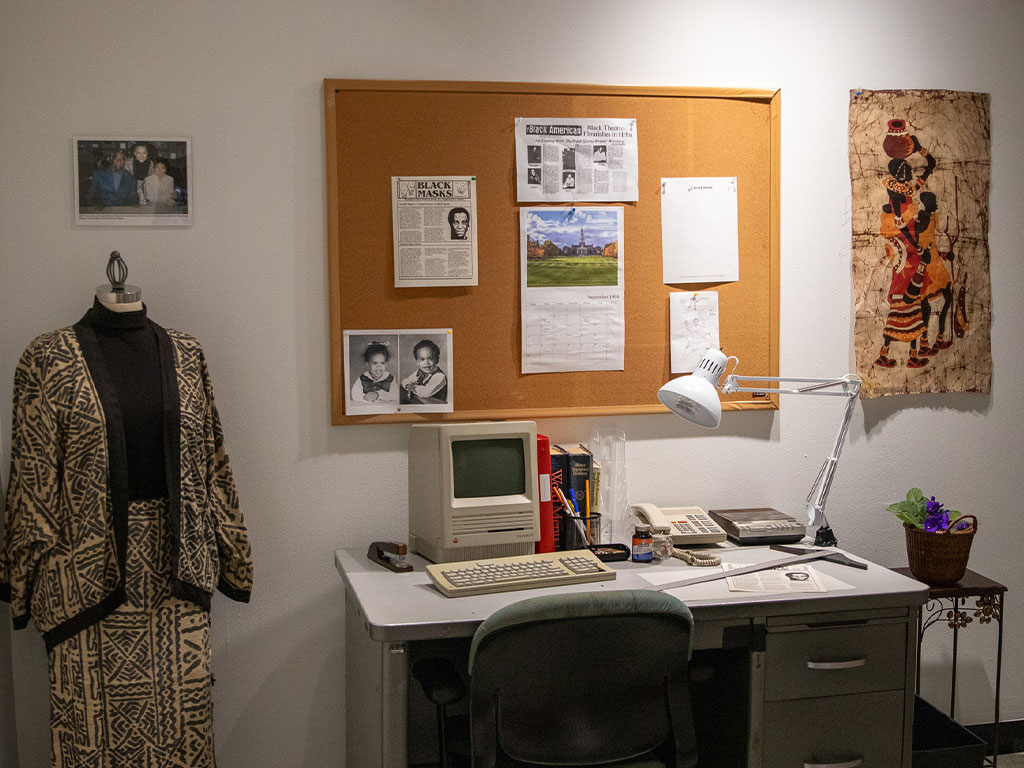 A vintage desktop computer, telephone and office desk, evoking a newsroom or editorial
workspace from the 1980s and 1990s. (Photo courtesy of FAMU Essential Theatre)
A vintage desktop computer, telephone and office desk, evoking a newsroom or editorial
workspace from the 1980s and 1990s. (Photo courtesy of FAMU Essential Theatre)
The exhibition will remain on display through August, providing students, alumni and community members with an opportunity to explore a unique chapter of Black theater history.
Harris hopes visitors leave inspired by Turner's journey and the power of pursuing a vision.
"Special ideas come to all of us," Harris said. "When an idea comes to you, don't abandon it. Embrace it. You never know where it will take you. Dr. Turner had an idea, she had a vision, and she embraced it. Forty years later, look at the impact."
“The Black Masks Exhibition: A 40-Year Celebration!” is open to the public in the Foster-Tanner Fine Arts Gallery and will remain on display through Aug. 29. Gallery hours are Monday through Friday from 11 a.m. to 4 p.m.
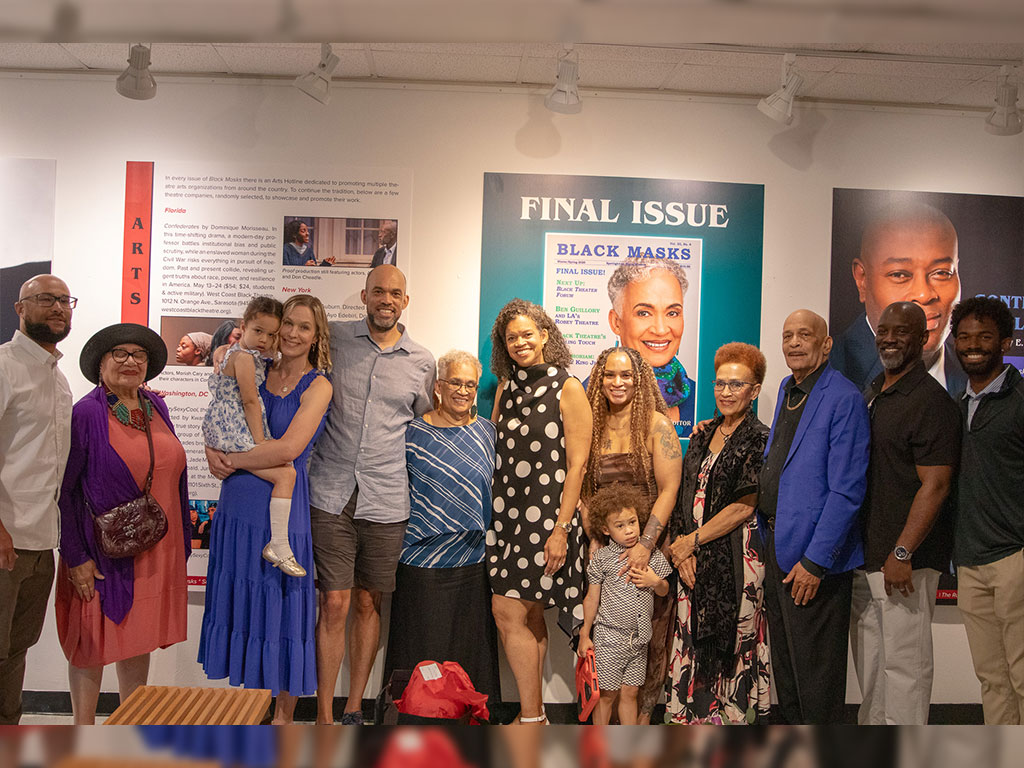 Surrounded by loved ones and longtime supporters, Beth Turner celebrates the opening of the Black Masks exhibition, which commemorates the history and legacy of the magazine she founded
in 1984. The exhibit highlights the publication’s role in amplifying Black voices
in the arts for more than 40 years. (Photo courtesy of FAMU Essential Theatre.)
Surrounded by loved ones and longtime supporters, Beth Turner celebrates the opening of the Black Masks exhibition, which commemorates the history and legacy of the magazine she founded
in 1984. The exhibit highlights the publication’s role in amplifying Black voices
in the arts for more than 40 years. (Photo courtesy of FAMU Essential Theatre.)
Media Contact:
Ashley Flete
Senior Communications Specialist
ashley1.flete@famu.edu