
FAMU Researcher to Lead National $200,000 Grant to Study Financial Education’s Community Impact
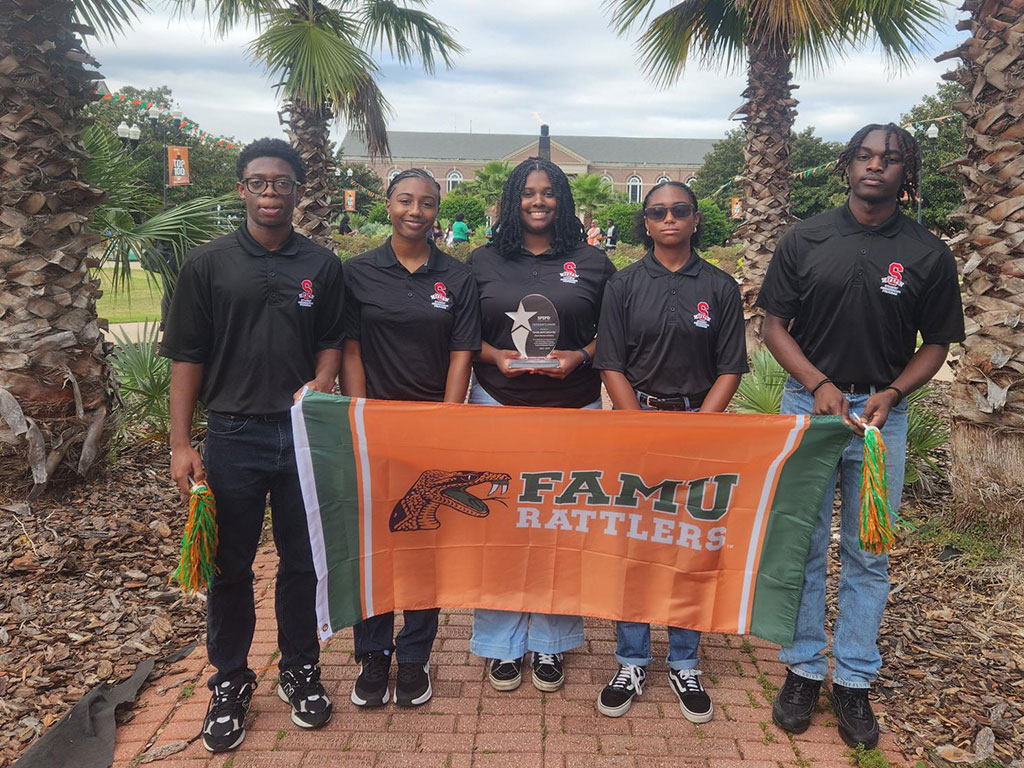
TALLAHASSEE, Fla. — Students in the Society for Financial Education and Professional Development Inc. (SFEPD) are participating in a research study designed to measure how financial education spreads through student communities and networks.
The Ripple Effects study examines how financial knowledge gained by students extends beyond the classroom and influences the financial behaviors and well-being of people in their surrounding communities. Researchers will analyze whether financial education among students at Florida A&M University and other historically Black colleges and universities is associated with stronger financial habits across their peer and family networks.
Inger Daniels-Hollar, Ph.D., assistant professor and principal investigator on the grant, said the study will allow researchers to evaluate how financial education at FAMU and other HBCUs creates measurable change beyond campus.
“This project will help us assess whether educating FAMU and other HBCU students in
financial decision-making leads to improved financial behaviors and financial well-being
among the people they influence, families, peers and community members,” Daniels-Hollar
said. “Having a principal investigator from FAMU reflects how students from the School
of Business and Industry are leading the effort of community uplift through financial
education.”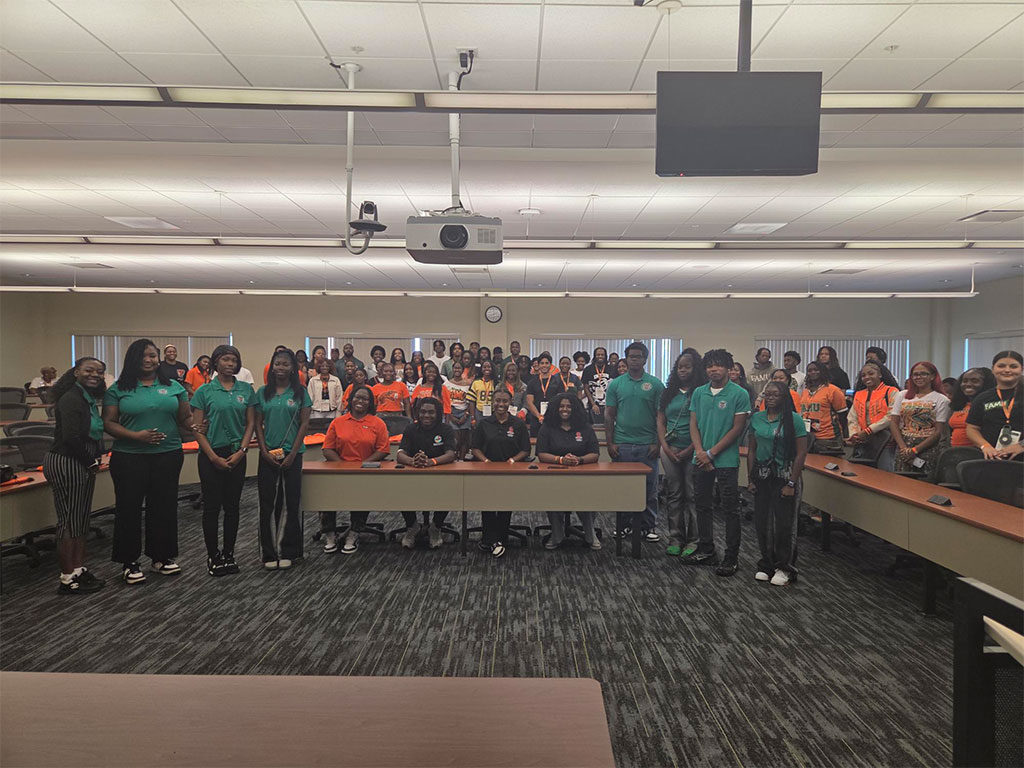 Students from SBI and Jones High School in Orlando, Florida pose with SFEPD ambassadors
following a financial education session at the SBI Global Leadership Conference during
Florida Classic Weekend. The session is designed to strengthen financial decision-making
skills among the FAMU students and broader community of Floridians. (Photo Courtesy: Inger Daniels-Hollar)
Students from SBI and Jones High School in Orlando, Florida pose with SFEPD ambassadors
following a financial education session at the SBI Global Leadership Conference during
Florida Classic Weekend. The session is designed to strengthen financial decision-making
skills among the FAMU students and broader community of Floridians. (Photo Courtesy: Inger Daniels-Hollar)
SFEPD student ambassadors serve as the primary educators and outreach leaders for the initiative. These ambassadors teach personal financial management principles to fellow students and community members through workshops, classroom presentations and campus outreach events.
Laurie Accede, a third-year accounting student from Miami and an SFEPD ambassador, described her involvement in the program’s outreach efforts.
“I’ve done tabling, which includes hosting a table in front of the School of Business
and Industry and passing out materials about credit, budgeting and other SFEPD resources,”
she said. “I’ve also given presentations in SBI classes and for local Tallahassee
organizations, as well as during spring preview for visiting students and parents.”
Accede said the study highlights the importance of financial literacy, particularly in today’s economy.
“Programs like this are really important to teach financial literacy,” she said. “It’s important that people gain the skills to properly manage their money. Building these skills during college helps them transfer into their careers after graduation. Generational wealth is especially lacking in the African American community, and programs like this help close that knowledge gap.”
Ramona Copeland, a second-year business administration student from the metro Atlanta area and an SFEPD ambassador, said the program makes financial education more accessible.
“Everyone has some type of relationship with money,” Copeland said. “It’s important to know how to make your money work for you and not become a hindrance to your development. Programs like this provide education behind financial concepts that can be difficult to grasp and not always accessible to everyone.”
Copeland said her experience as an ambassador has shaped her academic and career goals.
“Upon enrolling at FAMU, I was a business administration major, but now I have a finance concentration because I want to go more in depth on the topics, I’m teaching others,” she said. “I want to continue sharing financial education in the future as a financial adviser or planner. I don’t think I would be as passionate about spreading financial knowledge if it weren’t for the SFEPD program.”
The Ripple Effects study is funded through a partnership between the National Endowment for Financial Education and the FINRA Investor Education Foundation. Each organization contributed $100,000, bringing the total investment in the research to $200,000.
University leaders say the study reflects ongoing student-led efforts to expand financial literacy and community engagement through education and outreach.
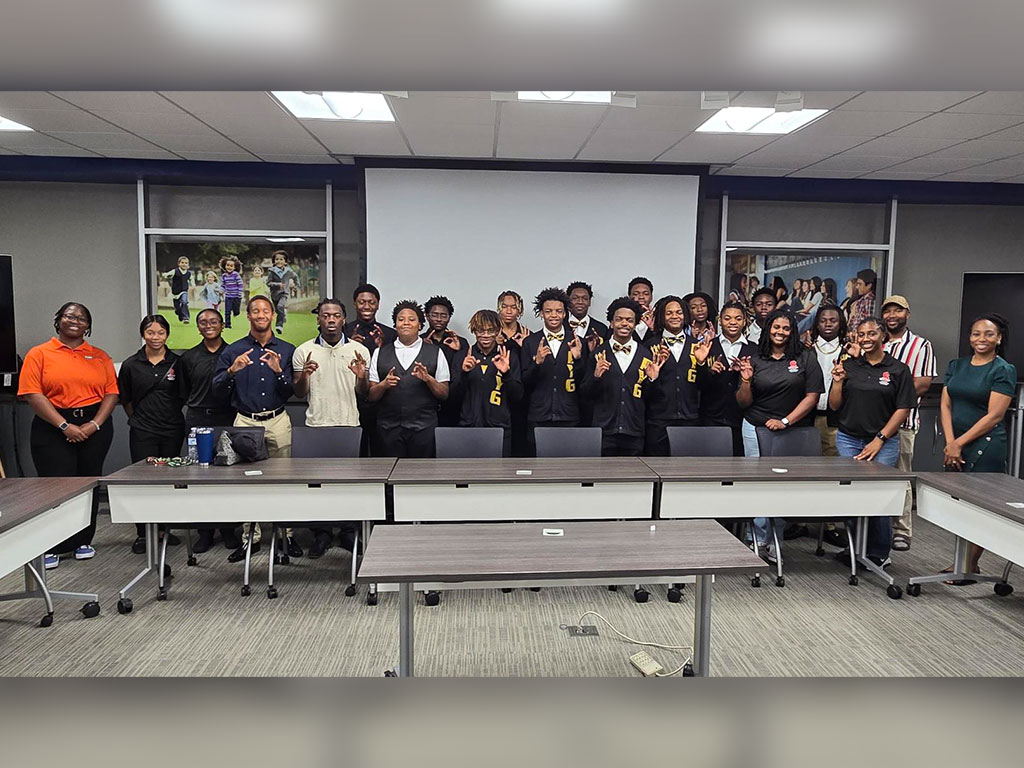 FAMU SFEPD Ambassadors lead a financial literacy seminar for students from Distinguished
Young Gentlemen, a community organization of high school and middle-school aged male
students. (Photo courtesy of Inger Daniels-Hollar)
FAMU SFEPD Ambassadors lead a financial literacy seminar for students from Distinguished
Young Gentlemen, a community organization of high school and middle-school aged male
students. (Photo courtesy of Inger Daniels-Hollar)
Media Contact:
Ashley Flete
Senior Communications Specialist
ashley1.flete@famu.edu