
FAMU Researchers Study Mosquito Trapping Methods to Improve Disease Surveillance
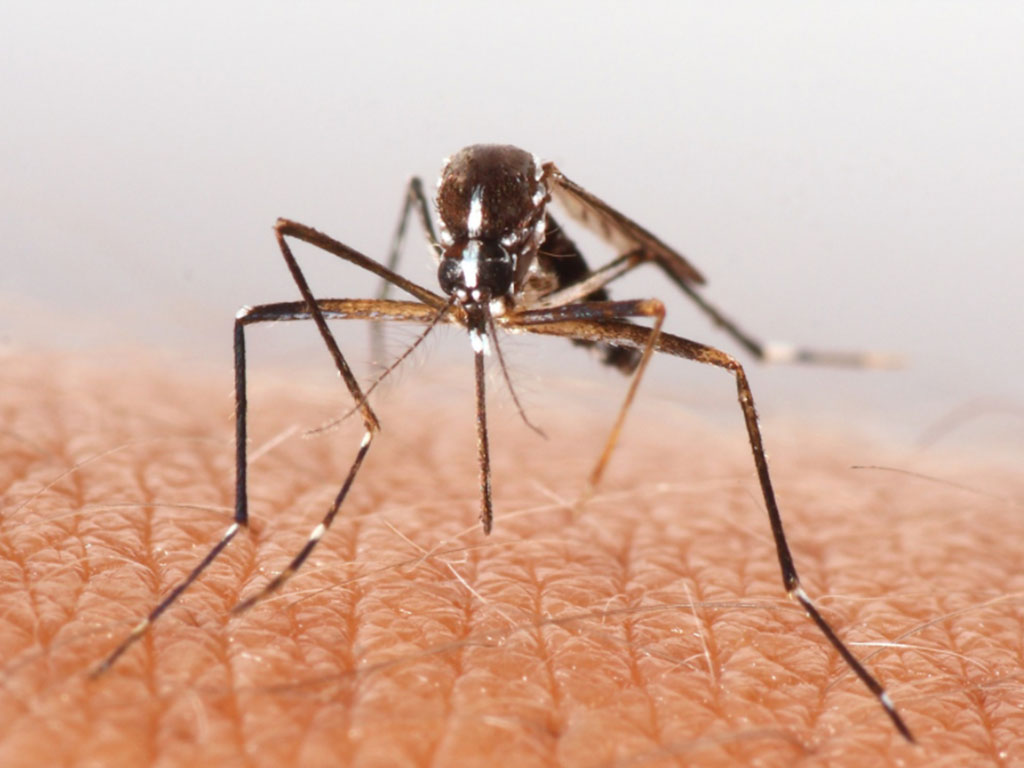
TALLAHASSEE, Fla. — As mosquito-borne illnesses continue to pose public health challenges worldwide, researchers at Florida A&M University's College of Agriculture and Food Sciences are studying trapping methods that could improve disease tracking, and help communities respond more quickly to emerging threats.
The project, led by Anamika Sharma, Ph.D., an entomologist in FAMU's Entomology Program, examines how different mosquito traps perform under varying environmental conditions. By identifying which methods work best at different stages of a mosquito's life cycle, researchers hope to strengthen monitoring efforts and provide data that can help reduce disease transmission risks.
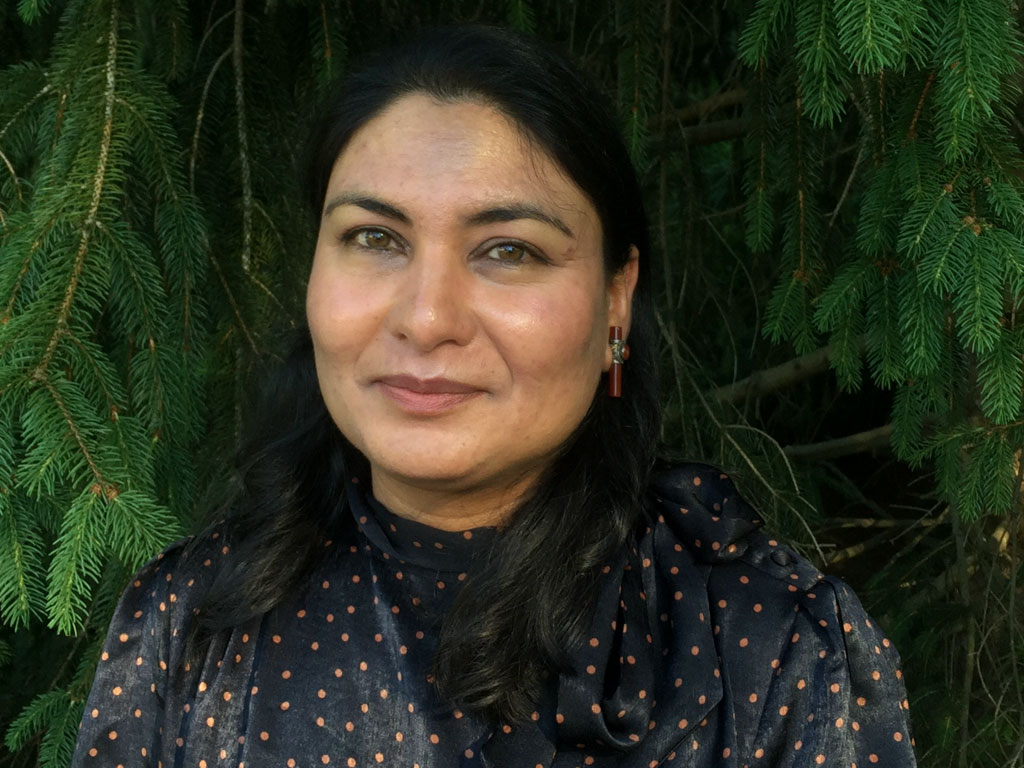 Anamika Sharma, Ph.D., an entomologist in Florida A&M University's College of Agriculture
and Food Sciences, is leading research on mosquito trapping methods aimed at improving
disease surveillance and strengthening mosquito control efforts across Florida. (Photo
Courtesy: FAMU)
Anamika Sharma, Ph.D., an entomologist in Florida A&M University's College of Agriculture
and Food Sciences, is leading research on mosquito trapping methods aimed at improving
disease surveillance and strengthening mosquito control efforts across Florida. (Photo
Courtesy: FAMU)
Mosquitoes can carry diseases such as malaria, dengue, Zika virus, West Nile virus and heartworm. In Florida, warm temperatures, frequent rainfall and severe weather events can create ideal breeding conditions, making mosquito monitoring especially important for public health.
"The process is complicated because it happens at different geographical locations depending on the different environmental conditions and natural disasters such as hurricanes and flooding," Sharma said.
Researchers are evaluating several types of mosquito traps, including carbon dioxide, pheromone, light and water traps. Carbon dioxide traps attract mosquitoes by mimicking human breath, while pheromone traps use scent cues to target specific species. Light traps help monitor mosquito activity, and water traps focus on breeding-stage mosquitoes.
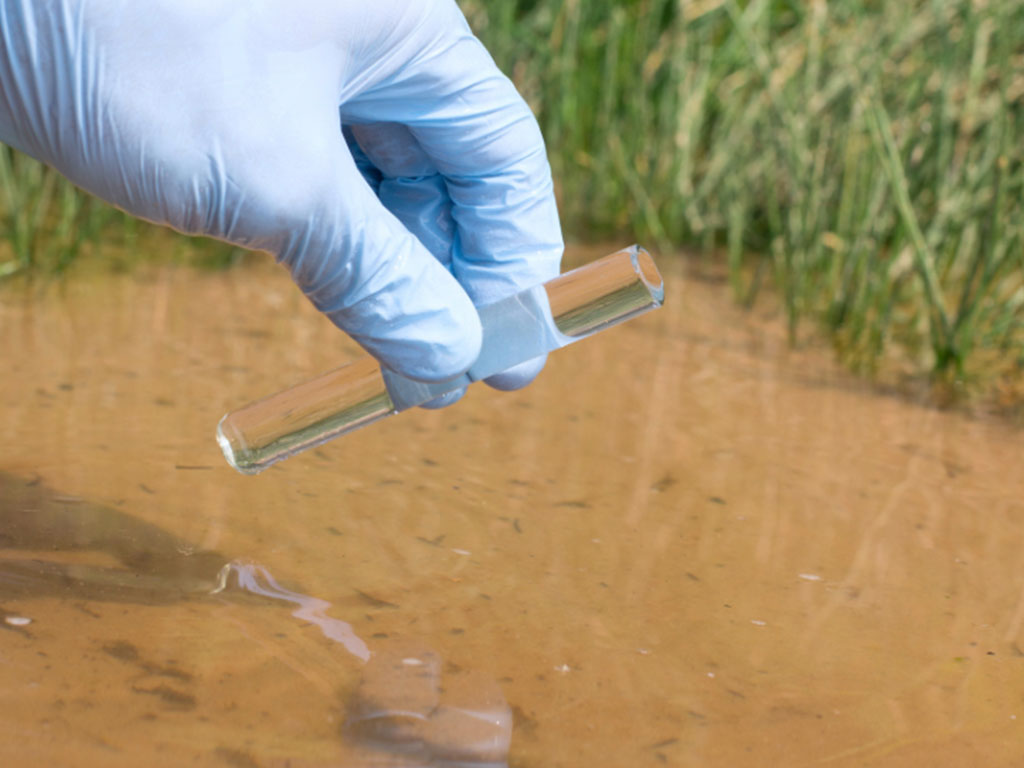 Researchers collect mosquito larvae from standing water as part of ongoing efforts
to evaluate mosquito populations and improve surveillance strategies. The data helps
scientists better understand mosquito breeding patterns and strengthen disease prevention
efforts. (Photo Courtesy: FAMU)
Researchers collect mosquito larvae from standing water as part of ongoing efforts
to evaluate mosquito populations and improve surveillance strategies. The data helps
scientists better understand mosquito breeding patterns and strengthen disease prevention
efforts. (Photo Courtesy: FAMU)
Sharma said comparing multiple trapping methods allows researchers to determine which approaches are most effective for different mosquito species, habitats and environmental conditions.
"A trap that performs very well in one setting may not be as effective in another," Sharma said. "This highlights the importance of tailoring mosquito surveillance strategies to local conditions rather than relying on a single universal approach."
The project provides valuable hands-on learning opportunities for FAMU students.
One of those students is Jacquez Daniels, a master's candidate in the College of Agriculture and Food Sciences. Since joining the project in February, Daniels has helped analyze scientific literature from around the world as part of a large-scale review of mosquito trapping methods and surveillance strategies.
 Research conducted through FAMU's College of Agriculture and Food Sciences is helping
advance mosquito surveillance strategies aimed at improving public health outcomes
and reducing disease transmission risks. (Photo Courtesy: FAMU)
Research conducted through FAMU's College of Agriculture and Food Sciences is helping
advance mosquito surveillance strategies aimed at improving public health outcomes
and reducing disease transmission risks. (Photo Courtesy: FAMU)
"Although I have only been involved in this project since February, it has strengthened
my skills in scientific literature review, data organization and critical analysis,"
Daniels said. "Working on a meta-analysis has taught me how to evaluate published
research objectively, recognize patterns across studies and understand how differences
in methodology can influence results."
Daniels said the experience has reinforced the importance of careful data collection,
accurate species identification and evidence-based science. It also has helped him
build skills that will support his future career in insect taxonomy and systematics.
"Being involved in research has given me opportunities to work alongside experienced researchers, develop new skills and gain confidence in my ability to tackle complex problems," he said. "The techniques and critical thinking developed through research are transferable across many areas of entomology, making me a more well-rounded researcher."
Daniels said greater public awareness of mosquito surveillance could help residents better understand their role in reducing disease risks.
"Mosquito control is not just about spraying adult mosquitoes," Daniels said. "Long-term prevention relies heavily on surveillance, environmental management, and understanding mosquito behavior and ecology."
He also encouraged residents to remove standing water around their homes, noting that even small amounts of stagnant water can create mosquito breeding sites.
Sharma said the research is becoming increasingly important as climate and weather patterns continue to shift.
"Climate change and weather conditions are drastically changing, so I think if we have a tool to help us with mosquito surveillance, it will be better for everybody," she said.
Improved trapping methods could help public health officials detect mosquito populations earlier, monitor disease-carrying species more accurately and reduce mosquito abundance in targeted areas.
"Better traps can help detect mosquito populations earlier, monitor disease vectors more accurately and reduce mosquito abundance in targeted areas," Sharma said. "Ultimately, this could lower disease transmission risks and improve public health outcomes while reducing unnecessary pesticide applications."
Researchers hope to continue expanding the project by evaluating trap performance in additional locations and environmental conditions.
As mosquito populations continue to shift, FAMU scientists hope the findings will help communities identify disease risks sooner while giving the next generation of researchers practical experience in the field.
Sharma notes that mosquitoes still play an important role in the ecosystem despite the health risks they can pose, underscoring the importance of balancing public health efforts with environmental stewardship.
For more information about FAMU's Entomology Program, research initiatives and upcoming educational workshops, visit FAMU College of Agriculture and Food Sciences
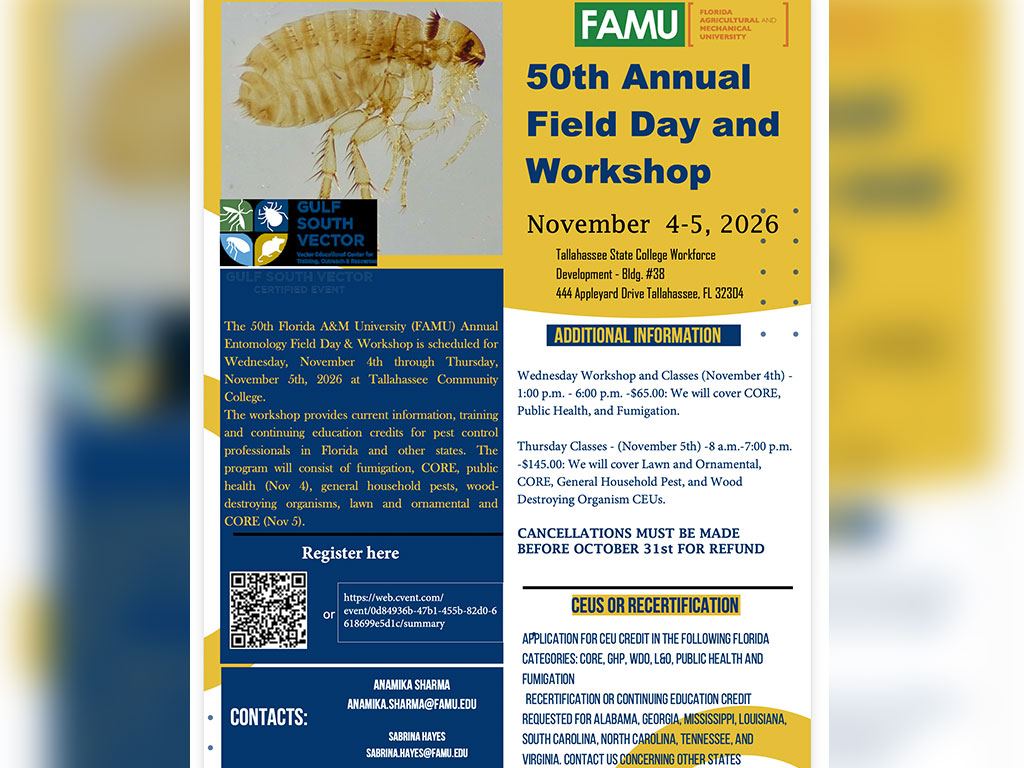 Community members and pest management professionals interested in learning more about
insect science and mosquito surveillance can also explore educational opportunities
through FAMU's annual Entomology Field Day and Workshop, a long-running program that
provides training and continuing education for industry professionals. (Photo Courtesy:
FAMU)
Community members and pest management professionals interested in learning more about
insect science and mosquito surveillance can also explore educational opportunities
through FAMU's annual Entomology Field Day and Workshop, a long-running program that
provides training and continuing education for industry professionals. (Photo Courtesy:
FAMU)
Media Contact:
Ashley Flete
Senior Communications Specialist
ashley1.flete@famu.edu