
FAMU Scholars Selected for Prestigious MIT Knight Science Journalism Fellowship
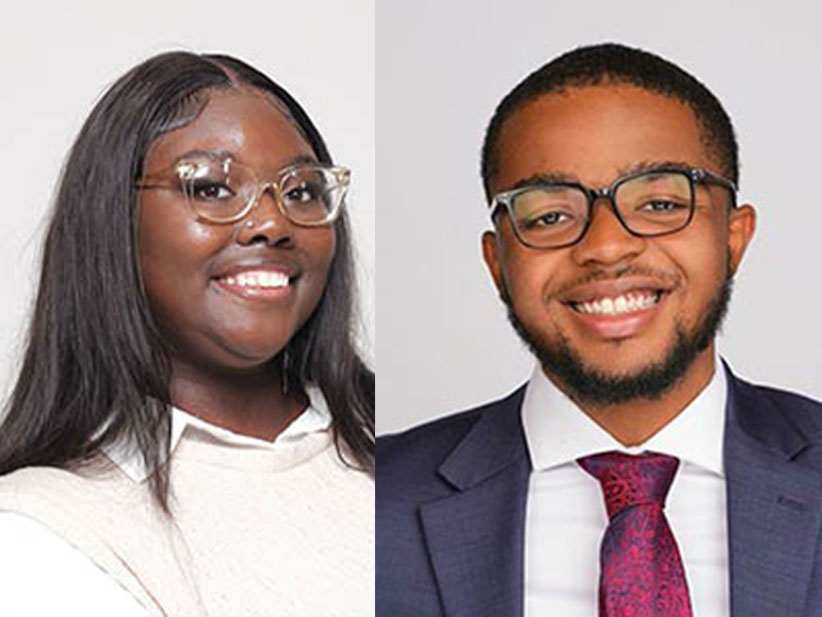
TALLAHASSEE, Fla. — Two standout scholars from the Florida A&M University (FAMU) School of Journalism & Graphic Communication have been named to the prestigious 2026-27 HBCU Science Journalism Fellowship class at the Massachusetts Institute of Technology (MIT). Broadcast journalism majors Khalil-Lullah Ballentine and Krysten Hood are among 10 students selected nationwide for this highly competitive program, marking a significant achievement for the university’s journalism department.
While the program offers world-class technical training, Ballentine remains focused on his primary goal of making complex information accessible to the people who need it most.
"I really want to do some work that's bridging the gap between things that are hard
to grasp and understand, and things that are written into legislation that are hard
to decode. I wanna be able to break it down so that more people in communities where
I'm really familiar can digest it a lot easier," he said. 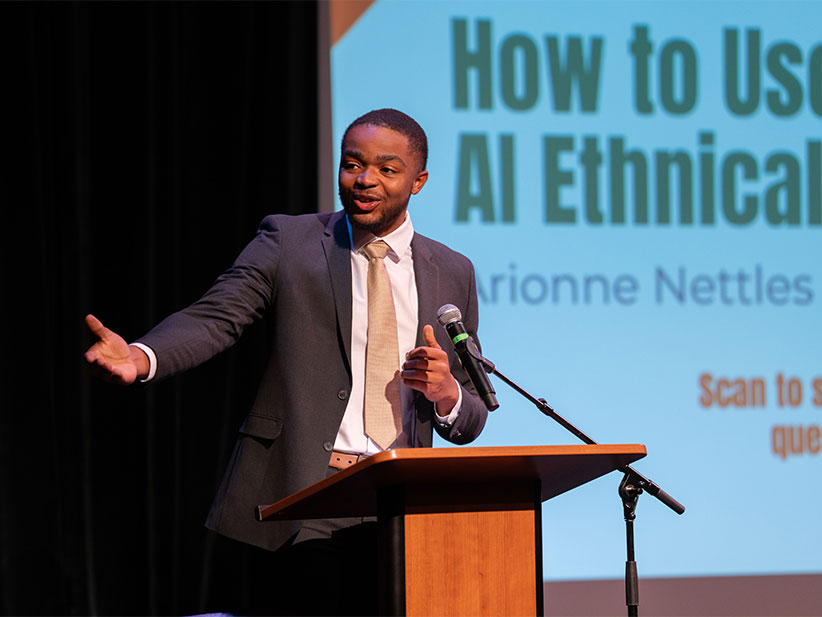 Khalil-Lullah Ballentine is a junior at Florida A&M University. (Photo special to
FAMU)
Khalil-Lullah Ballentine is a junior at Florida A&M University. (Photo special to
FAMU)
In other words, Ballentine wants underrepresented populations to have access to a
trusted, relatable, and knowledgeable source who can explain things clearly and in
an easy-to-understand way.
The fellowship, now in its third year, is a key part of the Knight Science Journalism (KSJ) Program at MIT. It is designed to give top-tier training, guidance, and early career assistance to undergraduate students at HBCUs who want to pursue a career in science, health and environment. By selecting Ballentine and Hood, the program recognizes their potential to lead in a field that has historically lacked diverse voices and perspectives.
Hood said the fellowship is an opportunity to learn how to make .
"I'm excited to start this fellowship because I want to learn more about how to make academic writing more powerful for everyday consumers. I feel that when we are storytelling and sharing advancements that are being made in science and technology, we have to make the language palatable for the everyday person who doesn't understand the context behind the research or may not be as well-versed in the advancements that are being made."
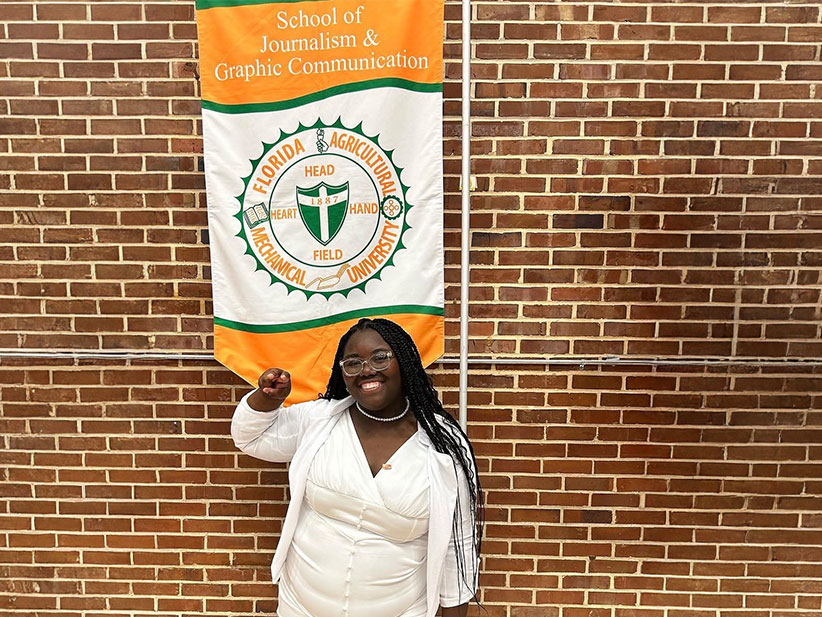 Krysten Hood, a junior at Florida A&M University, is ready to strike as a Knight Science
Journalism Fellow. (Photo special to FAMU)
Krysten Hood, a junior at Florida A&M University, is ready to strike as a Knight Science
Journalism Fellow. (Photo special to FAMU)
Hood said she plans to focus on AI in women’s healthcare, emphasizing the need for
inclusivity, representation, and intentional equity in research while helping the
public understand how these advancements impact their care.
A Transformative Hybrid Experience
The fellowship kicks off with a week-long summer camp at MIT’s campus in Cambridge, Massachusetts. During this busy week, Ballentine and Hood will join practical workshops taught by leading science journalists from well-known publications. After the summer camp, the students begin a 10-month program that mixes online and in-person work, where they are paired with professional mentors. This mentorship helps them improve their reporting skills and learn how to pitch difficult science stories to major news organizations.
Expanding the Narrative
The KSJ program works closely with HBCU faculty to ensure the fellowship meets the specific needs of emerging Black journalists. This year’s group includes students who are interested in many different topics, such as artificial intelligence and astronomy.
KSJ Program Director Usha Lee McFarling said representation is important because the field has not always included people from all backgrounds. By fostering talent at institutions like FAMU, the program aims to change that dynamic permanently.
Since its founding in 1983, the Knight Science Journalism Program has supported over 400 journalists globally. The program is a leader in science communication because it publishes the digital magazine Undark and manages the Victor K. McElheny Award, the program remains a leader in science communication. By having Ballentine and Hood join this top-tier group, Florida A&M University continues to prove it is a great place to train the next generation of expert reporters.
Media Contact
Rachel James-Terry
Senior Director of Strategic Communications
rachel.jamesterry@famu.edu