
FAMU School of the Environment Invited to Premier National Research Laboratory
TALLAHASSEE, Fla. - For students in Florida A&M University's School of the Environment, stepping inside Pacific Northwest National Laboratory (PNNL) was more than an opportunity to tour one of the nation's leading research institutions. It was a chance to see firsthand how the knowledge and skills they are developing at FAMU translate into solving real-world environmental challenges.
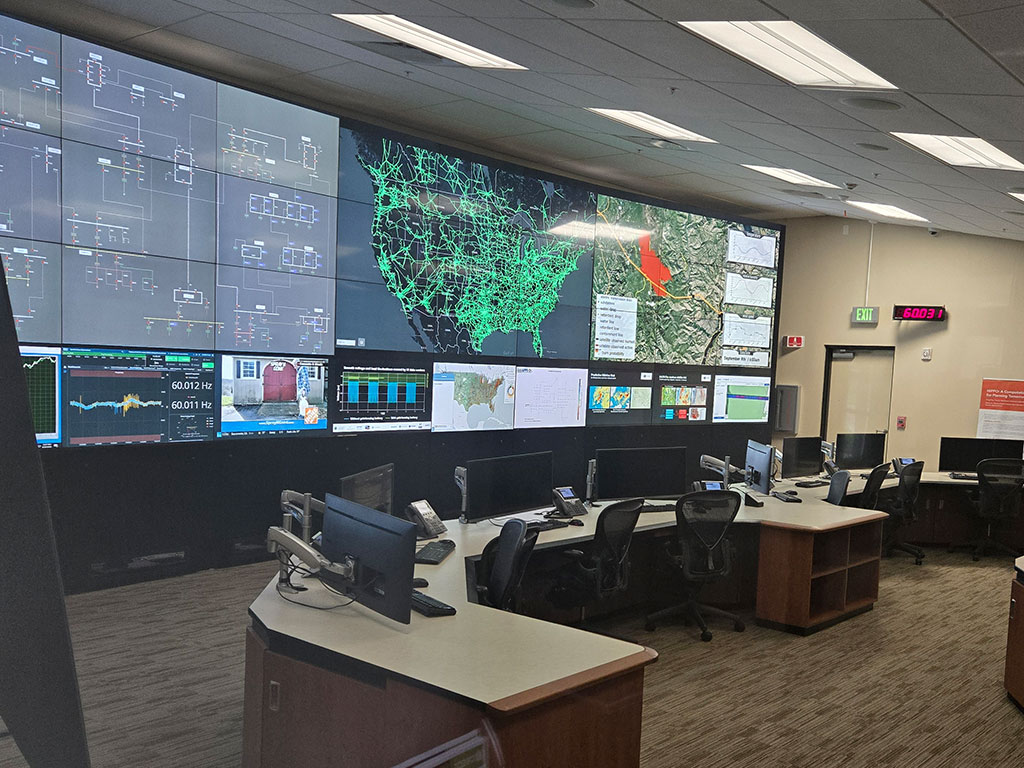 Students from Florida A&M University's School of the Environment tour the Grid Storage
Launchpad at Pacific Northwest National Laboratory (PNNL), where researchers monitor
and study the nation's electric power grid to advance energy resilience, reliability
and innovation. (Photo courtesy of Joel Blount)
Students from Florida A&M University's School of the Environment tour the Grid Storage
Launchpad at Pacific Northwest National Laboratory (PNNL), where researchers monitor
and study the nation's electric power grid to advance energy resilience, reliability
and innovation. (Photo courtesy of Joel Blount)
PNNL is one of the U.S. Department of Energy's national laboratories, conducting research that advances energy security, environmental sustainability and scientific innovation.
The invitation reflected years of collaboration between the School of the Environment
and the U.S. Department of Energy (DOE), while giving students a firsthand look at
the innovative research addressing some of the country's most pressing environmental
and energy challenges. Eight representatives from the School of the Environment, including
Dean Victor Ibeanusi, Ph.D., faculty members and undergraduate students, participated
in the two-day immersive experience, engaging with scientists and engineers, exploring
cutting-edge technologies and strengthening relationships that could lead to future
research collaborations.
For Dean Victor Ibeanusi, Ph.D., the invitation itself was a testament to the school's growing reputation.
"Being invited is different from requesting to come," Ibeanusi said. "It means people believe in what we're doing. They believe we have the expertise to contribute."
That recognition reflects years of intentional work by the School of the Environment not only through research, but by ensuring students are prepared to contribute long before they graduate.
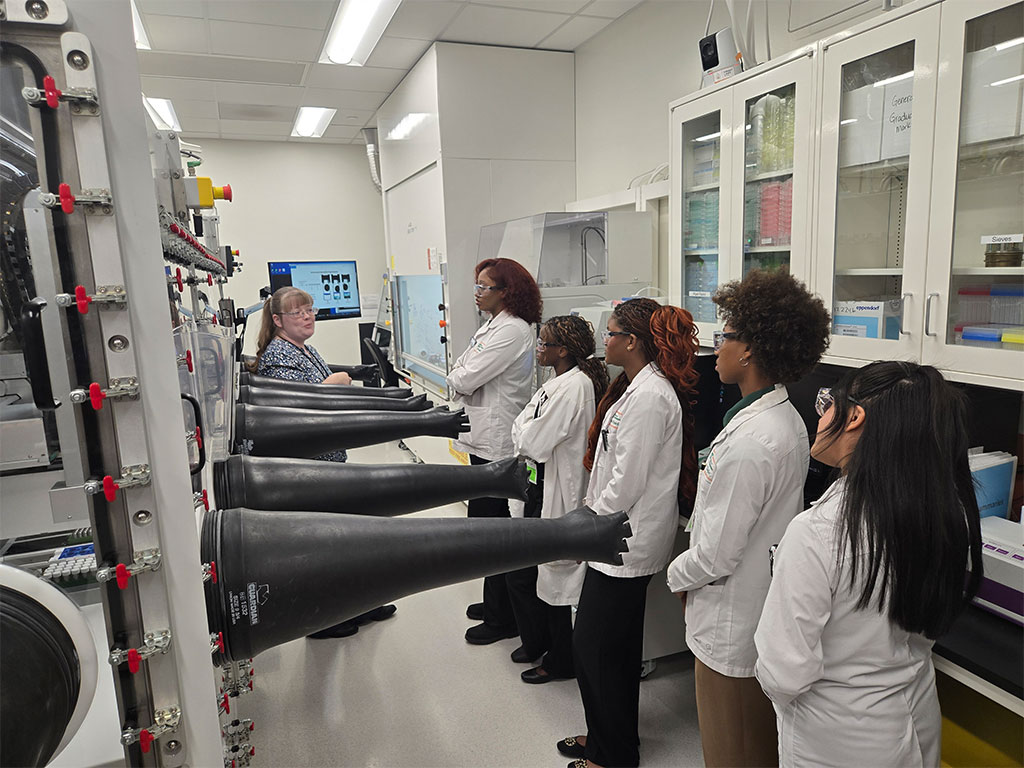 Florida A&M University School of the Environment students tour a research laboratory
at Pacific Northwest National Laboratory (PNNL), where scientists discussed advanced
analytical instrumentation and demonstrated technologies used to support environmental,
energy and national security research. (Photo courtesy of Joel Blount.)
Florida A&M University School of the Environment students tour a research laboratory
at Pacific Northwest National Laboratory (PNNL), where scientists discussed advanced
analytical instrumentation and demonstrated technologies used to support environmental,
energy and national security research. (Photo courtesy of Joel Blount.)
"We can talk all we want about workforce development," Ibeanusi said. "But if we're not aligning what students learn with real opportunities that enhance their skills and prepare them for the workforce, it doesn't go anywhere."
That philosophy is evident through the school's Nexus Scholars in Residence program, where students begin conducting research early in their academic careers. Students reinforce classroom learning through hands-on research projects that mirror the challenges scientists are addressing across the DOE, giving them a deeper understanding of how their education connects to real-world careers.
During the visit, participants toured several of PNNL's world-class research facilities, including the Computational Sciences Facility, Grid Storage Launchpad, Life Sciences Laboratory, Applied Engineering Laboratory and the Environmental Molecular Sciences Laboratory (EMSL). Along the way, they explored research in environmental remediation, nuclear waste management, artificial intelligence, robotics, biosensors, geophysical characterization and advanced analytical instrumentation.
For senior environmental science major Anna D. Manning, one lesson stood above the rest.
"My biggest takeaway from this visit was that more Black scientists are needed," she said. "During the tour, I enjoyed talking with the many scientists, but there were very few who looked like me."
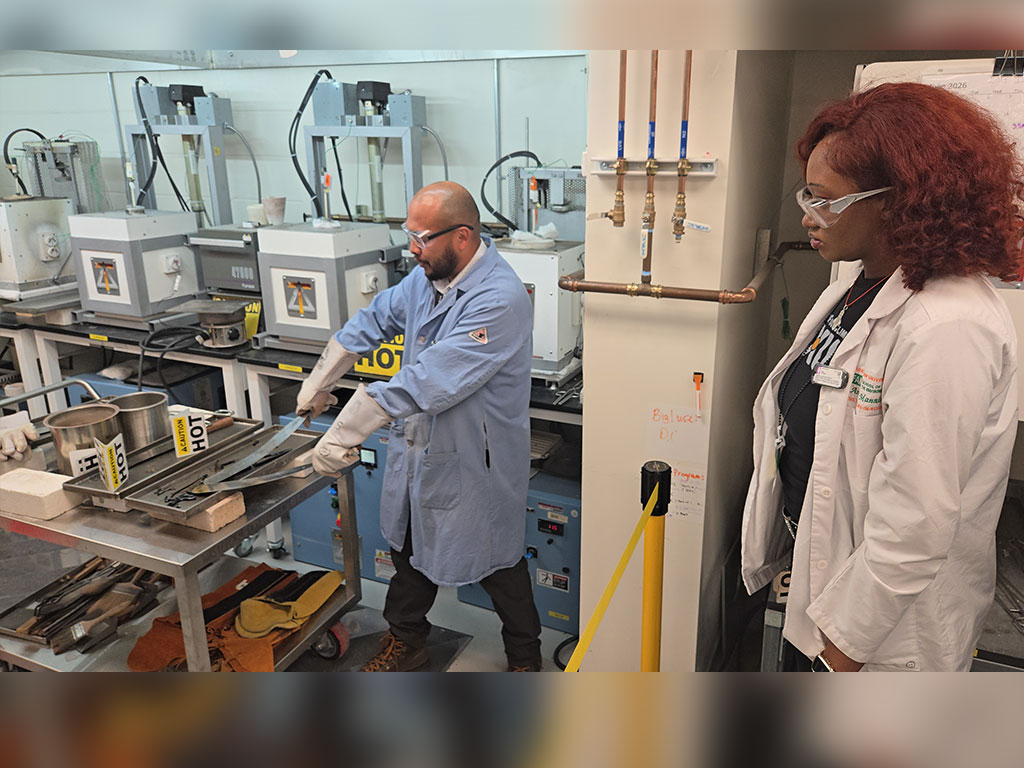 Senior environmental science major Anna D. Manning observes a live research demonstration during a tour of Pacific Northwest National
Laboratory (PNNL), where scientists showcased advanced materials testing and laboratory
techniques that support energy innovation and national security research. (Photo courtesy
of Joel Blount.)
Senior environmental science major Anna D. Manning observes a live research demonstration during a tour of Pacific Northwest National
Laboratory (PNNL), where scientists showcased advanced materials testing and laboratory
techniques that support energy innovation and national security research. (Photo courtesy
of Joel Blount.)
The experience not only broadened her perspective but also strengthened her commitment to continuing her education.
"This experience motivated me to continue my education and pursue a graduate degree after I graduate with my bachelor's in December," Manning said. "Being immersed in research that aligns with my work on a national scale was very eye-opening. This experience reaffirmed to me that the hard work will definitely pay off."
The visit also demonstrated the strength of the Rattler network. Among those helping make the opportunity possible was School of the Environment alumna Lucy Bates, who now serves with the DOE. Her involvement highlights how FAMU graduates continue creating pathways for future generations of students.
While students gained valuable insight into careers in environmental science, the visit also created opportunities for the university’s research enterprise.
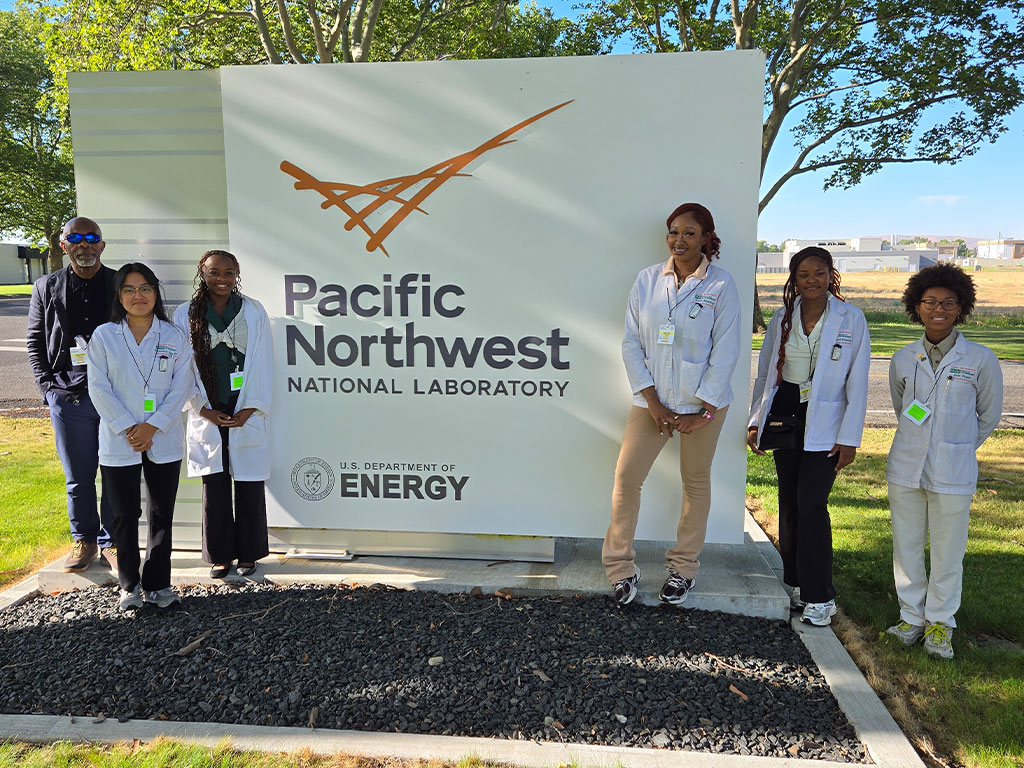
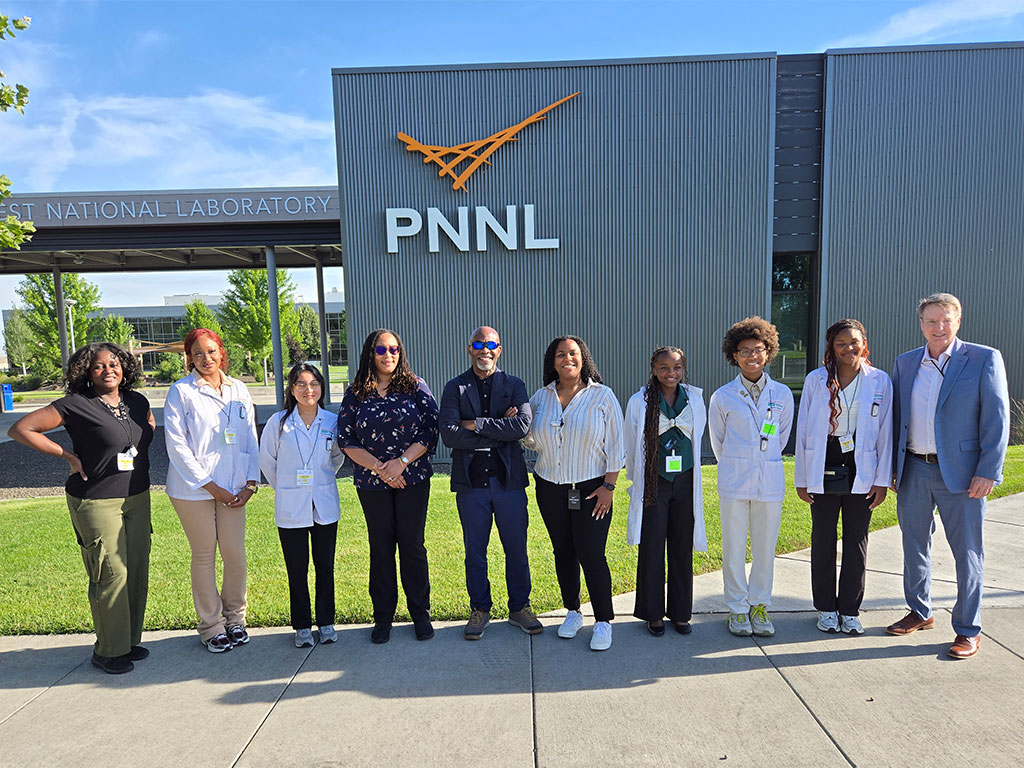 Florida A&M University School of the Environment students, faculty and staff pose
for a group photo outside Pacific Northwest National Laboratory (PNNL) during a two-day
educational visit that introduced students to cutting-edge research, advanced laboratory
facilities and career opportunities in environmental science, energy and national
security. (Photo courtesy of Joel Blount.)
Florida A&M University School of the Environment students, faculty and staff pose
for a group photo outside Pacific Northwest National Laboratory (PNNL) during a two-day
educational visit that introduced students to cutting-edge research, advanced laboratory
facilities and career opportunities in environmental science, energy and national
security. (Photo courtesy of Joel Blount.)
During his visit, Ibeanusi met with laboratory leaders to discuss the School of the Environment's research expertise, opening the door to future collaborative research initiatives and funding opportunities. By strengthening relationships with DOE researchers, FAMU is positioning itself to contribute to future projects while continuing to expand opportunities for students.
"We now understand where their research priorities are headed," Ibeanusi said. "That allows us to align our expertise with theirs so when new opportunities become available, we're already prepared to partner together."
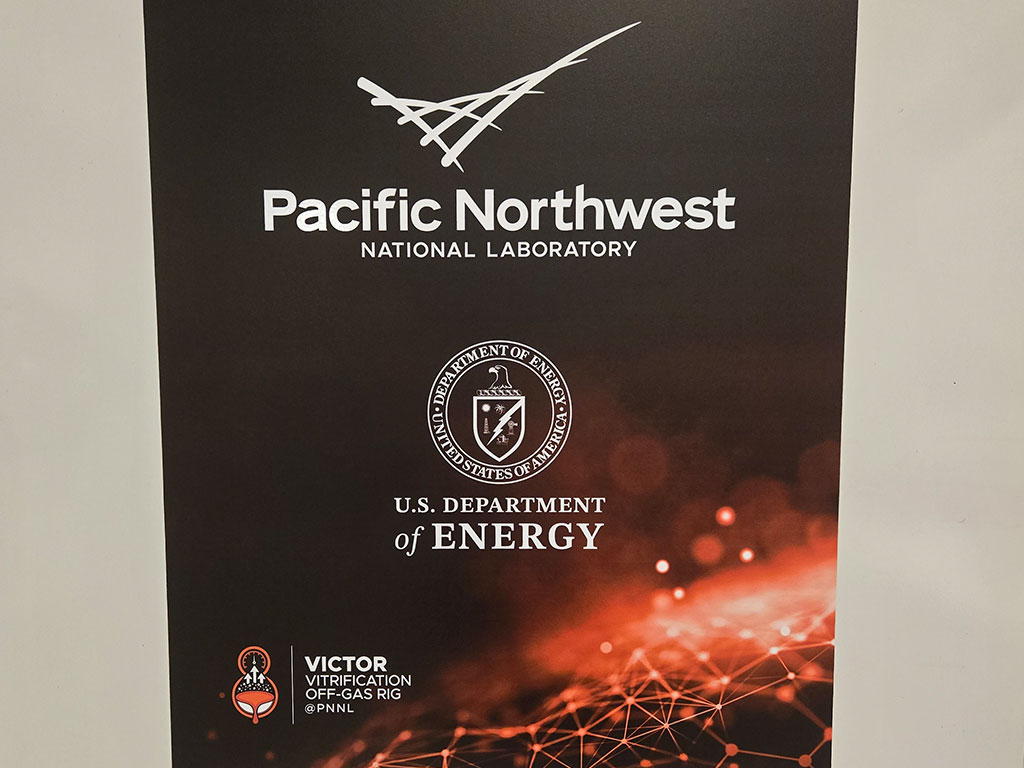 A display at Pacific Northwest National Laboratory (PNNL) highlights the U.S. Department
of Energy's partnership with the national laboratory system and the VICTOR vitrification
off-gas research program, one of the many innovative technologies showcased during
Florida A&M University School of the Environment's educational visit. (Photo courtesy
of Joel Blount.)
A display at Pacific Northwest National Laboratory (PNNL) highlights the U.S. Department
of Energy's partnership with the national laboratory system and the VICTOR vitrification
off-gas research program, one of the many innovative technologies showcased during
Florida A&M University School of the Environment's educational visit. (Photo courtesy
of Joel Blount.)
For Manning, however, the experience meant something even more personal. She shared that representing the School of the Environment at PNNL was a proud moment in her educational career.
"Being able to be the face of the next generation of science, especially as an HBCU student, was such an honor. Seeing the demand for Black scientists while also being the remedy for that issue is very humbling and motivational," she said.
At FAMU, experiences like this are about more than opening doors—they're about showing students what's possible.
Media Contact:
Ashley Flete
Senior Communications Specialist
ashley1.flete@famu.edu