
FAMU Takes Nexus Global at 2026 Summit in Mexico
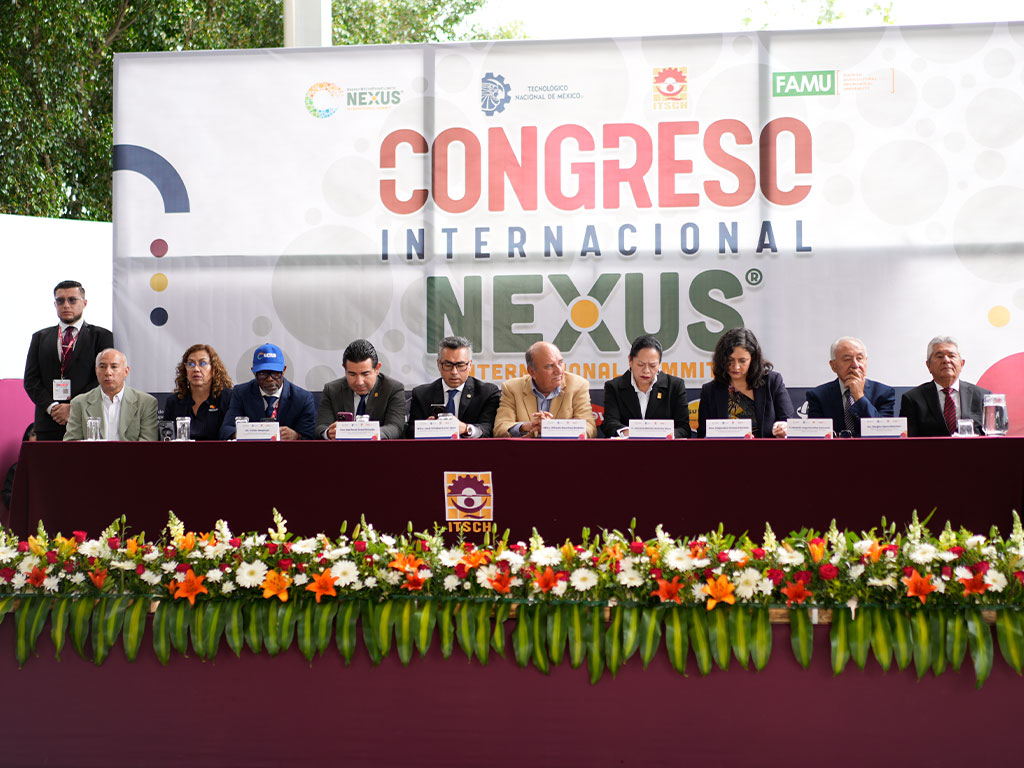
TALLAHASSEE, Fla. — Nearly 850 students, scientists, educators and leaders gathered in Michoacán, Mexico, as Florida A&M University (FAMU) expanded its EnergyWaterFoodClimateNexus initiative deeper into Latin America, creating an international platform for research, workforce development and collaboration.
Led by the FAMU School of the Environment, the 2026 EnergyWaterFoodClimateNexus International Summit was held Aug. 25-27 at the Instituto Tecnológico Superior de Ciudad Hidalgo (ITSCH) in Ciudad Hidalgo. The turnout exceeded initial expectations of more than 600 participants, reflecting growing interest in an initiative focused on the connections among energy, water, food and climate.
Highlights from the 2026 EnergyWaterFoodClimate Nexus Summit in Morelia, Michoacán,
Mexico, showcase FAMU students, faculty and global partners engaging in research,
collaboration and cultural exchange throughout the international summit. (Photo courtesy
of Ernest Nelfrard)
For FAMU School of the Environment Dean Victor Ibeanusi, Ph.D., D.h.c., founder of the Nexus initiative, understanding those connections is critical to finding sustainable solutions.
“We need to understand how these three systems function,” Ibeanusi said, referring to energy, water and food and their relationship to climate. “If we as a society can understand how these systems function and be able to integrate them, we can begin to have sustainable solutions to some of those vexing challenges of the environment, like food security, water quality and energy efficiency [and] climate resilience.”
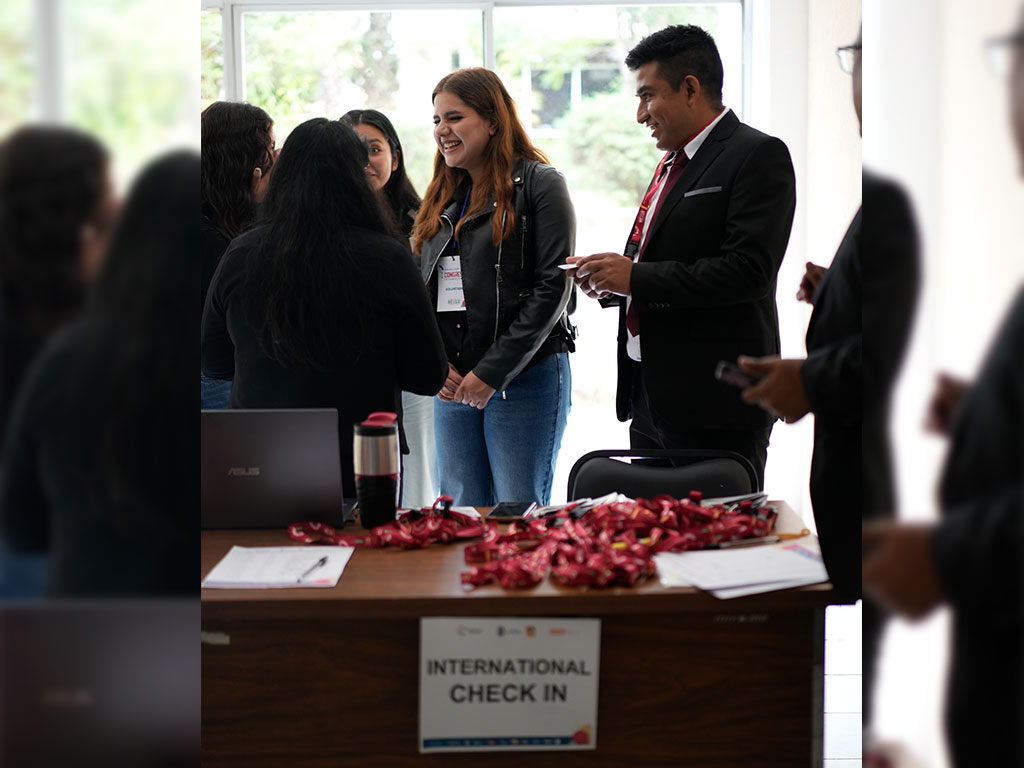
International guests connect during check-in at the 2026 EnergyWaterFoodClimateNexus
International Summit in Ciudad Hidalgo, Michoacán, Mexico, marking the start of three
days of cross-cultural exchange and collaboration. (Photo courtesy of Ernest Nelfrard)
The summit centered on three strategic priorities: workforce development, big data geospatial innovation and global food security. Through interdisciplinary problem-solving, systems thinking and advanced data analytics, Nexus aims to prepare students and early-career professionals to tackle complex resource challenges.
At the center of that work are people, climate and culture, recognizing that sustainable solutions must consider not only environmental systems as well as the communities and cultural contexts they affect. In Mexico, that approach brought scientific research into conversation with students, educators and local leaders confronting many of those challenges firsthand.
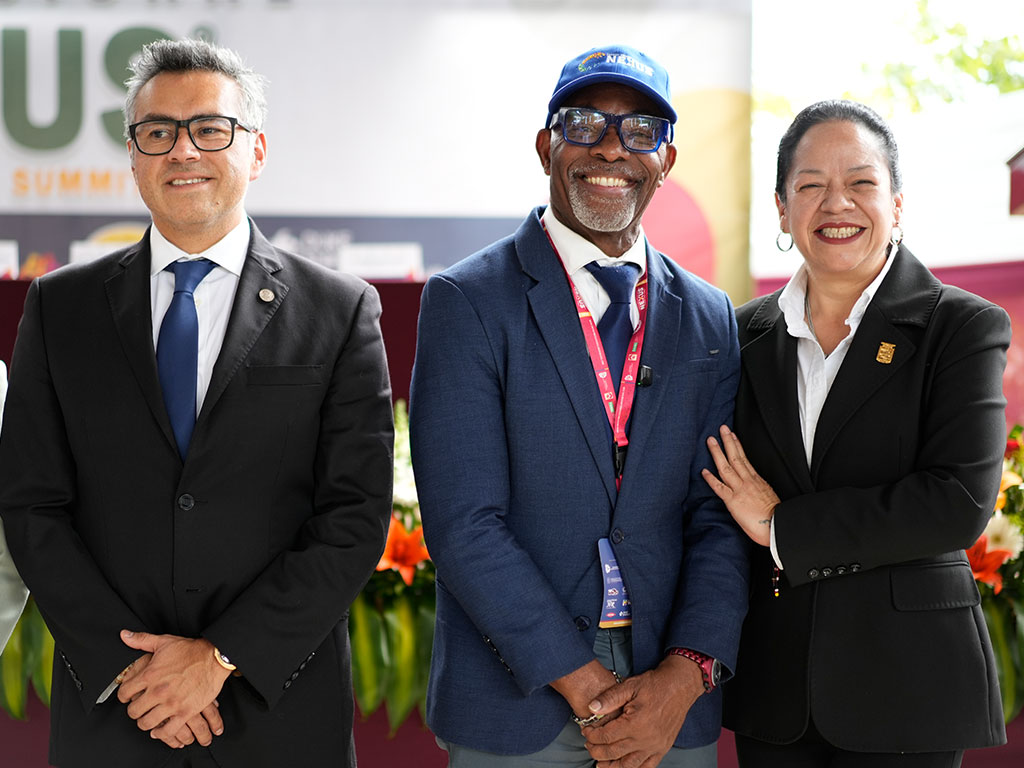 From left: José Trinidad Lara López, general director of the Instituto Tecnológico
Superior de Ciudad Hidalgo; Victor Ibeanusi, Ph.D., D.h.c. (honoris causa), dean of
the Florida A&M University School of the Environment; and Jeovana Alcántar Baca, mayor
of the Municipality of Hidalgo, Michoacán, during the 2026 EnergyWaterFoodClimateNexus
International Summit in Ciudad Hidalgo, Mexico.
From left: José Trinidad Lara López, general director of the Instituto Tecnológico
Superior de Ciudad Hidalgo; Victor Ibeanusi, Ph.D., D.h.c. (honoris causa), dean of
the Florida A&M University School of the Environment; and Jeovana Alcántar Baca, mayor
of the Municipality of Hidalgo, Michoacán, during the 2026 EnergyWaterFoodClimateNexus
International Summit in Ciudad Hidalgo, Mexico.
(Photo courtesy of Ernest Nelfrard)
The turnout carried particular significance for Ibeanusi, who said on opening day that participation from Mexico and Latin America demonstrated the initiative was reaching a broader audience.
“We have over 800 participants from Latin America and Mexico. That’s huge,” Ibeanusi said. “It means the message we’re trying to [convey]is resonating in this region.”
 Traditional performers showcase the culture of Michoacán. Cultural experiences were
woven throughout the international gathering, complementing conversations around science,
sustainability and the communities at the center of environmental solutions. (Photo
courtesy of Ernest Nelfrard)
Traditional performers showcase the culture of Michoacán. Cultural experiences were
woven throughout the international gathering, complementing conversations around science,
sustainability and the communities at the center of environmental solutions. (Photo
courtesy of Ernest Nelfrard)
Research Without Borders
Across three days, Nexus moved that message from concept to application through keynote addresses, panel discussions, workshops, research presentations and an interactive poster session.
Michael Martínez-Colón, Ph.D., an associate professor in the FAMU School of the Environment, led the first workshop. His presentation explored the relationship among climate change, sediment and organic matter transport, methane production and the movement of contaminants through river systems.
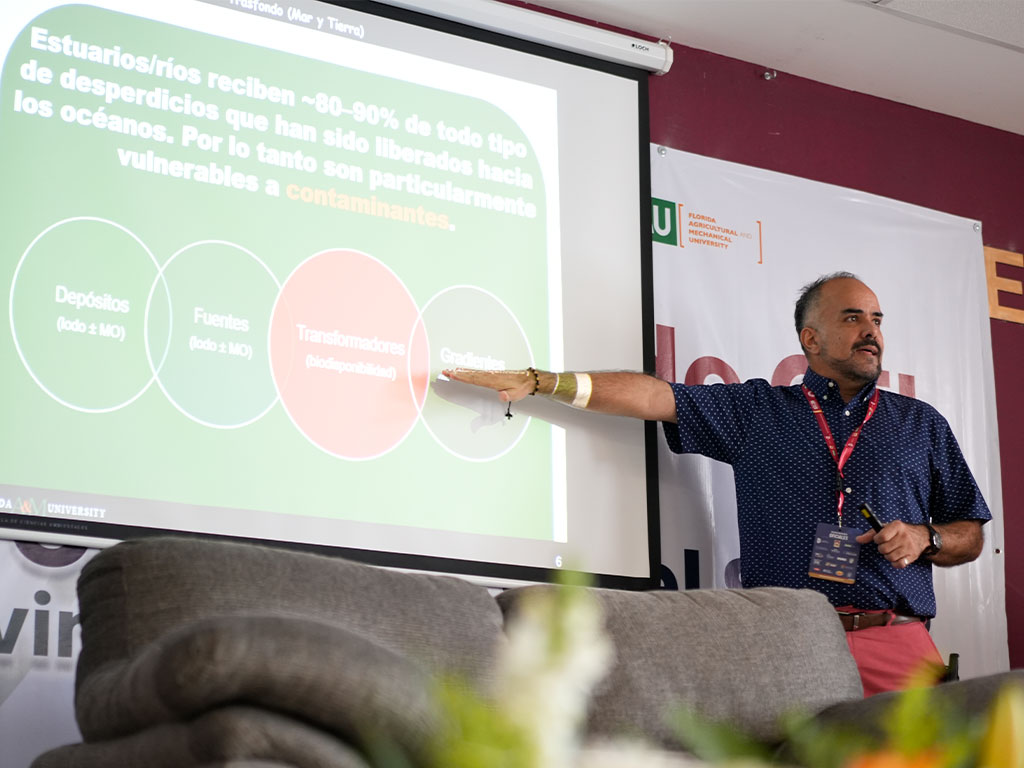 Martínez-Colón opened the first workshop session with a presentation exploring the
connections among climate change, organic matter and sediment transport, methane production
and the movement of contaminants through river systems. (Photo courtesy of Ernest
Nelfrard)
Martínez-Colón opened the first workshop session with a presentation exploring the
connections among climate change, organic matter and sediment transport, methane production
and the movement of contaminants through river systems. (Photo courtesy of Ernest
Nelfrard)
“Global climate change is not just about the environment getting more abrasive, but it also has an effect on the potential transport of contaminants downstream,” Martínez-Colón said.
His presentation followed those connections from terrestrial environments through rivers and ultimately to coastlines, illustrating the interconnected approach at the heart of Nexus.
Other sessions examined water quality and microplastics, climate-resilient agriculture, environmental policy, artificial intelligence, greenhouse gas emissions and air quality monitoring.
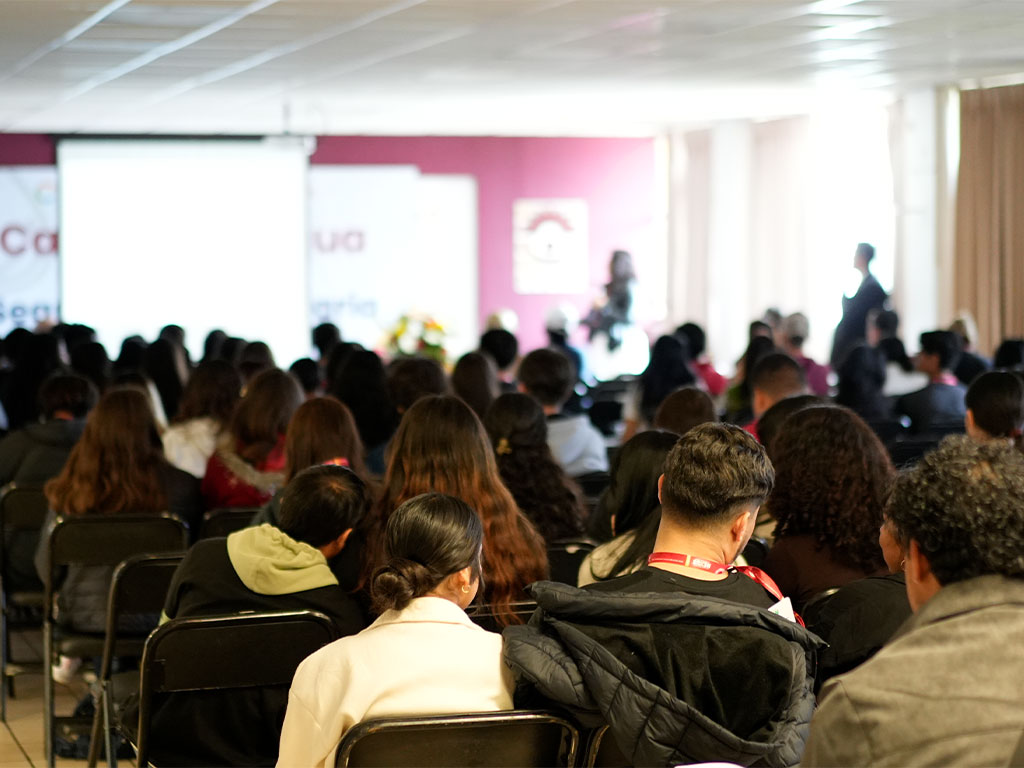 Participants attend a session during the 2026 EnergyWaterFoodClimateNexus International
Summit in Ciudad Hidalgo, Michoacán, Mexico. The FAMU School of the Environment-led
summit drew approximately 850 participants for three days of research, collaboration
and discussions centered on energy, water, food, climate, people and culture. (Photo
courtesy of Ernest Nelfrard)
Participants attend a session during the 2026 EnergyWaterFoodClimateNexus International
Summit in Ciudad Hidalgo, Michoacán, Mexico. The FAMU School of the Environment-led
summit drew approximately 850 participants for three days of research, collaboration
and discussions centered on energy, water, food, climate, people and culture. (Photo
courtesy of Ernest Nelfrard)
The exchange extended well beyond the United States and Mexico. Researchers representing institutions in South Africa, China, Germany, Argentina, Chile and India were among those contributing to the program. Scholars from Mangosuthu University of Technology in South Africa, for example, presented work involving wastewater treatment, greenhouse gas forecasting, climate adaptation, food systems and water quality.
Together, the sessions demonstrated a central premise of Nexus: Environmental challenges may differ by region, but research and solutions can cross borders.
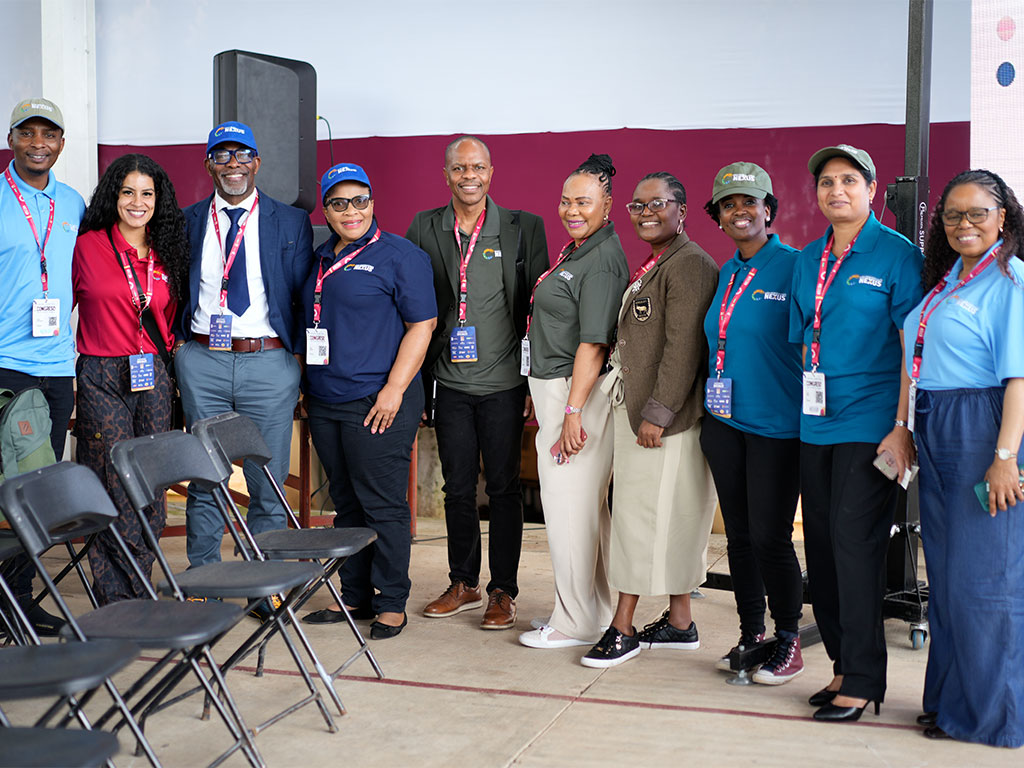 FAMU School of the Environment Dean Victor Ibeanusi, Ph.D., joins Nexus international
partners, strengthening connections across institutions and borders. (Photo courtesy
of Ernest Nelfrard)
FAMU School of the Environment Dean Victor Ibeanusi, Ph.D., joins Nexus international
partners, strengthening connections across institutions and borders. (Photo courtesy
of Ernest Nelfrard)
Building Bridges in Michoacán
The summit’s location also allowed FAMU to strengthen relationships with academic and community leaders in Mexico.
José Trinidad Lara López, general director of ITSCH, welcomed the international gathering and emphasized the need for spaces where students and researchers can move from recognizing environmental problems to identifying strategies to address them.
“Alongside these young students pursuing degrees in technology, we need to pause and analyze the immediate strategies required to reverse the effects we are facing — ranging from global warming to water crises and concerns regarding food self-sufficiency,” Lara López said. “We must seek out these strategies in forums and spaces like this one.”
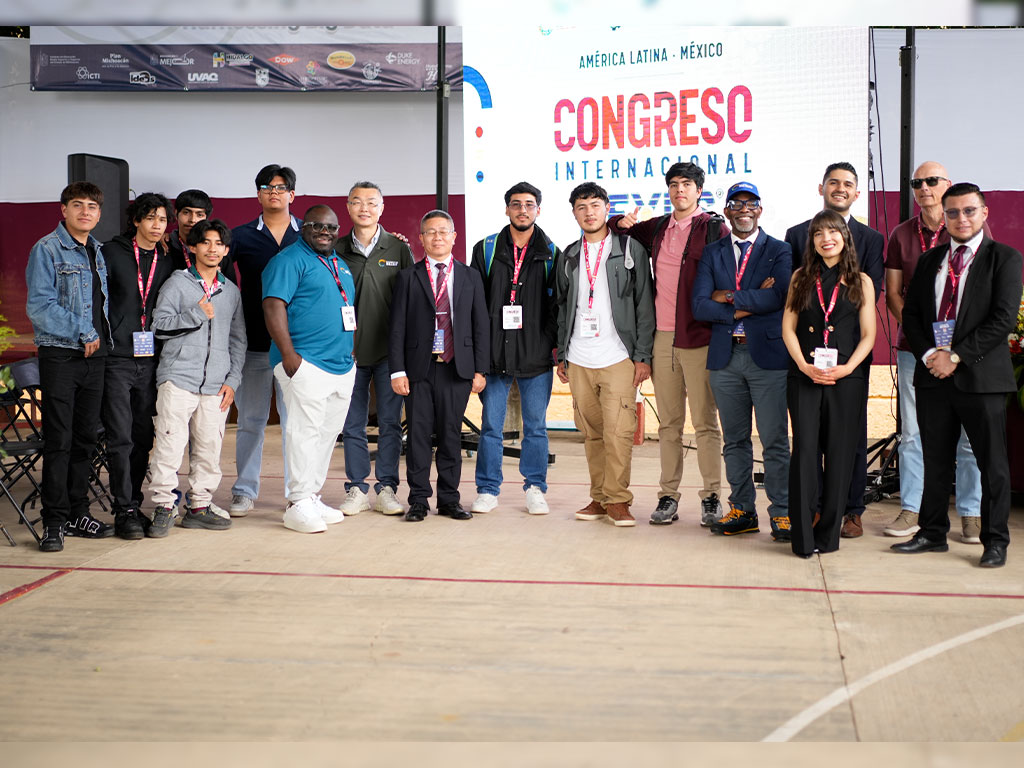 Students, researchers and international partners gather at Nexus 2026, reflecting
Mayor Jeovana Alcántar Baca’s call for young people to remain committed to their communities
and the world around them. ((Photo courtesy of Ashley Flete)
Students, researchers and international partners gather at Nexus 2026, reflecting
Mayor Jeovana Alcántar Baca’s call for young people to remain committed to their communities
and the world around them. ((Photo courtesy of Ashley Flete)
On the ITSCH campus, that exchange brought international researchers into the same spaces as students preparing for careers in science and technology. Local leadership was also part of the conversation.
Hildago Mayor Jeovana Alcántar Baca, welcomed summit participants during opening-day activities and emphasized the role young people can play in strengthening their communities.
“These are the kinds of young people our country needs today: empathetic, committed to their community and showing solidarity with the world around them,” Alcántar Baca said. “Our municipality and the state of Michoacán are fortunate to have such youth.”
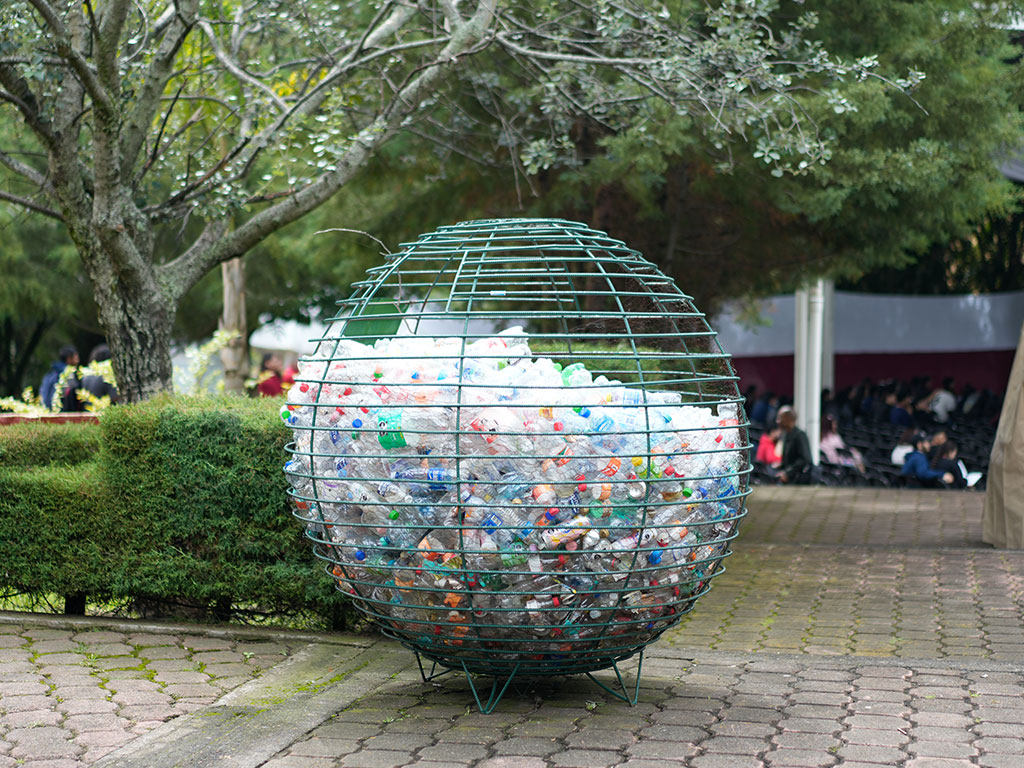 A globe-shaped collection bin filled with plastic bottles on the Instituto Tecnológico
Superior de Ciudad Hidalgo campus serves as a visual reminder of the environmental
challenges at the heart of the Nexus mission and the need for sustainable solutions
across communities. (Photo courtesy of Ernest Nelfrard)
A globe-shaped collection bin filled with plastic bottles on the Instituto Tecnológico
Superior de Ciudad Hidalgo campus serves as a visual reminder of the environmental
challenges at the heart of the Nexus mission and the need for sustainable solutions
across communities. (Photo courtesy of Ernest Nelfrard)
Her remarks reinforced a theme of the summit: Scientific advancement gains greater meaning when it reaches the people and communities it is intended to serve.
Preparing the Next Generation
FAMU students also played an active role in the summit.
Thirteen students from the School of the Environment traveled to Mexico as part of the University delegation, gaining firsthand exposure to an international scientific gathering centered on environmental challenges they are preparing to address through their studies and future careers.
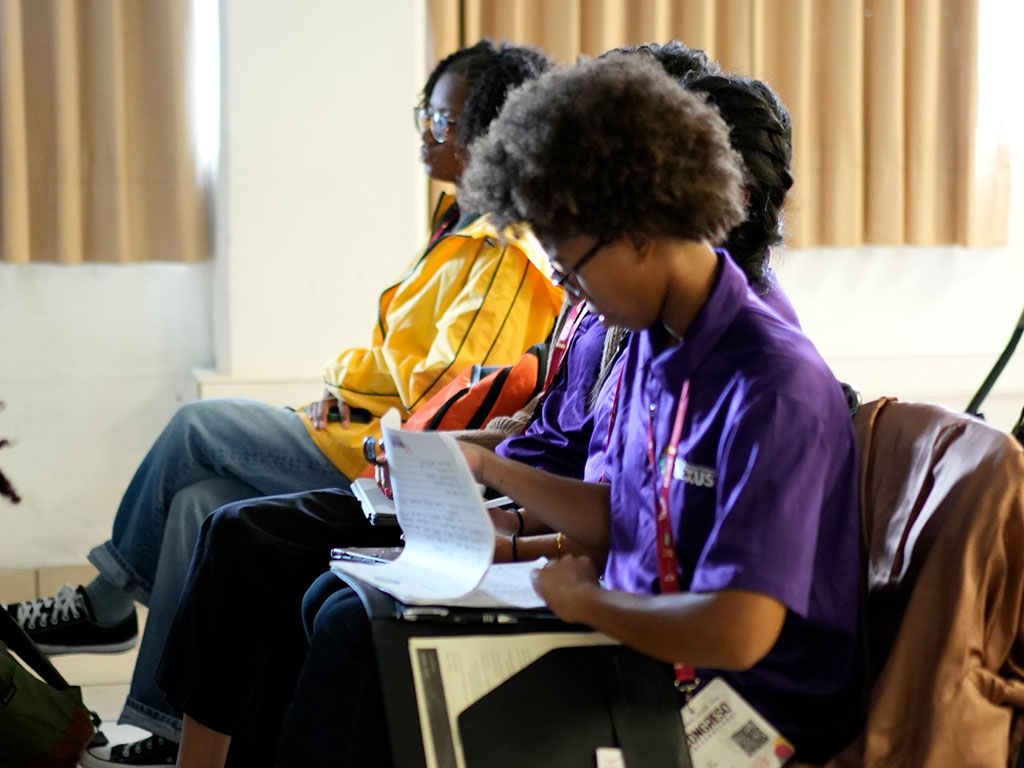 FAMU School of the Environment students take notes during a session at the 2026 EnergyWaterFoodClimateNexus
International Summit in Ciudad Hidalgo, Michoacán, Mexico. Thirteen FAMU students
traveled to Mexico as part of the University delegation, gaining firsthand exposure
to international research and discussions centered on energy, water, food and climate.
(Photo courtesy of Ernest Nelfrard)
FAMU School of the Environment students take notes during a session at the 2026 EnergyWaterFoodClimateNexus
International Summit in Ciudad Hidalgo, Michoacán, Mexico. Thirteen FAMU students
traveled to Mexico as part of the University delegation, gaining firsthand exposure
to international research and discussions centered on energy, water, food and climate.
(Photo courtesy of Ernest Nelfrard)
Students participated throughout the conference, including taking notes during keynote addresses, panels, workshops and research presentations. The assignments placed them directly in conversations with scientists and professionals representing different disciplines and countries.
The experience aligned with Nexus’ workforce development mission by extending learning beyond the classroom and exposing students to research, perspectives and professional connections across national borders.
The summit also provided FAMU with an international recruitment platform. Before the delegation traveled to Mexico, 10 prospective students connected with the Nexus initiative had already applied to FAMU undergraduate and graduate programs.
Science in Service to Society
The Nexus International Thought Leaders Awards added another dimension to the summit by recognizing scientists and leaders whose work advances the global science enterprise, including honoree
Alejandra Ochoa Zarzosa, Ph.D., of the Instituto de Ciencia, Tecnología e Innovación del Estado de Michoacán de Ocampo. Ochoa Zarzosa also delivered a keynote presentation on science and advocacy for environmental sustainability.
“This recognition serves as an incentive to keep working, building and generating
scientific knowledge for the benefit of society — specifically the society of Michoacán
— as well as for the training of students,” Ochoa Zarzosa said. “We are a team; this
isn’t just for me but for the entire group I’ve worked with over the past 25 years
at the Universidad Michoacana.”
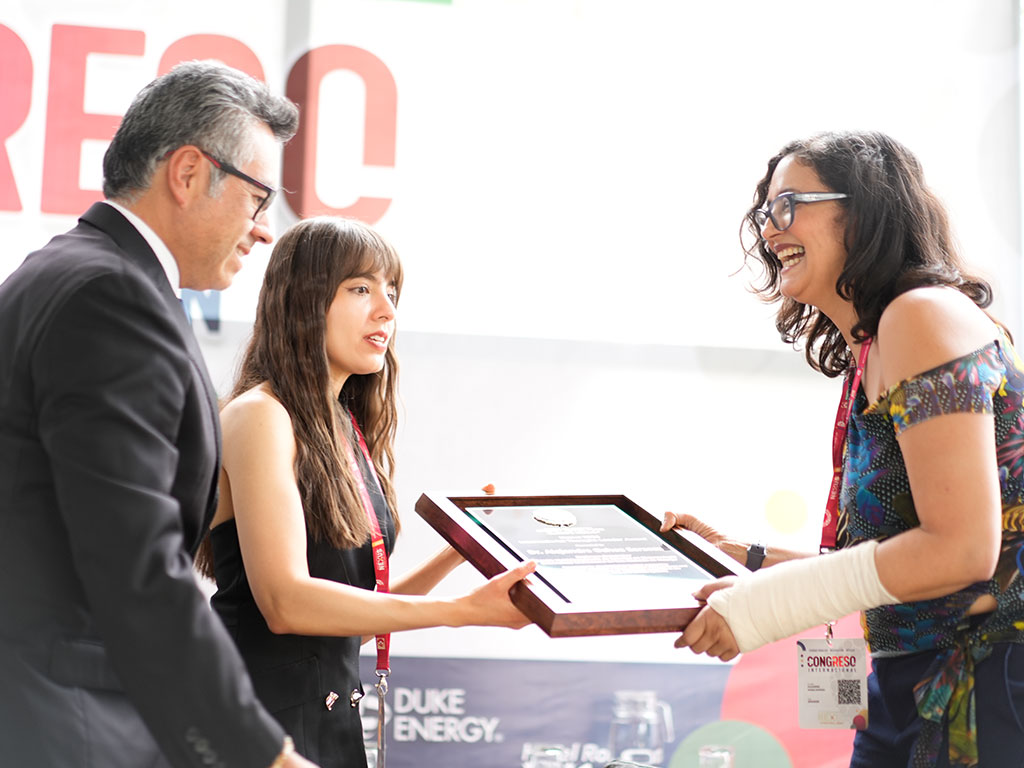
Alejandra Ochoa Zarzosa, Ph.D., of the Instituto de Ciencia, Tecnología e Innovación
del Estado de Michoacán de Ocampo, receives a Nexus International Thought Leaders
Award during the 2026 EnergyWaterFoodClimateNexus International Summit in Ciudad Hidalgo,
Michoacán, Mexico. The award recognizes contributions to scientific research, innovation
and sustainable solutions across the Nexus enterprise. (Photo courtesy of Ernest Nelfrard)
For Ochoa Zarzosa, the honor carried a responsibility beyond the award itself.
“Ultimately, this represents a commitment to continuing this research so that we can build a better society based on science,” she said.
The summit’s final day, Aug. 27, included presentations and a closing ceremony, followed by a gala dinner and awards ceremony at Ex Hacienda El Molino.
For the School of the Environment, their work now extends beyond the summit as FAMU prepares a globally connected generation capable of turning those conversations into solutions.
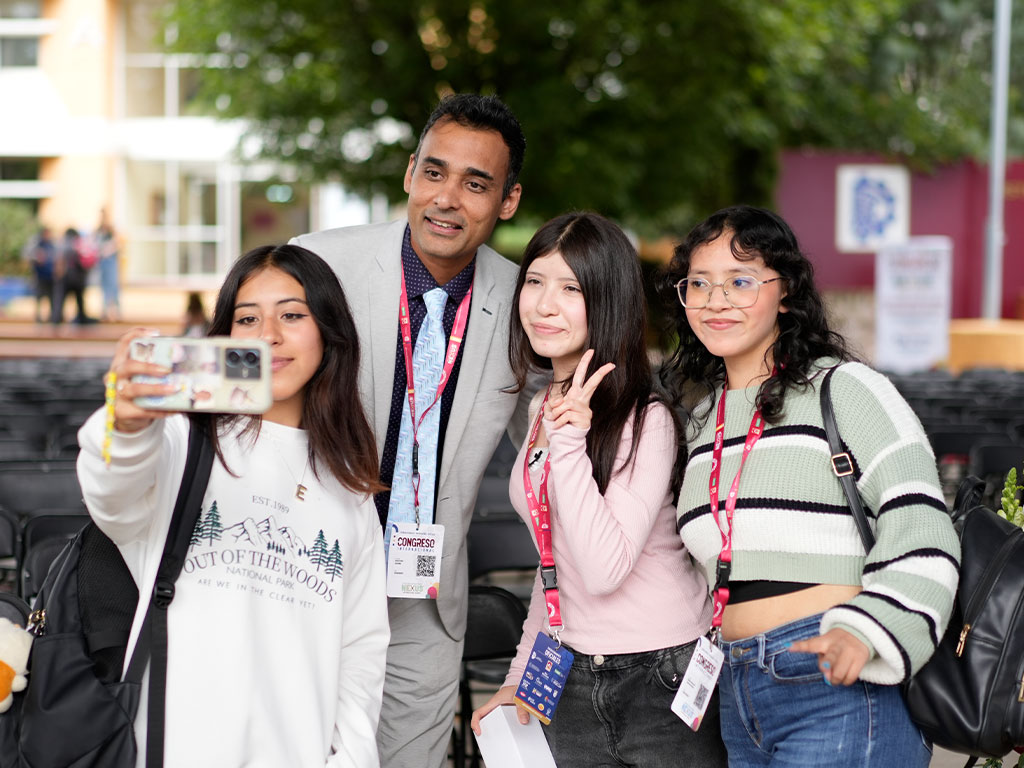 Nexus 2026 participants capture a moment together during the International Summit
in Ciudad Hidalgo, Michoacán, Mexico. The international gathering brought students,
researchers and educators together to exchange ideas, build connections and engage
across cultures. (Photo courtesy of Ernest Nelfrard)
Nexus 2026 participants capture a moment together during the International Summit
in Ciudad Hidalgo, Michoacán, Mexico. The international gathering brought students,
researchers and educators together to exchange ideas, build connections and engage
across cultures. (Photo courtesy of Ernest Nelfrard)
Media Contact:
Ashley Flete
Senior Communications Specialist
ashley1.flete@famu.edu