
FAMU Positions Students and Faculty at the Forefront of AI and Data Science
TALLAHASSEE, Fla. — From classrooms to research labs, artificial intelligence is redefining how knowledge is created, taught and applied. At Florida A&M University, that transformation is being met with strategic investment and campus-wide collaboration through the Department of Computer and Information Sciences’ Artificial Intelligence and Data Science Cluster — a key initiative supporting the university’s goal of attaining Carnegie R1 research status.
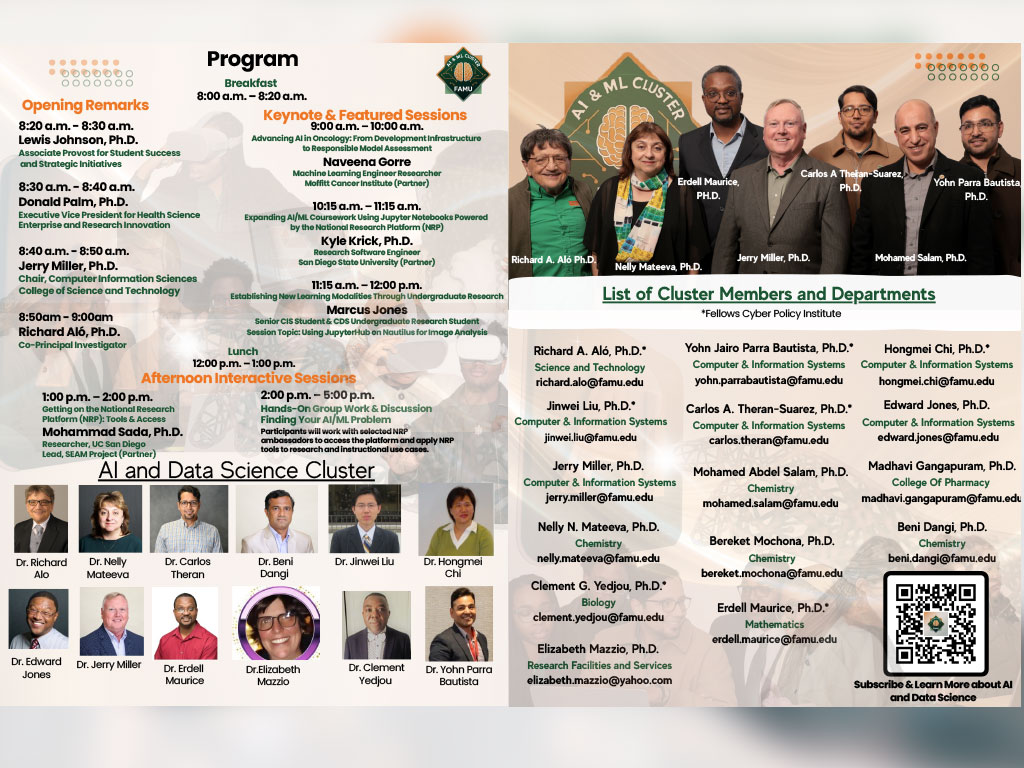
Richard A. Aló, Ph.D., FAMU’s Esteemed Scholar in Artificial Intelligence, Data Science
and Machine Learning, and the Lead for the Cluster, said the Cluster was intentionally
designed to extend beyond traditional STEM boundaries.
“My charge is to infuse these advanced technologies across the curriculum — not just
in science, technology, engineering and mathematics, but also in the humanities, social
sciences and criminal justice,” Aló said. “Artificial intelligence is having a major
impact on society, and we have a responsibility to bring all of our students and faculty
into that conversation.”
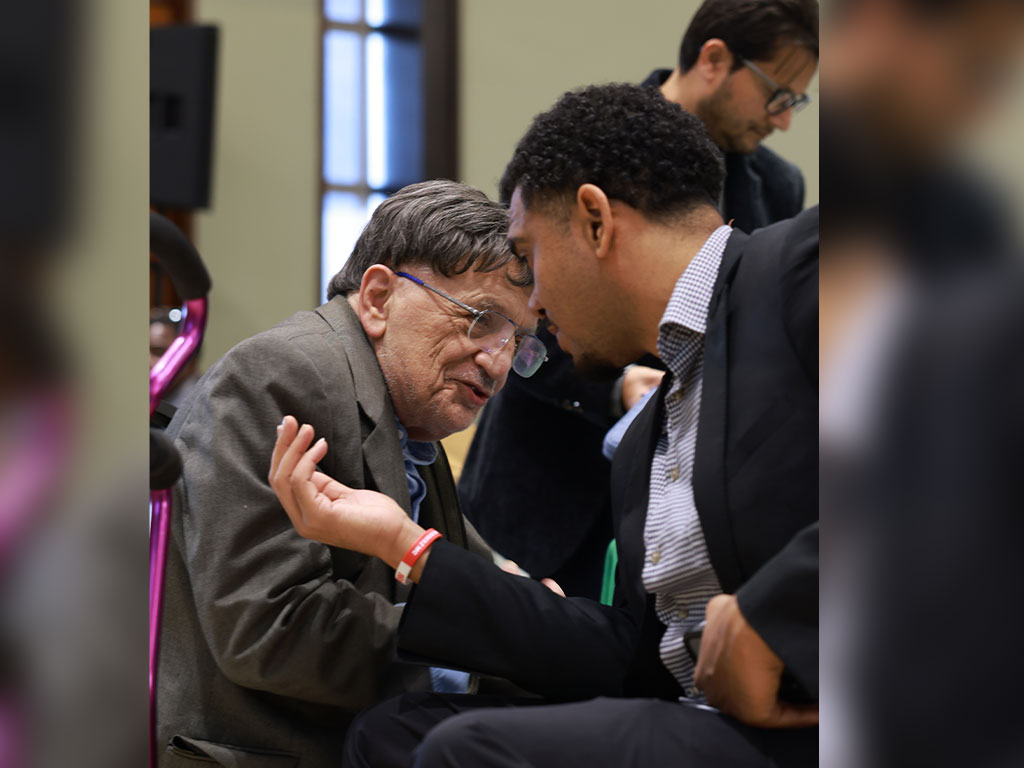 Richard Aló, Ph.D., shares a moment with event MC Adam Ramgeet during the AI & Data
Science Workshop. (Photo Courtesy: Ernest Nelfrard)
Richard Aló, Ph.D., shares a moment with event MC Adam Ramgeet during the AI & Data
Science Workshop. (Photo Courtesy: Ernest Nelfrard)
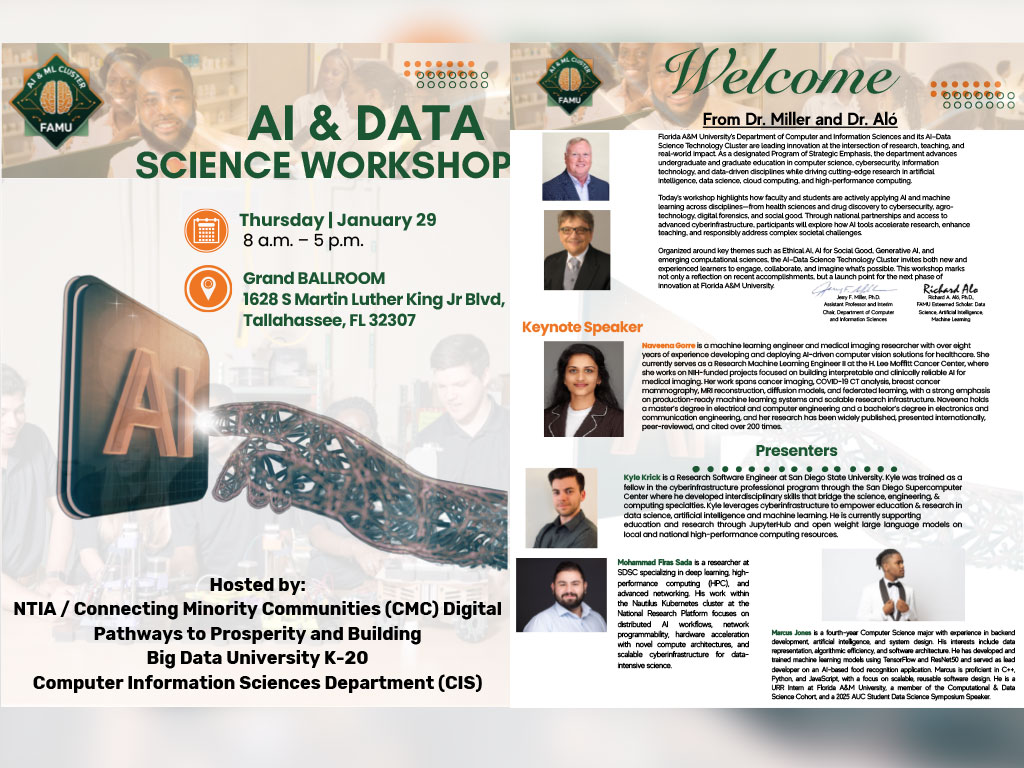
What began as a pilot workshop with just five participants has quickly grown into a university wide effort, drawing more than 150 students and faculty members to FAMU’s latest AI and Data Science Workshop. The expansion reflects growing demand for AI literacy and underscores the university’s commitment to strengthening research capacity, interdisciplinary collaboration and workforce readiness, while preparing students to lead the responsible and ethical use of emerging technologies.
Aló said the cluster approaches AI through three connected lenses — talking about AI, teaching with AI and using AI— ensuring students understand both the technology itself and its broader societal implications. As a team, the cluster also centers its work on AI’s impact on society, a focus strengthened by a 2023 $5 million Hewlett Foundation grant that established a Cyber Policy Institute. The institute brings together social and political scientists, ethicists and psychologists alongside cluster researchers to study, anticipate and help mitigate emerging challenges tied to AI’s impact on humanity.
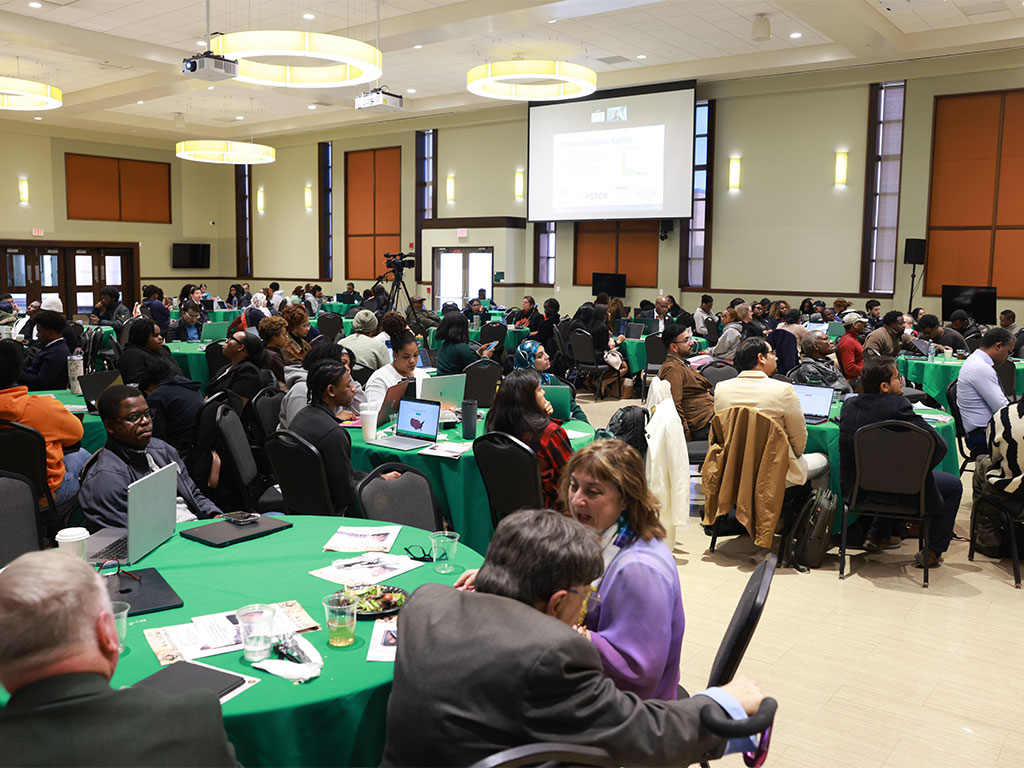
 FAMU attendees participate in a full day of learning during the AI & Data Science
Workshop hosted by the Department of Computer and Information Sciences.
FAMU attendees participate in a full day of learning during the AI & Data Science
Workshop hosted by the Department of Computer and Information Sciences.
Preparing Students for Real-World Careers
Workforce readiness is a central focus of the cluster. Through updated coursework, certifications and research opportunities, students gain hands-on experience with tools and platforms used by leading research institutions and industry partners.
Students develop skills in:
- Artificial intelligence and machine learning
- Data science and Engineering and big data analytics
- Cybersecurity and digital forensics
- Healthcare, healthcare management, business, engineering and scientific research applications
For psychology major My’Angel Jones, the workshop prompted meaningful discussion about how AI can support — rather than replace — human-centered disciplines.
“It’s really about FAMU being on the forefront of AI and getting students to keep up with the times,” Jones said. “With psychology, a lot of what we do involves emotion and mental regulation. AI can’t replace that, but it can help with research.”
Jones added that AI tools can assist with organizing and restructuring data, allowing students to focus more deeply on analysis and interpretation.
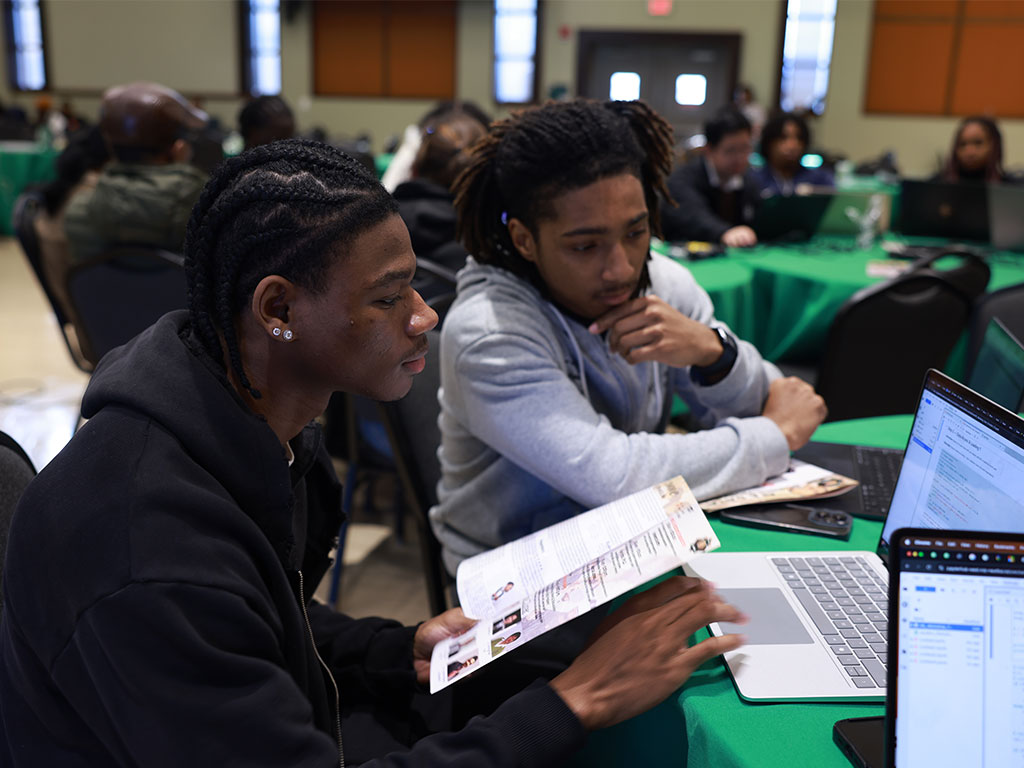 Hands-on learning as FAMU attendees dive into collaboration and discovery. (Photo
Courtesy: Ernest Nelfrard)
Hands-on learning as FAMU attendees dive into collaboration and discovery. (Photo
Courtesy: Ernest Nelfrard)
AI in the Classroom: Meeting Students Where They Are
While students are building career-ready skills, faculty members are also rethinking how artificial intelligence can enhance learning inside the classroom.
For mathematics instructor Erdell Maurice, whose research focuses on mathematics education, AI is helping students build confidence in a subject area that has historically challenged many learners.
“AI has the ability to personalize your education,” Maurice said. “Students come in with different gaps and different strengths. I ask them to use AI to identify where those gaps are and then help fill them. Traditionally, mathematics has been an area of weakness for many students, but with these tools, it can become an area of strength.”
Maurice said the approach aligns with the broader mission of the AI and Data Science Cluster — meeting students where they are while supporting academic growth and long-term success.
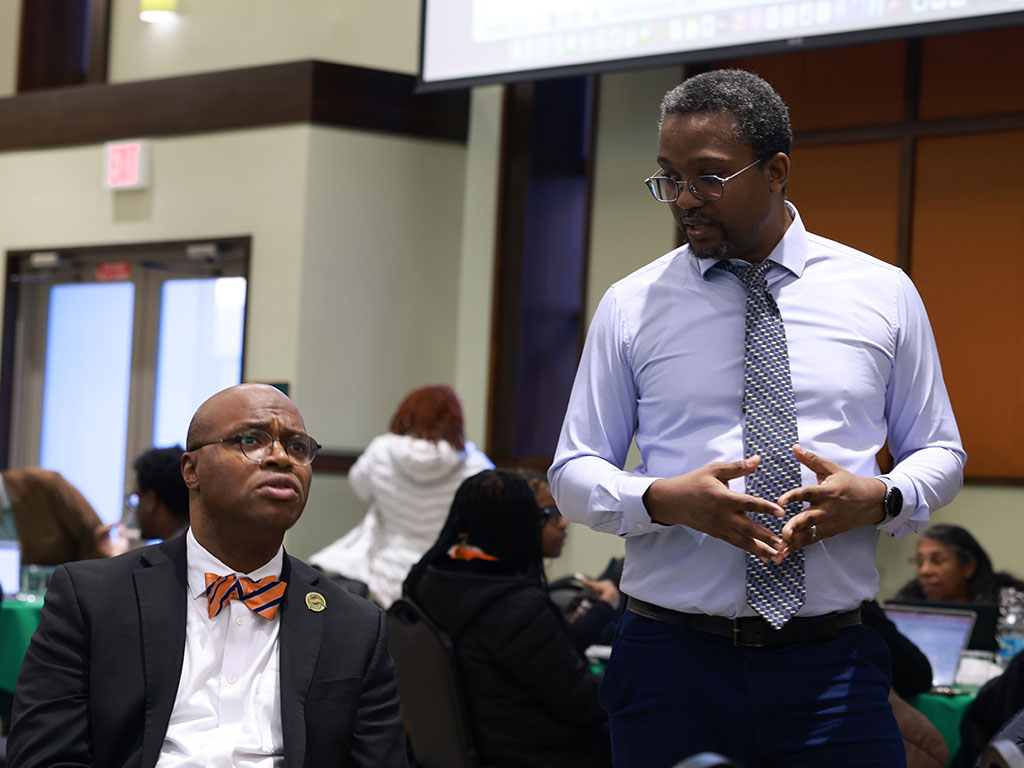 Erdell Maurice, Ph.D., engages with attendees during the AI & Data Science Workshop.
(Photo Courtesy: Ernest Nelfrard)
Erdell Maurice, Ph.D., engages with attendees during the AI & Data Science Workshop.
(Photo Courtesy: Ernest Nelfrard)
Ethics, Sustainability and Responsible Use
Ethical responsibility and environmental impact were also central themes of the workshop. Animal science industry scholar Kyla Rogers, a third-year student from Tallahassee, attended with a focus on sustainability and ethics.
“I wanted to learn more about the ethics of AI,” Rogers said. “It uses a lot of water and land resources, so I’m interested in how we can make AI better environmentally and use it responsibly in classrooms.”
Rogers emphasized that AI should serve as a learning tool rather than a shortcut.
“It’s helpful when you use it to understand the step-by-step process of why things work the way they do, instead of relying on it for answers,” she said.
Research That Reaches Beyond Campus
Jerry Miller, interim chair of the Department of Computer and Information Sciences, said the workshop highlighted how artificial intelligence is being implemented across both teaching and research at the university and extending beyond campus, addressing challenges in healthcare, cybersecurity, environmental studies and responsible AI development.
“AI has permeated nearly everything we’re doing,” Miller said. “We’re using it in the classroom and in research to help faculty and students understand how these tools can strengthen learning and advance scholarship across disciplines.”
FAMU’s efforts are supported by a $5.35 million grant from the National Telecommunications and Information Administration, which has expanded broadband capacity and strengthened research infrastructure. The initiative has also enhanced connectivity for neighboring, economically underserved communities.
 FAMU attendees collaborate on applied learning during a hands-on AI & Data Science
Workshop session. (Photo Courtesy: Ernest Nelfrard)
FAMU attendees collaborate on applied learning during a hands-on AI & Data Science
Workshop session. (Photo Courtesy: Ernest Nelfrard)
Through a partnership with the University of California, San Diego, FAMU researchers now have access to the National Research Platform, providing cloud and exascale computing power, along with thousands of graphical processing units to support advanced research in areas such as climate modeling, healthcare innovation and drug development.
“We’ve been building this quietly,” Aló said. “Now we’re inviting faculty and students to step into what I call the seventh wave — the wave reshaping industry, research and society through artificial intelligence.”
Looking Ahead to 2026
As the university looks toward 2026, the Department of Computer and Information Sciences plans to expand AI literacy across campus, increase project-based learning, strengthen global and industry partnerships and continue mentoring students into advanced degrees and technology-driven careers.
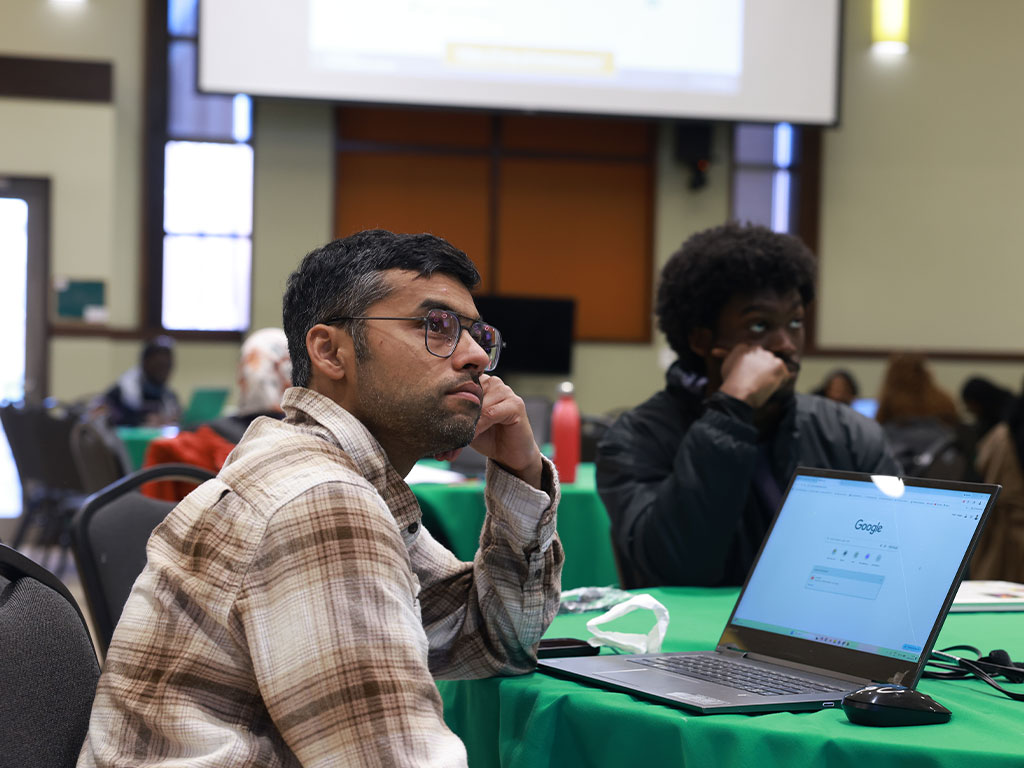 Focused faces, future-forward thinking. (Photo Courtesy: Ernest Nelfrard)
Media Contact:
Ashley Flete
Senior Communications Specialist
ashley1.flete@famu.edu