
FAMU's 'Rattler Moji' Buoy Supports Oyster Farmers While Expanding Student Research Opportunities
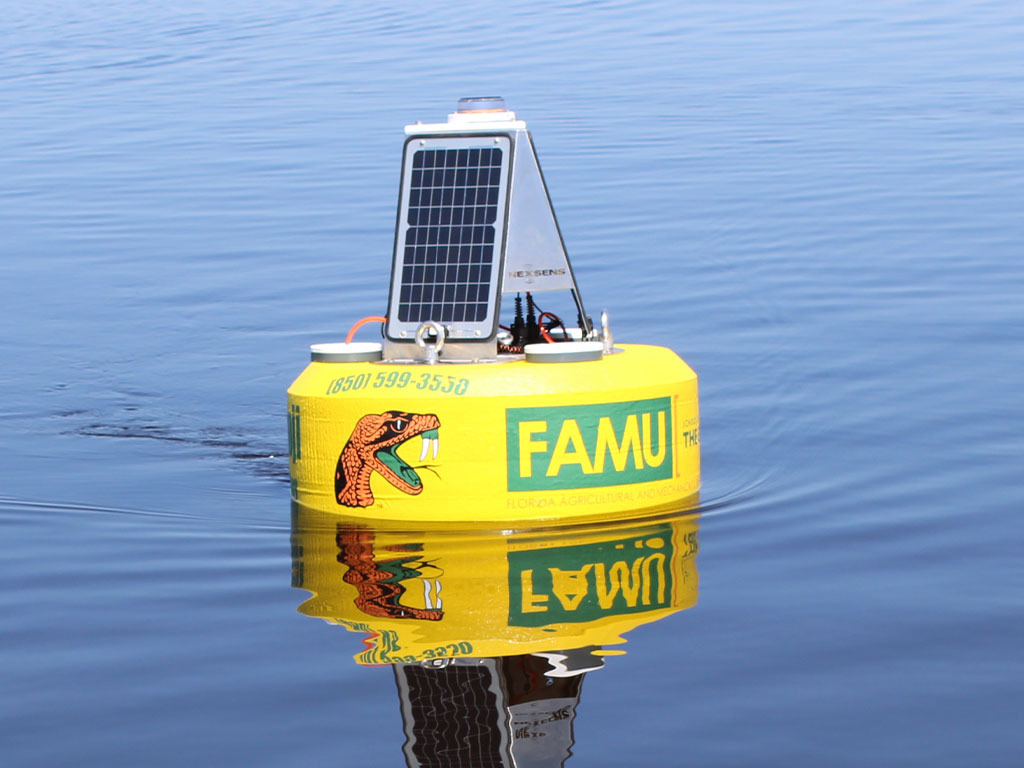
TALLAHASSEE, Fla. — Along the waters of Spring Creek in Wakulla County, a solar-powered buoy is helping
Florida A&M University (FAMU) students conduct environmental research while providing
local oyster farmers with critical data that supports their businesses.
Known as the "Rattler Moji," the buoy serves as a real-time water quality monitoring
system operated by FAMU's School of the Environment. Deployed in partnership with
NexSens Technology Solutions, the buoy has collected environmental data since 2021,
including salinity, temperature, dissolved oxygen, nitrates, turbidity and other key
water quality indicators. The technology gives students, researchers and community
partners instant access to information that once required extensive field sampling
and laboratory analysis.
From the classroom to the coast, Florida A&M University's School of the Environment
is providing students with hands-on research opportunities through the "Rattler Moji"
buoy at Spring Creek. (Video by Kennedy Owens-Grain)
For the School of the Environment, the buoy has become an essential tool for research,
workforce development and community engagement.
"This instrument is able to measure a number of parameters for water quality, including
dissolved oxygen, nitrates, temperature, salinity, conductivity, turbidity and total
dissolved solids," said Benjamin Mwashote, Ph.D., director of research in FAMU's School
of the Environment. "Students use this data for research projects, dissertations,
publications and environmental modeling."
The buoy transmits information through a cellular network, allowing students and faculty
to access real-time data from classrooms, laboratories and even mobile devices. The
information is also used to support ongoing studies examining how water quality conditions
affect oyster farming in the region.
"We use this data for many of our research products and publications," Mwashote said.
"It is a very important instrument for understanding water quality in this area and
how those conditions impact oyster farming."
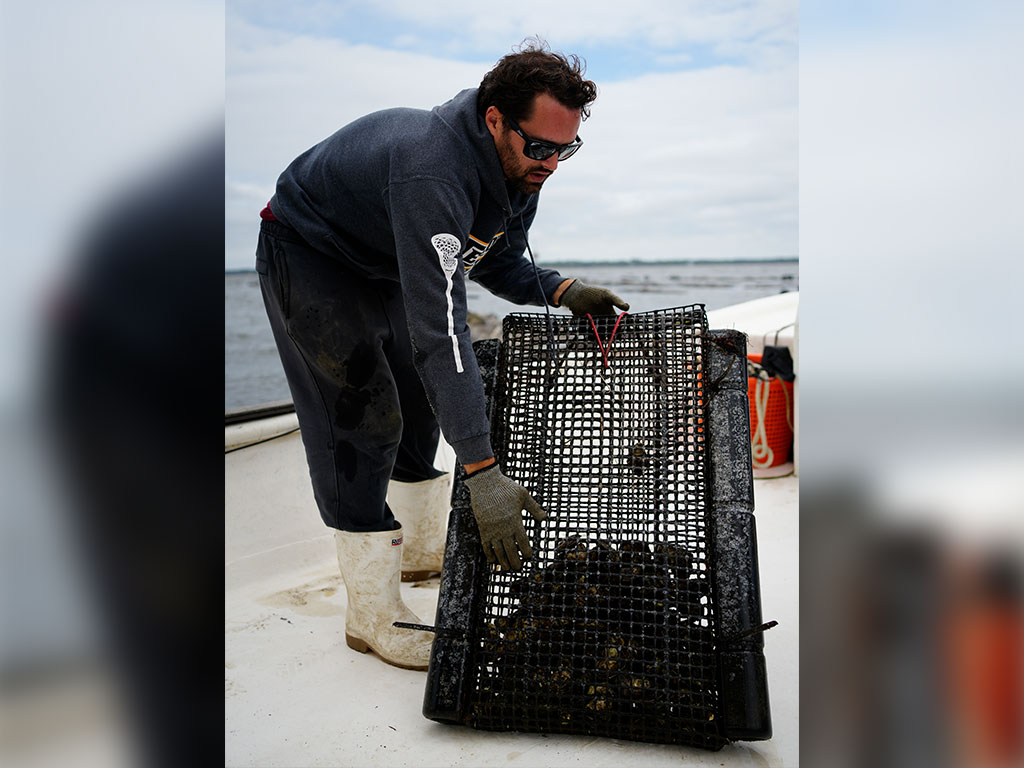 Chad Minter, owner of S&M Oyster Company, works aboard his oyster farm in Spring Creek.
Real-time water quality data collected by FAMU's "Rattler Moji" buoy helps oyster
farmers monitor environmental conditions that can affect production and oyster quality.
(Photo Courtesy: Ernest Nelfrard)
Chad Minter, owner of S&M Oyster Company, works aboard his oyster farm in Spring Creek.
Real-time water quality data collected by FAMU's "Rattler Moji" buoy helps oyster
farmers monitor environmental conditions that can affect production and oyster quality.
(Photo Courtesy: Ernest Nelfrard)
The partnership has proven especially valuable for Chad Minter, owner of S&M Oyster
Company, whose farm operates in the same waters where the buoy is located. The technology
provides access to environmental data that once required frequent trips into the field.
"It definitely helps with record keeping," Minter said. "I used to have to go out and collect the information myself with my own devices. Now I can pull it up on my computer and see what's been happening out there."
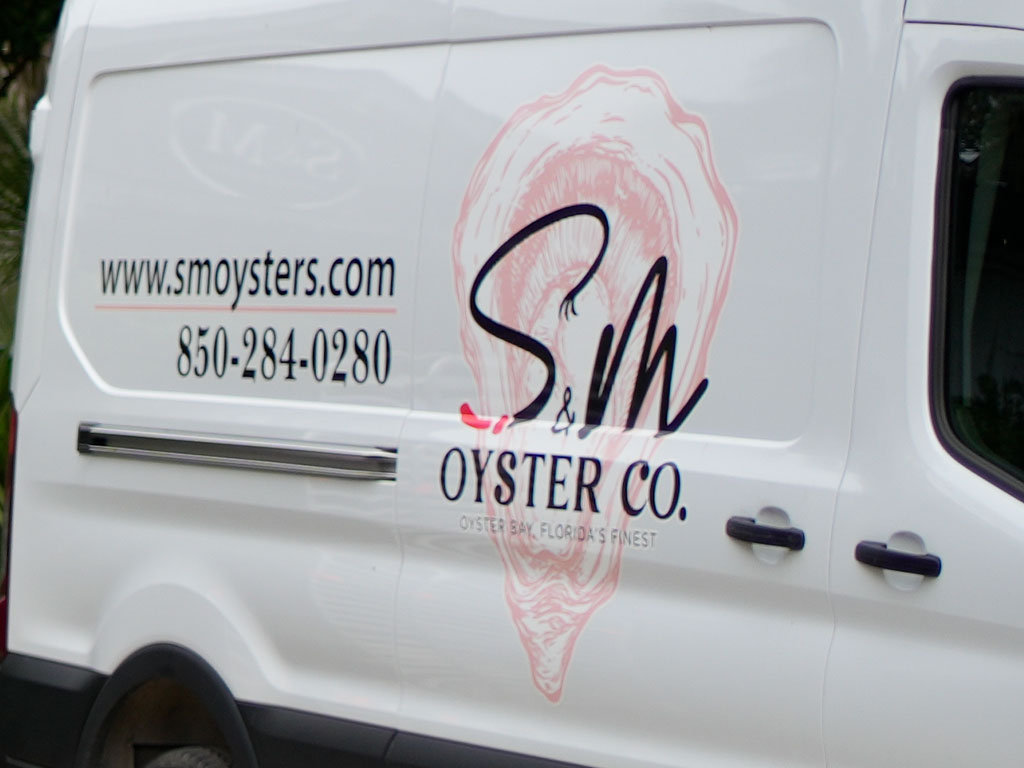 S&M Oyster Company, owned by Chad Minter, partners with Florida A&M University's School
of the Environment to support research examining how water quality conditions affect
oyster farming in Wakulla County. (Photo Courtesy: Ernest Nelfrard)
S&M Oyster Company, owned by Chad Minter, partners with Florida A&M University's School
of the Environment to support research examining how water quality conditions affect
oyster farming in Wakulla County. (Photo Courtesy: Ernest Nelfrard)
For oyster farmers, environmental conditions can directly affect production and product quality. Salinity levels, in particular, influence the characteristics of oysters and provide valuable information for customers and chefs.
"Some chefs want to know how salty the oysters are," Minter said. "It's nice to know if the bay is extra salty because of a lack of rain or if we've had a lot of rain and the salinity is lower. It's information we can relay to whoever needs to know."
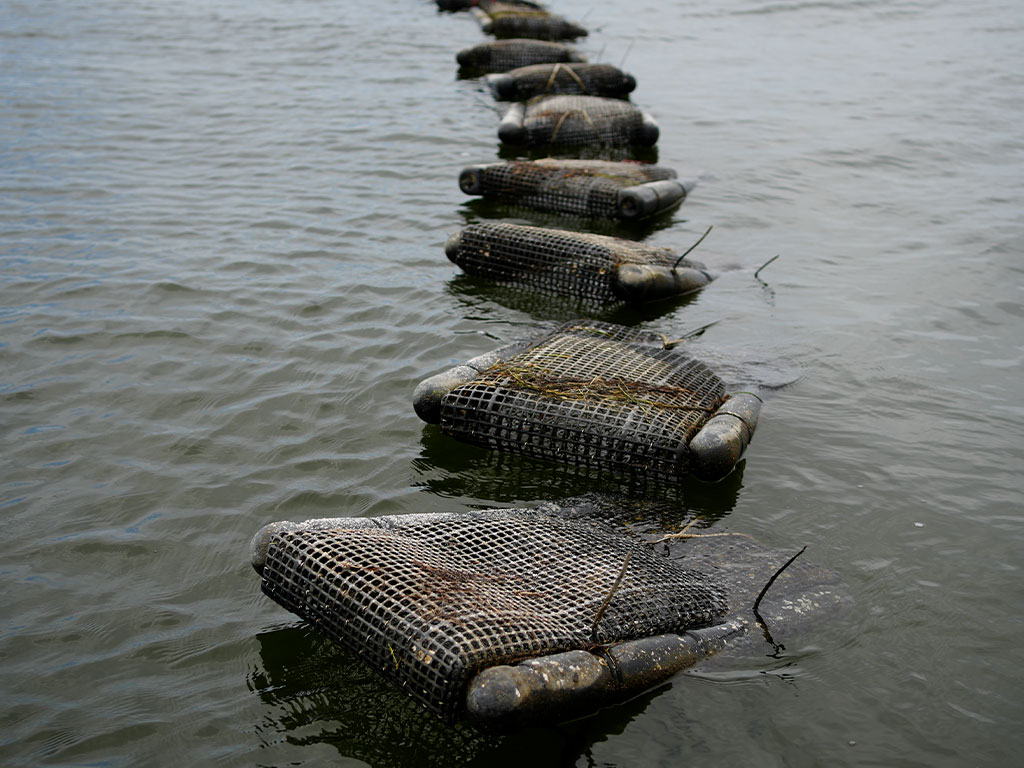 Floating oyster cages sit in the waters of Spring Creek in Wakulla County, where Florida
A&M University's School of the Environment partners with local oyster farmers to study
water quality and support sustainable aquaculture practices. (Photo Courtesy: Ernest
Nelfrard)
Floating oyster cages sit in the waters of Spring Creek in Wakulla County, where Florida
A&M University's School of the Environment partners with local oyster farmers to study
water quality and support sustainable aquaculture practices. (Photo Courtesy: Ernest
Nelfrard)
Student Researchers Gain Hands-On Experience
Beyond supporting local industry, the Rattler Moji is creating unique opportunities for students interested in environmental science, coastal ecosystems and water quality research.
Rosemarie Rosales, a fourth-year environmental science student, said the technology gives undergraduate students access to research experiences often reserved for graduate-level programs.
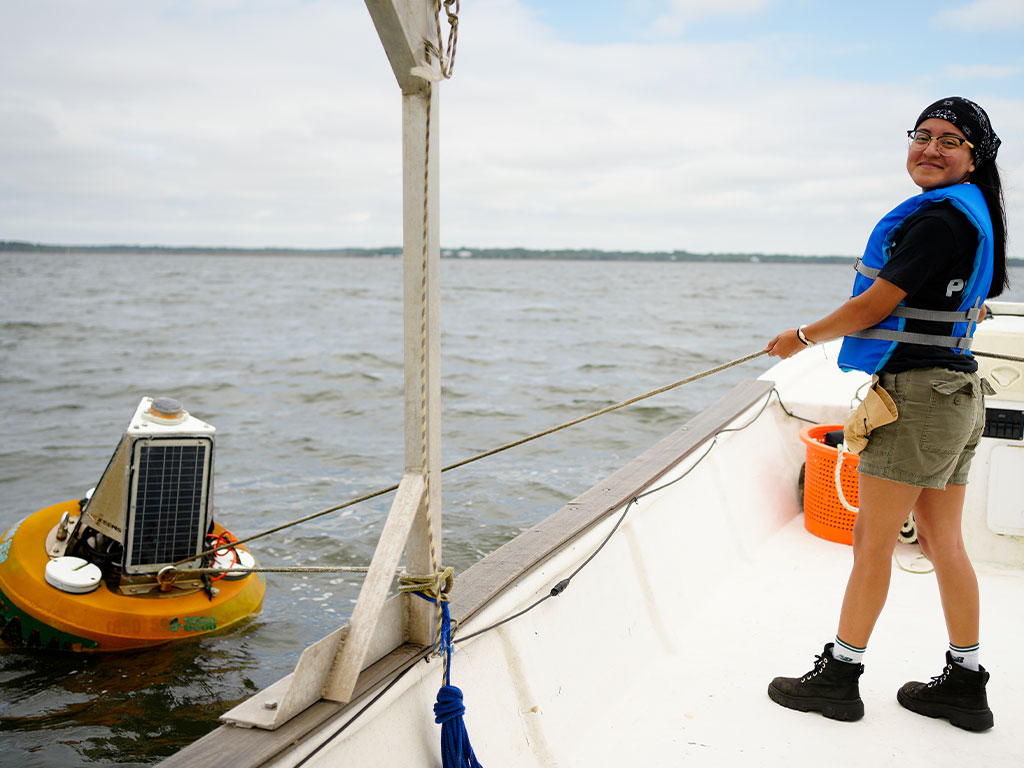
Rosemarie Rosales, a fourth-year environmental science student in Florida A&M University's
School of the Environment, assists with operations involving the school's "Rattler
Moji" buoy in Spring Creek. The solar-powered buoy provides real-time water quality
data used for student research, environmental monitoring and oyster farming studies.
(Photo Courtesy: Ernest Nelfrard)
"FAMU is the only university that we know of so far that has the Rattler Moji right outside in Spring Creek," Rosales said. "That alone is such a big advancement. Undergraduate students can access real-time environmental data and use it for research projects."
Rosales, whose research focuses on the bioremediation of copper contamination in soil and water, said the buoy's ability to track water quality parameters creates opportunities for students across multiple environmental disciplines.
"The buoy is great for future research projects because it provides real-time data for us," she said. "We can look up salinity levels, dissolved oxygen, turbidity and temperature right from our phones."
The buoy also complements the school's NEXUS Geospatial Innovation Mobile Laboratory,
a mobile research hub equipped with artificial intelligence and machine learning capabilities
that allows faculty and students to bring environmental research directly into communities.
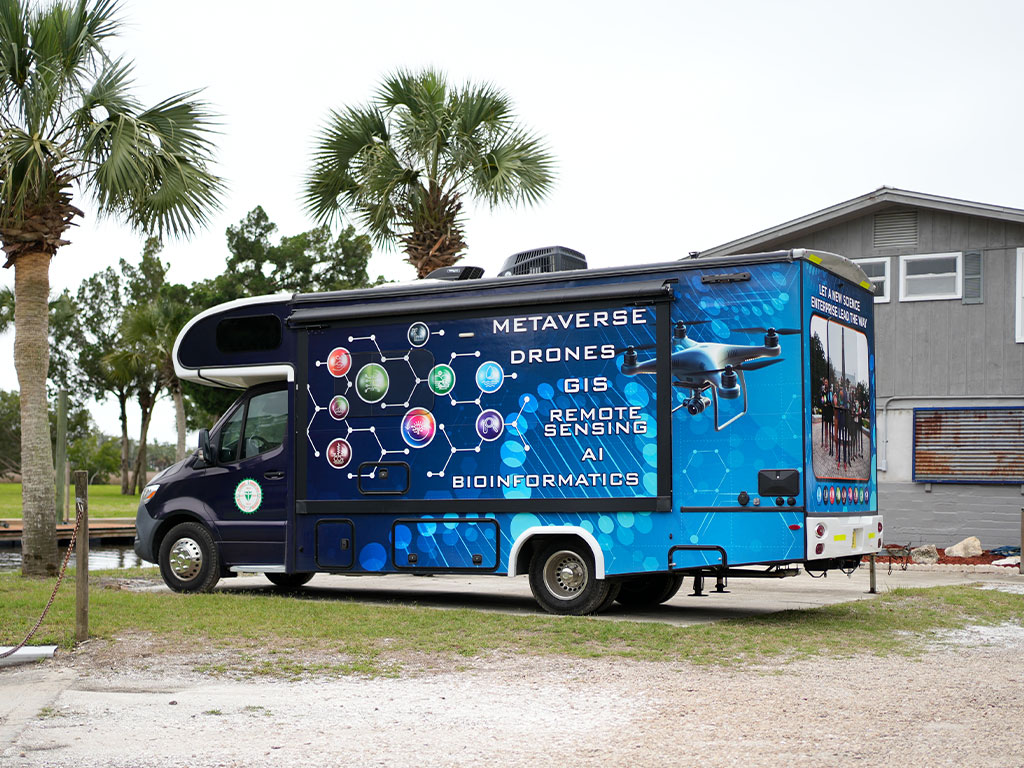 The NEXUS Geospatial Innovation Mobile Laboratory brings environmental research and
emerging technologies directly into communities, providing Florida A&M University
students with hands-on experience in artificial intelligence, remote sensing, GIS,
drones and environmental data collection. (Photo Courtesy: Ernest Nelfrard)
The NEXUS Geospatial Innovation Mobile Laboratory brings environmental research and
emerging technologies directly into communities, providing Florida A&M University
students with hands-on experience in artificial intelligence, remote sensing, GIS,
drones and environmental data collection. (Photo Courtesy: Ernest Nelfrard)
Joel Blount Jr., director of student success for the School of the Environment, said both technologies are helping students see how environmental science can create meaningful change while exposing them to career opportunities.
"This is our mobile hub to go out and train students on real-world environmental challenges
that affect their communities," Blount said. "We're excited about the capabilities
we have to make a meaningful impact on students' lives and expose them to opportunities
in environmental research."
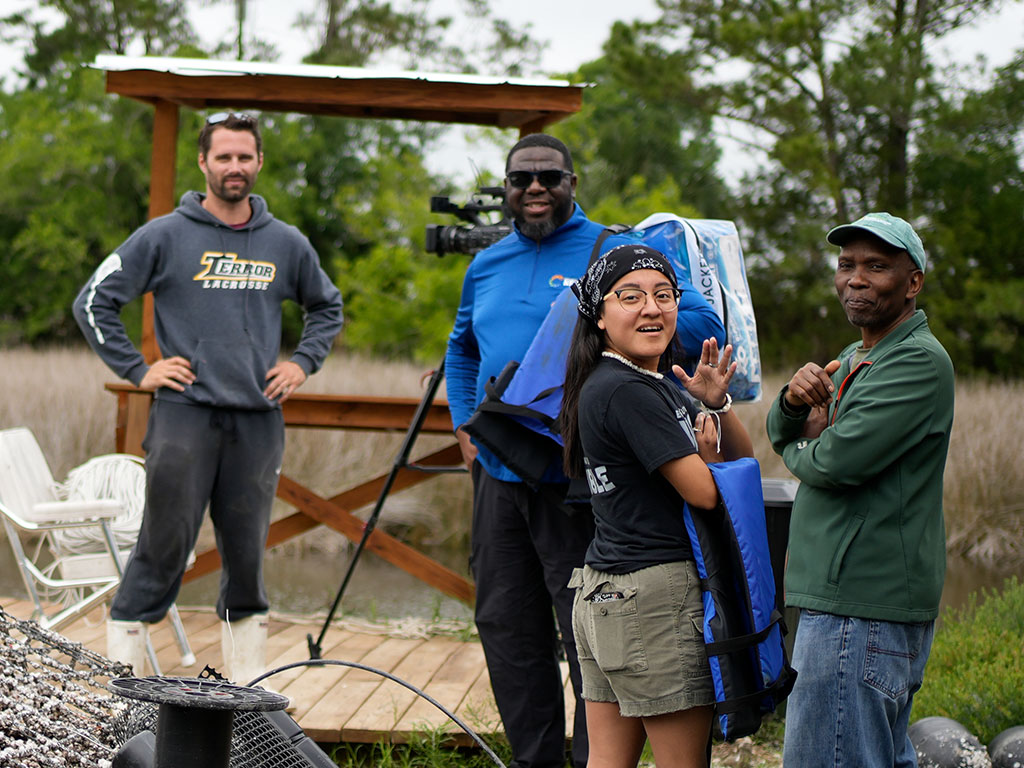 Joel Blount Jr., director of student success for Florida A&M University's School of
the Environment, joins environmental science student Rosemarie Rosales and community
partners during a field visit to an oyster farming site in Spring Creek. The partnership
provides students with hands-on research experiences while supporting local aquaculture
operations through real-time environmental monitoring.
Joel Blount Jr., director of student success for Florida A&M University's School of
the Environment, joins environmental science student Rosemarie Rosales and community
partners during a field visit to an oyster farming site in Spring Creek. The partnership
provides students with hands-on research experiences while supporting local aquaculture
operations through real-time environmental monitoring.
(Photo courtesy of Ernest Nelfrard)
Blount said the buoy also gives students valuable exposure to industry partnerships and applied research.
"When students come out here, many of them are experiencing the water for the first time," he said. "They get to engage with the buoy, work alongside oyster farmers and see what's possible. That's what we want our students to understand — what is possible."
As FAMU continues expanding research opportunities and community partnerships, initiatives
like the Rattler Moji buoy and the NEXUS Geospatial Innovation Mobile Laboratory are
helping prepare the next generation of environmental leaders. Through hands-on research
experiences, industry partnerships and real-world data collection, students gain skills
that extend far beyond the classroom while addressing environmental challenges that
impact communities throughout Florida.
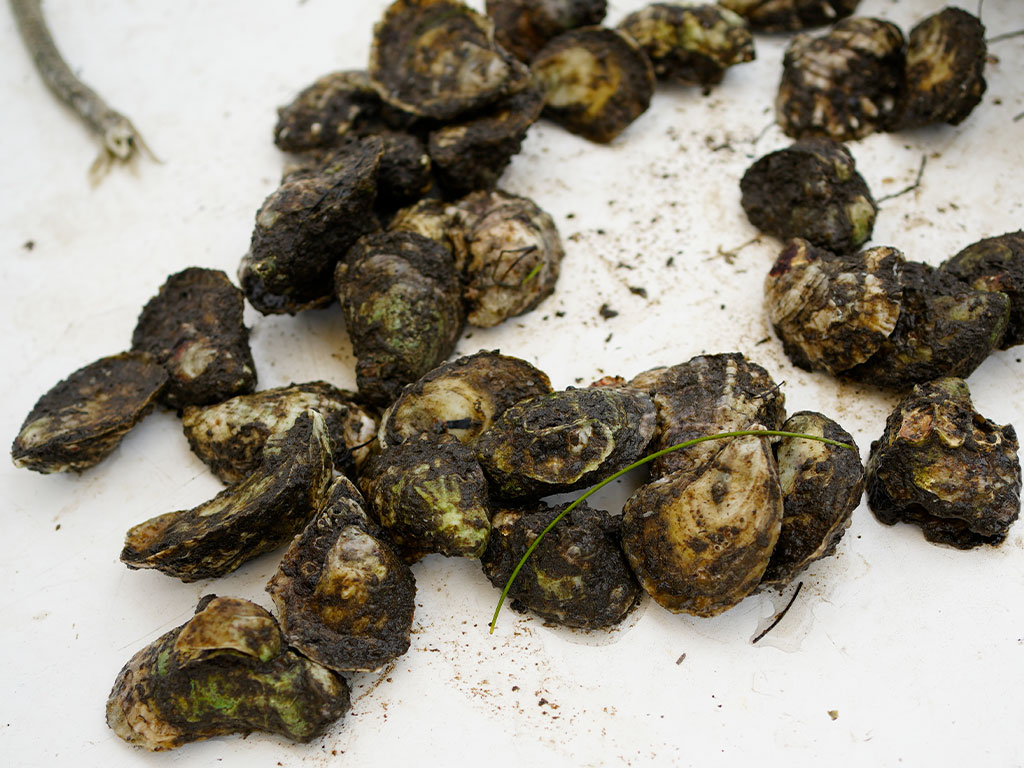 Freshly harvested oysters rest aboard a boat in Spring Creek, where Florida A&M University's
School of the Environment studies water quality conditions that influence oyster growth
and aquaculture operations. (Photo courtesy of Ernest Nelfrard)
Freshly harvested oysters rest aboard a boat in Spring Creek, where Florida A&M University's
School of the Environment studies water quality conditions that influence oyster growth
and aquaculture operations. (Photo courtesy of Ernest Nelfrard)
The School of the Environment also invests in student success through programs such
as the NEXUS Scholars-in-Residence Scholarship, which provides eligible students with
opportunities to participate in undergraduate research, complete internships, present
at professional conferences and produce capstone or thesis projects. The program is
designed to enhance the student experience while increasing internship and job placement
opportunities for future environmental professionals.
For faculty and staff within the School of the Environment, the goal is simple: connect students to meaningful research experiences that create lasting impact for communities across Florida. Whether students are analyzing real-time water quality data from Spring Creek or working alongside local oyster farmers, they are gaining the knowledge and experience needed to help shape the future of environmental science.
For more information about the School of the Environment and the NEXUS Scholars-in-Residence Scholarship program, visit https://soe.famu.edu/
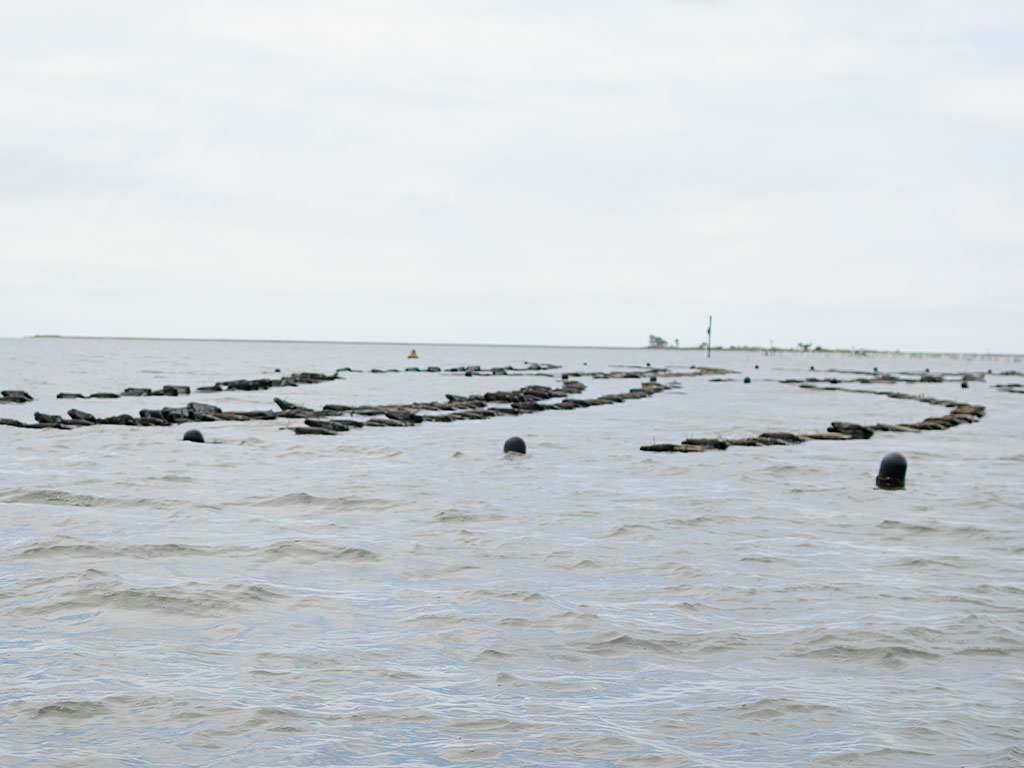
Real-time environmental data collected by FAMU's "Rattler Moji" buoy helps researchers
and local oyster farmers monitor conditions across oyster farming sites in Spring
Creek.
(Photo courtesy of Ernest Nelfrard)
Media Contact:
Ashley Flete
Senior Communications Specialist
ashley1.flete@famu.edu