
Florida A&M University Cohort Engages History and Global Leadership Through Immersive Educational Experience in Israel and the Palestinian Territories
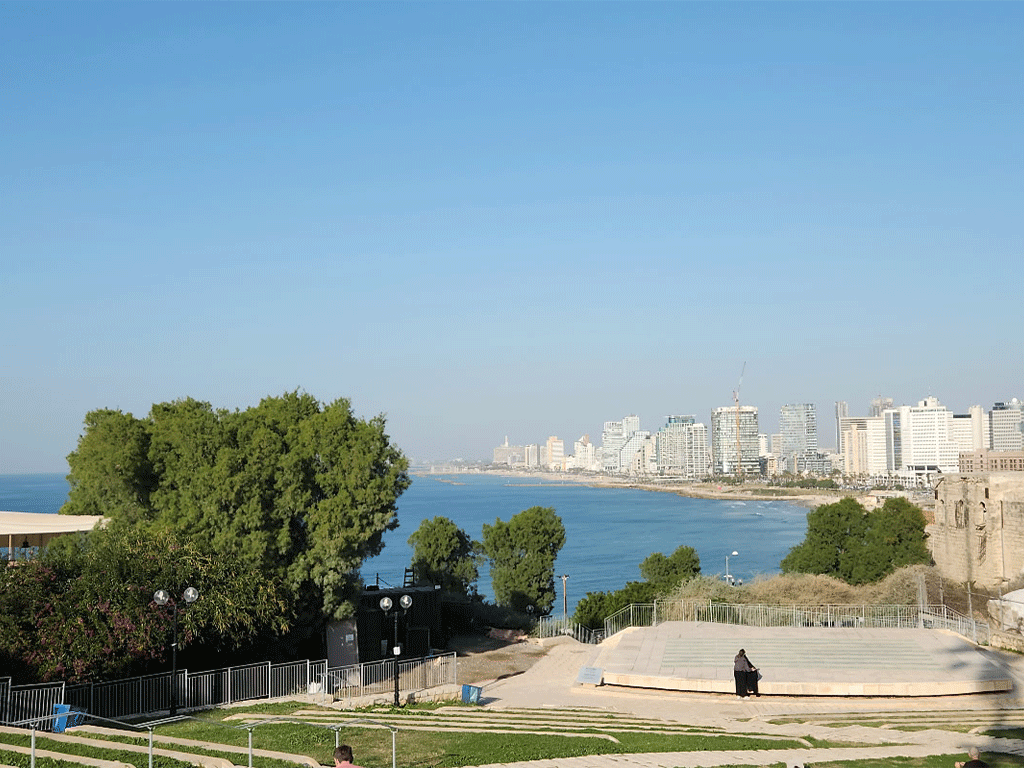
TALLAHASSEE, Fla. — A cohort of students, faculty and administrators from Florida A&M University (FAMU) recently completed a multi-city international educational experience designed to deepen their understanding of global history, faith traditions, geopolitics, and cross-cultural leadership through firsthand engagement.
“This immersive experience reflects the very heart of our institutional mission—to educate students who think critically, lead ethically, and engage the world with both courage and compassion,” said FAMU President Marva B. Johnson, J.D. “By encountering history, faith, and contemporary conflict firsthand, our students gained not only knowledge, but cultivated a foundation for the discernment required to navigate complex global environments, honor multiple perspectives, and formulate their own understanding of the complications involved when managing justice responsibly in a global society.”
The program was facilitated by Passages Israel, a nationally recognized educational
organization with extensive experience hosting U.S. college delegations. Additional
institutions participating in the delegation included representatives from Alabama
State University, Southern University, and Howard University. Over the history of
the enterprise, Passages Israel has supported thousands of students through academically
grounded programs emphasizing intercultural understanding and student safety.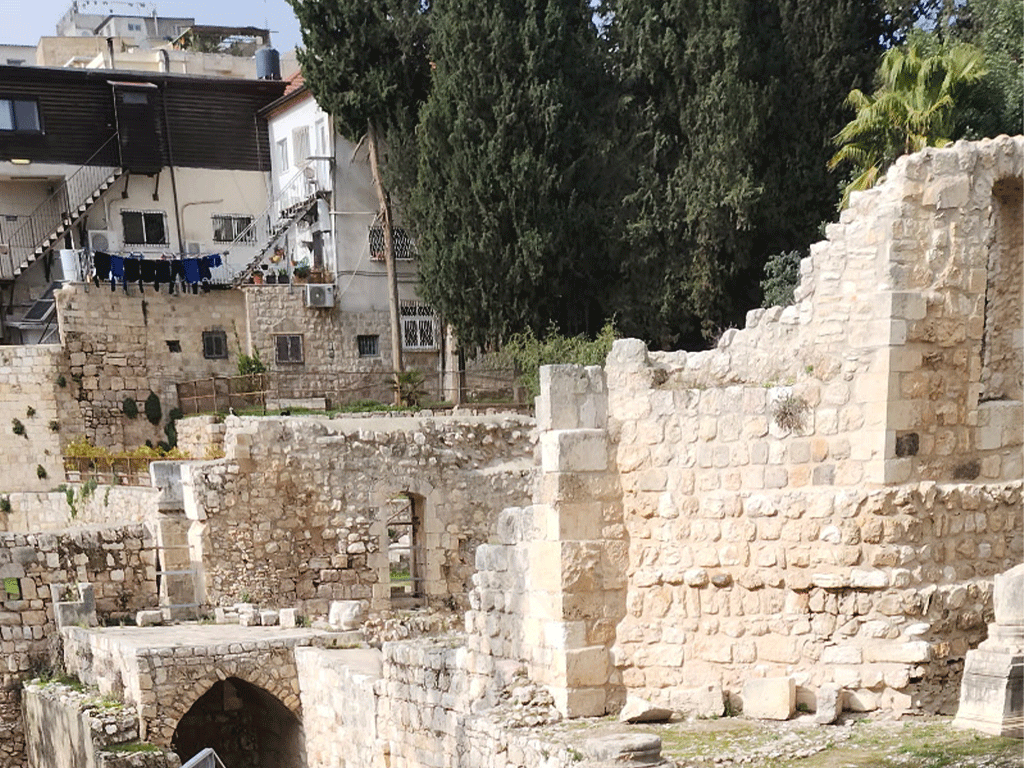 The medicinal baths are highlighted as the sight where Jesus healed a sick man. (Photo
special to FAMU)
The medicinal baths are highlighted as the sight where Jesus healed a sick man. (Photo
special to FAMU)
“Passages was honored to have President Marva Johnson and Florida A&M University students
on our trips to Israel this winter,” said Zach Bauer, CEO of Passages Israel. “Our goal is to expose students to both ancient and modern Israel, deepening their
faith while also gaining a greater understanding of the complex issues confronting
Israel today. We’re grateful for their partnership and hope to expand upon it in the
future.”
The academic journey combined historical exploration, service learning, faith-based reflection, and engagement with diverse communities—providing students with a comprehensive and educationally rigorous global learning experience.
“When students travel internationally, learning leaves the classroom and becomes lived experience,” said Vice President of Student Affairs William Hudson, Jr. “One of my personal regrets is not taking advantage of the opportunity to engage in more international travel while in college. It helps students discover not only the world, but who they are within it.”
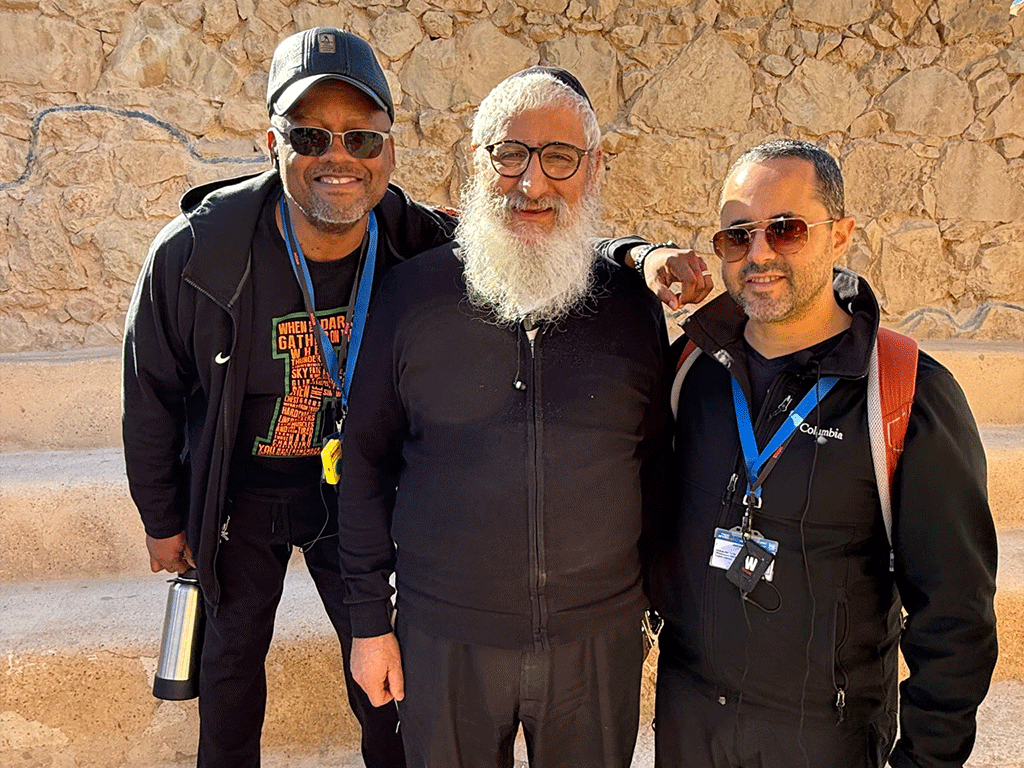 Vice President of Student Affairs William Hudson Jr. (left) and members of the Passages
Israel team stand in front of the museum at Masada National Park in Israel. (Photo
special to FAMU)
Vice President of Student Affairs William Hudson Jr. (left) and members of the Passages
Israel team stand in front of the museum at Masada National Park in Israel. (Photo
special to FAMU)
The experience began with arrival in Tel Aviv, where students participated in orientation sessions introducing Israel as a modern, multicultural society shaped by immigration, innovation, and regional complexity. From there, the group traveled north to the Galilee, exploring the Sea of Galilee, Capernaum, Magdala, and the Mount of Beatitudes. These sites allowed the delegation to frame biblical narratives within their original Jewish and Roman historical contexts, strengthening theological literacy while encouraging critical reflection.
In Nazareth, they visited the Church of the Annunciation and Mount Precipice, examining how geography, marginalization, and power intersect in sacred history. Evening political briefings provided historical and contemporary context on Israeli governance, Palestinian statelessness, and regional security dynamics, reinforcing the importance of systems-level analysis over simplistic narratives.
A central component of the program included humanitarian service activities supporting medical care for children. The group volunteered with Save a Child’s Heart, a globally respected humanitarian organization providing life-saving cardiac care to children from Israel, the Palestinian Territories, and countries around the world. The experience underscored how compassion and medical ethics transcend cultural and political borders.
In Jerusalem, the City of David, Warren’s Shaft, and the Southern Wall Steps were explored to learn how archaeology, scripture, and sovereignty converge. A dialogue with an Ethiopian Israeli Defense Forces soldier offered powerful insight into Black identity, citizenship, military service, and belonging within Israeli society—challenging U.S.-centric understandings of race and faith.
“My role as chaplain focused on grounding the experience spiritually and intellectually – linking sacred geography to scripture while helping students reflect on leadership, resilience, and moral clarity in contested spaces,” said David E. Jackson, D.Min., Ph.D.
Traveling to southern Israel, the group visited Kfar Aza, the Nova Festival site, and the Sderot Resilience Center, confronting the human cost of violence and trauma in communities affected by recent attacks. That evening, a Palestinian speaker highlighted the religious diversity of Palestinian identity and reinforced the program’s commitment to centering multiple lived experiences.
Jerusalem’s sacred geography came alive through visits to the Mount of Olives, Garden of Gethsemane, Via Dolorosa, and the Church of the Holy Sepulchre, where the group reflected on how faith, pilgrimage, and political power intersect
in contested spaces. The journey concluded with a visit to an Ethiopian Jewish cultural
center. The discussion explored themes of migration, faith preservation, and the African
Diaspora identity, offering a comparative perspective on heritage and belonging across
global communities.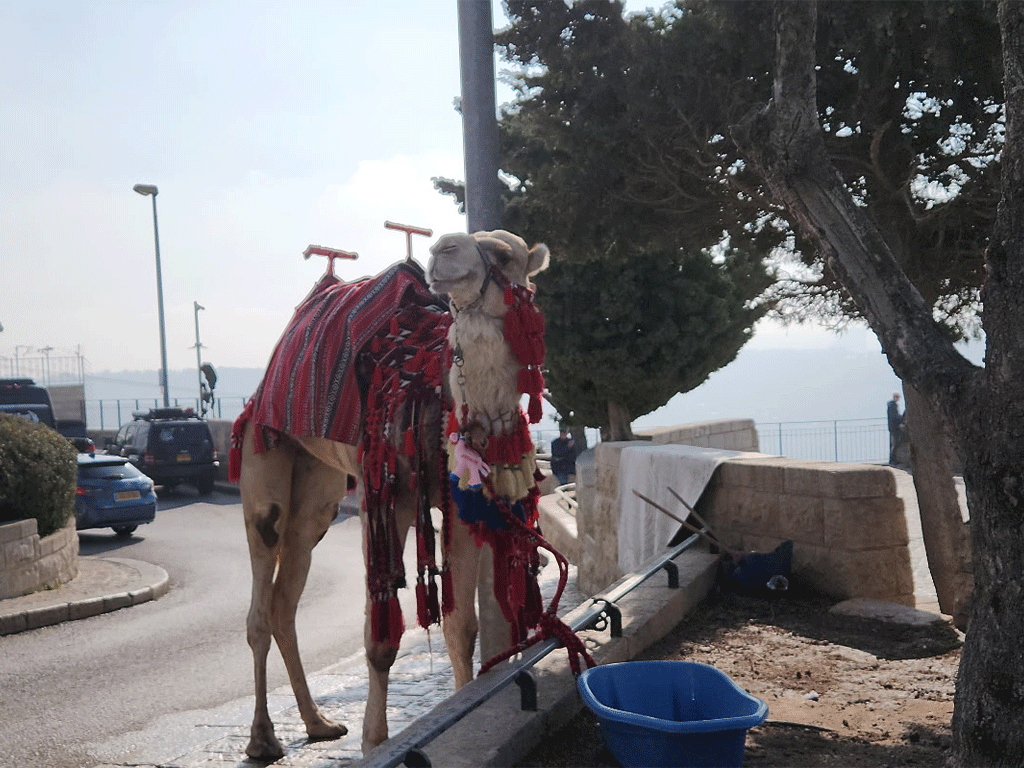 A sighting of a camel is a normal occurrence in the city of Jerusalem. (Photo special
to FAMU)
A sighting of a camel is a normal occurrence in the city of Jerusalem. (Photo special
to FAMU)
Educational Impact and Institutional Significance
This experience was intentionally designed to align with the historic mission of HBCUs: preparing students to lead with intellectual rigor, moral clarity, and global awareness. Rather than avoiding complexity, the program equipped students to engage it responsibly.
Through direct dialogue with Israelis and Palestinians, Black Israelis, Jewish, Christian, and Muslim communities, and humanitarian leaders, students developed critical competencies in:
- Global citizenship and ethical leadership
- Interfaith and intercultural literacy
- Conflict analysis and trauma-informed understanding
- Comparative approaches to race, identity, and belonging
The program emphasized that learning does not equal endorsement, and that proximity
to difficult histories strengthens—not weakens—an individual’s ability to advocate
for justice.
“We are immensely proud of our students for engaging in this experience with courage,
intellectual curiosity, and maturity,” said President Johnson. “They returned not
only with a deeper understanding of the region, but with strengthened analytical skills
and a renewed commitment to ethical leadership—outcomes that reflect the very best
of our institution.”
Media Contact:
Alonda Thomas
Alonda.Thomas@famu.edu