
Florida A&M University Launches Strategic Planning Initiative Focused on Alignment, Innovation, and Student Success
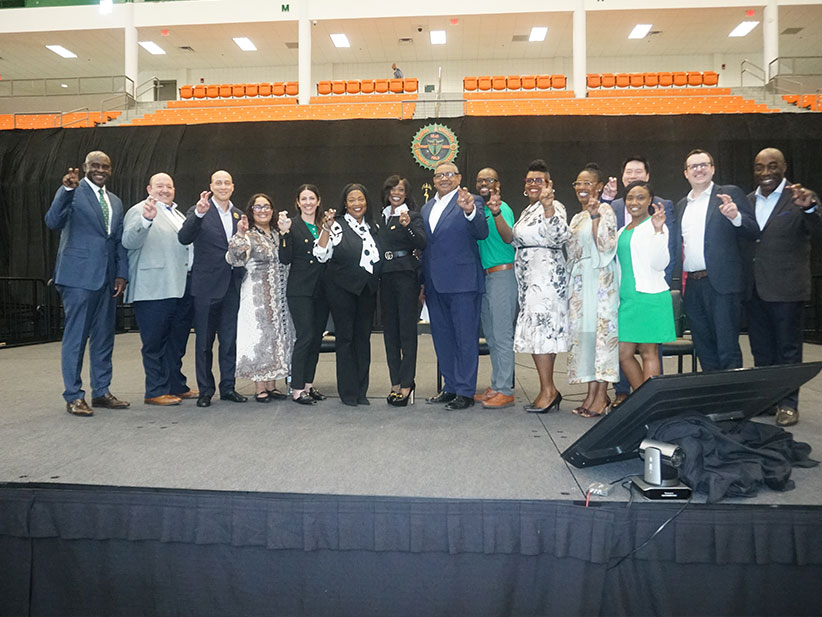
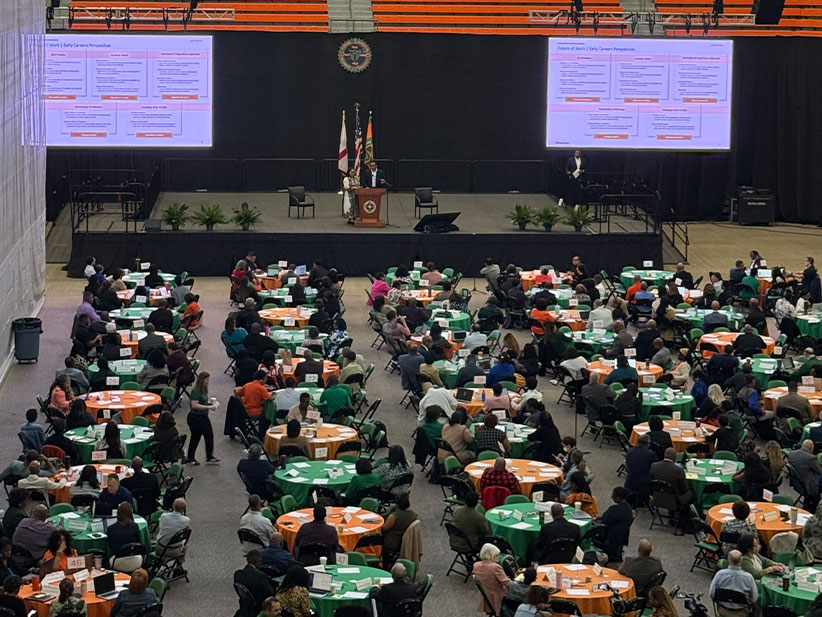
TALLAHASSEE – Florida Agricultural and Mechanical University (FAMU) convened faculty, staff, and industry partners for a comprehensive strategic planning session designed to help shape the University’s next era of institutional excellence and innovation. The daylong initiative brought together campus leadership and representatives from JPMorgan Chase to explore emerging trends in higher education, workforce development, artificial intelligence, and strategic accountability.
During her remarks, President Marva B Johnson, J.D., outlined the University’s vision for the next strategic planning cycle, emphasizing that the institution’s future will be guided by four key principles: alignment, accountability, innovation, and continuous improvement.
“Our 2022–2027 Boldly Striking Strategic Plan has guided our focus on student success, academic excellence, and institutional effectiveness—and it has produced results,” Johnson said. “This moment is not just reflection—it is renewal. We are building upon Boldly Striking to define the next phase of our progress.”
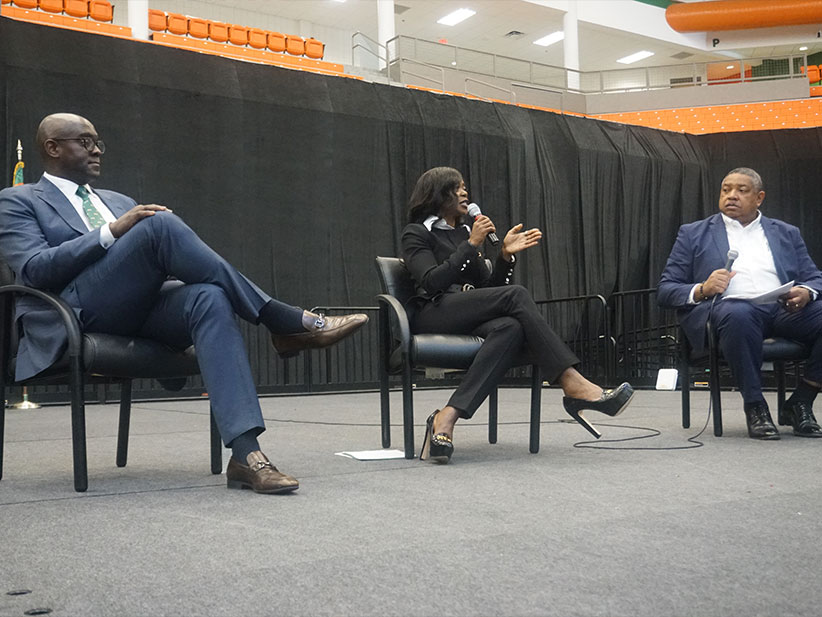 Former Chair of the Florida Board of Governors Brian Lamb and FAMU President Marva
B. Johnson, J.D., participated in a panel hosted by FAMU COO Kelvin Lawson.
Former Chair of the Florida Board of Governors Brian Lamb and FAMU President Marva
B. Johnson, J.D., participated in a panel hosted by FAMU COO Kelvin Lawson.
FAMU’s next strategic plan will operate on a three-year cycle rather than a traditional longer-term framework, allowing the institution to respond more quickly to emerging trends, workforce demands, and student needs. The shorter planning horizon is designed to create greater agility in decision-making, accelerate implementation, and strengthen accountability across the University. It also positions FAMU to more effectively align its institutional priorities and performance measures with the Florida Board of Governors’ 2030 Strategic Plan, ensuring the University remains competitive, responsive, and strategically focused as higher education continues to evolve.
Vice President Roddrick Jones, Ph.D., Division of Strategic Planning, Analysis & Institutional Effectiveness, emphasized the development of the University’s data governance program and introduced the strategic plan review process designed to align academic and administrative units with institutional priorities. He also highlighted several institutional gains achieved under the current strategic plan, including an increase in FAMU’s four-year graduation rate from 27% to more than 42%, along with improvements in academic progress and workforce readiness outcomes.
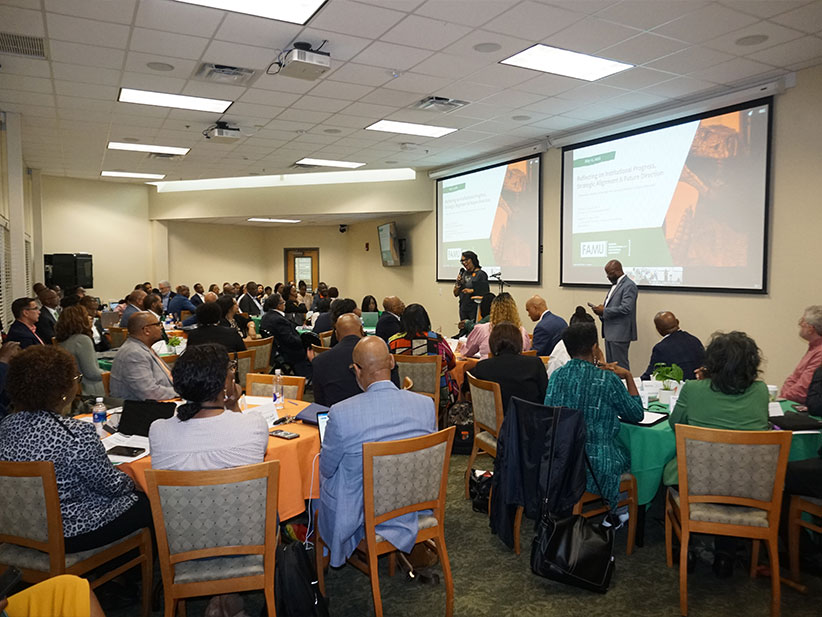 Provost Allyson Watson, Ph.D., and Vice President Roddrick Jones led day two of the
strategic planning sessions.
Provost Allyson Watson, Ph.D., and Vice President Roddrick Jones led day two of the
strategic planning sessions.
Provost Allyson Watson, Ph.D., vice president of Academic Affairs, also stressed the importance of aligning every college, department, and operational unit with institutional priorities, the State University System of Florida’s 2030 goals, and performance-based funding metrics increasingly shaping higher education nationwide.
“We are evolving from a culture of activity to a culture of outcomes,” Johnson said. “This work belongs to all of us. Our faculty and staff are not participants—you are architects.”
The strategic planning agenda featured presentations and panel discussions with leaders from the Thurgood Marshall College Fund and JPMorgan Chase focused on the future of work, artificial intelligence integration, economic mobility, leadership development, and national trends impacting colleges and universities.
Sessions included discussions on AI fluency, workforce preparedness, curriculum innovation, technology infrastructure, and strategic forecasting. University leaders also facilitated collaborative exercises centered on the State University System’s 2030 framework and FAMU’s vision for the future.
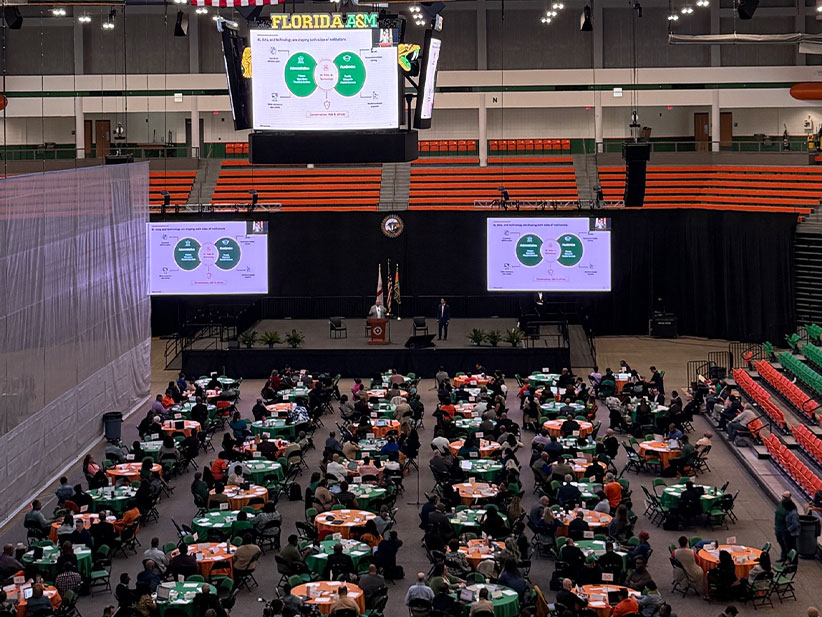 Faculty and senior leadership were invited to attend the university's strategic planning
session as President Marva B. Johnson, J.D. leads the institution into the next chapter.
Faculty and senior leadership were invited to attend the university's strategic planning
session as President Marva B. Johnson, J.D. leads the institution into the next chapter.
Chief Operating Officer Kelvin Lawson expressed appreciation for the partnership and support provided throughout the planning process.
“We are grateful to JPMorgan Chase for supporting these strategic planning conversations and helping create opportunities for meaningful collaboration around innovation, workforce readiness, and student success,” Lawson said. “Partnerships like this strengthen our ability to prepare students for the future while advancing the mission of Florida A&M University.”
Johnson emphasized that partnerships will continue to play an important role in advancing institutional priorities, particularly through initiatives that support economic mobility, career readiness, and student achievement.
“Together, we will co-create solutions that position FAMU as a national leader in student success and economic mobility,” Johnson said.
The strategic planning initiative represents the beginning of a collaborative process that will engage stakeholders across the University as FAMU develops its next institutional roadmap—one designed to strengthen academic excellence, operational effectiveness, research growth, and long-term student outcomes.
For more than 130 years, FAMU has advanced its mission through teaching, research, and service. University leaders said the next strategic plan will build upon that legacy while positioning the institution to meet the evolving needs of students, industry, and communities across the state and nation.
 FAMU’s next strategic plan will operate on a three-year cycle rather than a traditional
longer-term framework, allowing the institution to respond more quickly to emerging
trends, workforce demands, and student needs.
FAMU’s next strategic plan will operate on a three-year cycle rather than a traditional
longer-term framework, allowing the institution to respond more quickly to emerging
trends, workforce demands, and student needs.
The Strategic Planning Committee members are as follows:
Strategic Planning Committee
- Kelvin Lawson (Chair), Chief Operating Officer
- Allyson Watson (Co-Chair), Provost and Vice President for Academic Affairs
- Donald Palm (Co-Chair), Executive Vice President, Health Science Enterprise & Research Innovation
- Roddrick Jones (Vice Chair), Vice President for Strategic Planning, Analysis and Institutional Effectiveness
- Altony Lee, Chief of Staff
- William Hudson, Jr., Vice President for Student Affairs and Enrollment Management
- Antoneia Roe, Associate Vice President for Student Affairs
- TBD, Chief Financial Officer
- Shajuana Jenkins, Associate Vice President and University Controller
- Moeub Lanh, University Budget Director
- Deidre Melton, AVP, Enterprise Risk Management/Deputy Chief Operating Officer
- Jeffrey Pierce, Director of Undergraduate Admissions & Recruitment
- Reginald Perry, Associate Provost for Faculty and Academic Affairs
- Lewis Johnson, Associate Provost for Student Success and Strategic Initiatives
- Mary Simmons, Dean, School of Allied Health
- Shannon Smith, Dean, School of Nursing
- Brandi Tatum-Fedrick, Vice President, University Advancement
- Carmen Cumings, Assistant Vice President for University Engagement/Alumni Affairs
- Alonda Thomas, Vice President, Chief Marketing & Communications Officer
- John Davis, Vice President & Director of Athletics
- Rica Calhoun, Chief Compliance and Ethics Officer
- Artisha Polk, President, FAMU National Alumni Association
- Mary Smith, Vice President, Florida Region
- Donna Allen, Vice President, Southern Region
- Sharon Duncan, Vice President, Northeast Region
- Robin Carter, Vice President, Midwest Region
- Nannette Williams, Vice President, Far West Region
- Jatisha Marsh, Vice President, National/International Region
- Kenneth Neighbors, Chair, FAMU Foundation Board of Directors
- Kara Consalo, College of Law (Faculty Representative)
- Kayla Joseph, College of Law (Student Representative)
- Karam F.A. Soliman, College of Pharmacy & Pharmaceutical Sciences, IPH (Faculty Representative)
- Inger Daniels, School of Business & Industry (Faculty Representative)
- Kennedy Williams, (SGA-President)
- Tristen Thompson, (SGA-Electoral Commissioner)
- Daryl Parks, (Community Representative)
Staff Support
- Augustus Mitchell, Director, Health Professions Program
Board of Trustees Liaison
- Kenneth Jones