
From the Hill to ‘Raising Kanan,’ Rob Hardy Knows the Power of a Good Story
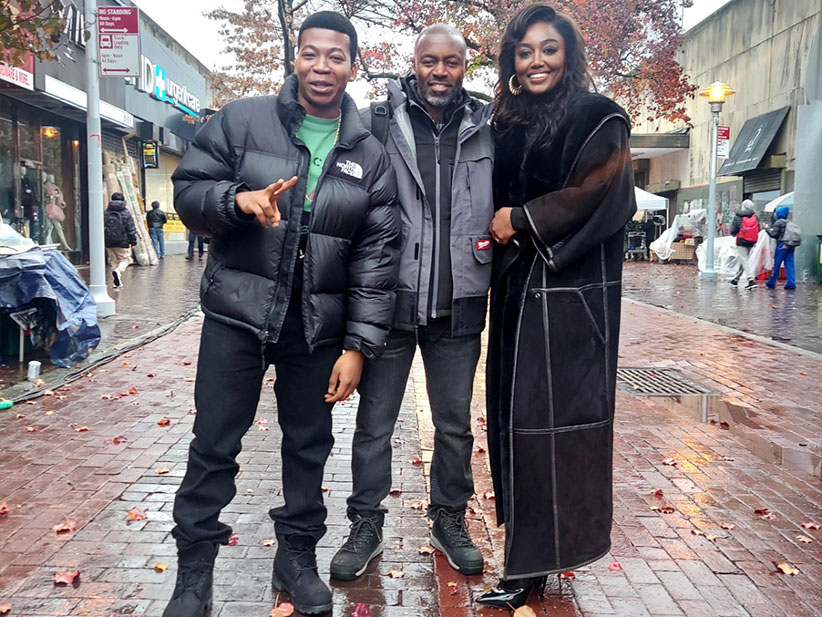
The FAMU alumnus behind the “Raising Kanan” finale built a career telling stories Black audiences recognize. Now he’s making sure more people get the chance to tell them.
The ending of “Power Book III: Raising Kanan” gave fans the shock they knew was coming and still were not ready to see: Jukebox killed her aunt Raq, the woman who helped raise her and the mother whose love had anchored Kanan’s world, even as their relationship grew harder to survive. FAMU alumnus and director Rob Hardy, who directed the series finale, focused the scene on the women’s faces and the history between them. We saw what Juke did. Hardy wanted us to feel what it cost her.
“When Jukebox killed her, it wasn’t like we saw her physically kill her,” Hardy said during a Zoom interview. “It was more so about the emotion of, I’m killing this person that I looked up to my whole life, that looked out for me.”
Then Kanan finds his mother. Hardy, who directed both the pilot and the finale, knew the audience had been waiting five seasons for the boy to become the ruthless man they met in the original “Power.” This was one of the moments that would get him there.
“Whatever humanity [he] had left, it’s gone,” Hardy said, describing Kanan’s state of mind. “That was like [his] last tie to that part of [him]self.”
As if that were not enough to send fans into a social media tizzy or looking for somebody to call, the finale returns to an earlier, gentler scene: the family together, “Good Times” playing on the television, the future still wide and bright. Hardy credits creator Sascha Penn and the show’s writers for bringing the story back to that moment. The contrast between the family’s beginnings and its ending is almost painfully unbearable to watch.
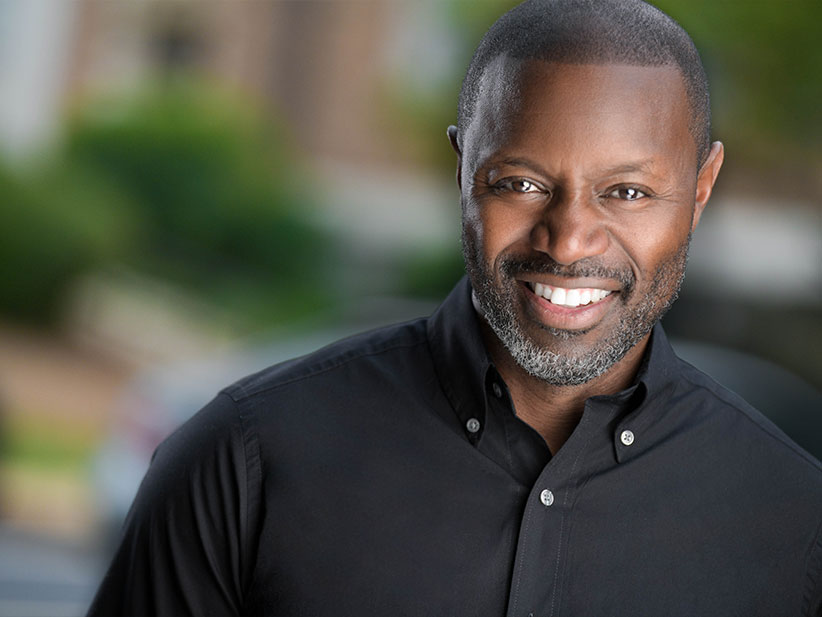 Rob Hardy is a part of FAMUs incoming class of 1991 and is looking forward to returning
to the Hill for homecoming 2026. (Photo special to FAMU)
Rob Hardy is a part of FAMUs incoming class of 1991 and is looking forward to returning
to the Hill for homecoming 2026. (Photo special to FAMU)
“What was this all about? It was about family, and love, and optimism, and the hopes and dreams of a mom who loves a kid,” Hardy said.
Hardy was interested in showing us that kid from the start. Kanan had turtles. He had won a spelling bee. His bedroom walls and the things he kept around him offered glimpses of a life that could have gone another way. Hardy wanted viewers to notice those details before the darkness swallowed them up.
“How do you go from A to Z?” he asked. “How do we tell that visually to where you can look into his house, or the stuff he has, or what’s on his walls to say, oh, he started out as this kid?”
That attention to what a place reveals comes naturally to Hardy. He grew up in Philadelphia, but an aunt lived in Queens, and he spent time around South Jamaica as a teenager. He knew the neighborhoods where “Raising Kanan” was set, including the Jamaica Coliseum Mall, where he shopped for clothes before heading to Florida A&M University.
The mall appeared in the show’s pilot and again in its finale. By the final shoot, Hardy said, many of its businesses were gone and the property had been sold. Yet people from the neighborhood still recognized the world the production had brought back. Some arrived dressed in their best ’90s gear, hoping to be extras.
“They would literally show up, dressed to the nines, in ’90s clothes,” he said, “just because we were in the real spot where they hung out back in the day.”
It was a full-circle moment for Hardy, though the teenager shopping for his FAMU wardrobe could hardly have imagined returning with a television crew. Back then, he had a dream of making movies and a far more practical major.
Hardy earned a degree in mechanical engineering. His father had doubts about filmmaking as a career, so Hardy figured engineering might lead him into special effects somehow.
“And then after, I’ll go to NYU like Spike Lee and go to film school,” he recalled, but then came a couple of engineering internships. “And I realized that that was not my ministry.”
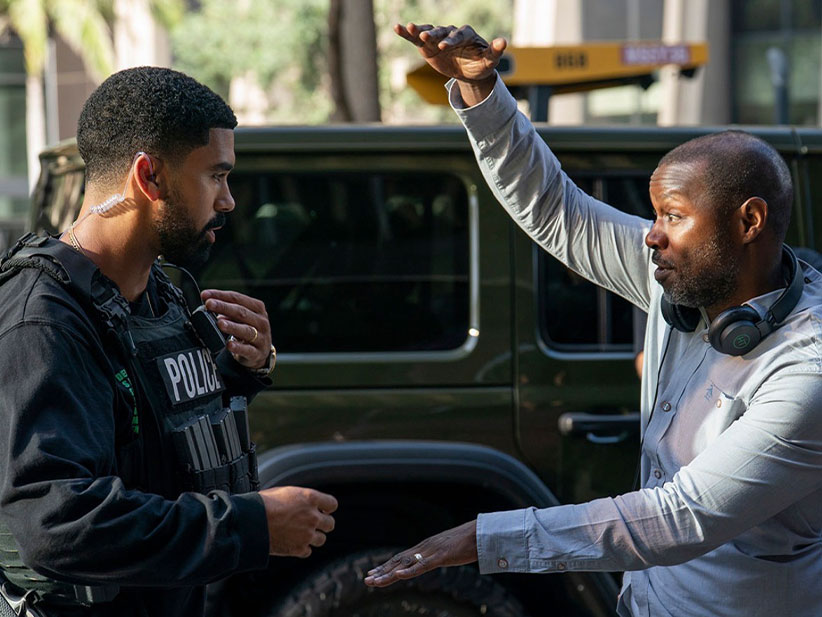 Rob Hardy directed episodes 105 and 106 of the Netflix drama series Nemesis created
by Courtney Kemp and Tani Marole. (Photo special to FAMU)
Rob Hardy directed episodes 105 and 106 of the Netflix drama series Nemesis created
by Courtney Kemp and Tani Marole. (Photo special to FAMU)
Hardy finished the degree, but he did not wait for graduation to start telling stories. At FAMU, he found classmates who could act, make music, put together a look and help turn an idea into a film. One of them was Will Packer, among the first friends Hardy made on campus.
Together with other students, they made “Chocolate City,” a feature film created at a university that did not have a film program. Hardy wrote, directed and helped produce it.
Equipment presented a problem, and when they reached out to another institution they were told: “You can use everything for free, but if you use one light, then we own it,” Hardy recollects.
The proposition did not sit right with the entrepreneurs, so they declined the offer. Instead, the group brought in a few Florida State University filmmakers to run cameras they scrounged up and found a way to make their movie.
“We’ll figure it out here at our school,” Hardy remembered thinking. “We did our thing, and it was for us, by us.”
“Chocolate City” gave Hardy a start. FAMU gave him something he still uses when a script lands on his desk or a production needs a solution: the belief that an idea is worth chasing before anyone gives you a perfect set of circumstances.
“Everybody had a major, and then everybody had a passion,” he said of his time on the Hill. “And then the hustle was how you get from the major to the passion.”
Hardy also found brotherhood on the Hill. A member of Beta Nu Chapter of Alpha Phi Alpha Fraternity Inc., he described it with a grin as “the oldest and the coldest.” The friendships he made at FAMU would follow him well beyond Tallahassee.
In Atlanta, Hardy and Packer co-founded Rainforest Films before the city became a television and film production powerhouse. They saw artists, entrepreneurs and room to build. They also saw a city they could afford while they worked out how to break into an industry long centered elsewhere.
“We felt like we could FAMU hustle our way into a situation in Atlanta and be the
indie film guys,” he said.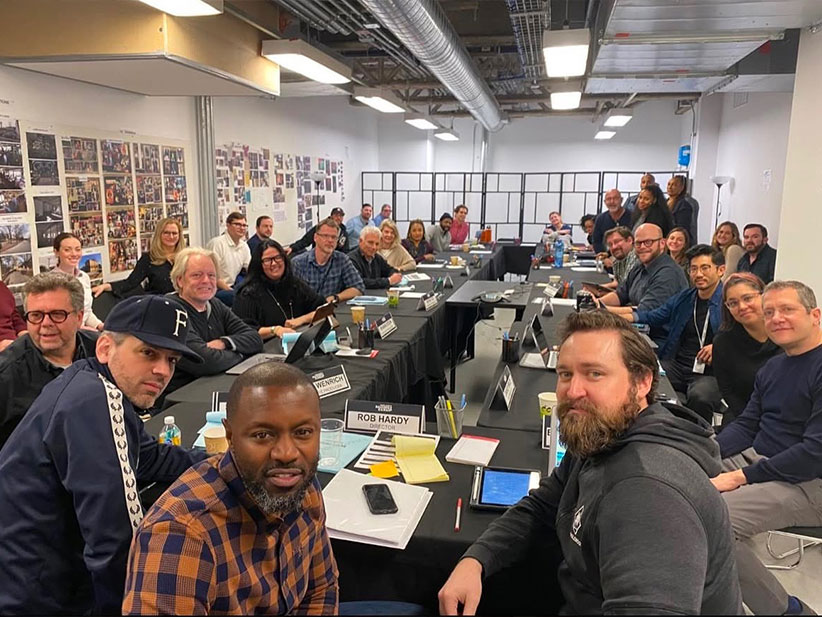 The production crew gathers with director Rob Hardy to discuss the pilot episode of
"Power Book III: Raising Kanan." (Photo special to FAMU)
The production crew gathers with director Rob Hardy to discuss the pilot episode of
"Power Book III: Raising Kanan." (Photo special to FAMU)
Years later, Hardy’s work is woven through shows that Black audiences have watched, debated and claimed as their own. Along with “Power” and “Raising Kanan,” he has directed episodes of “All American,” “Black-ish” and BET’s “The Quad,” as well as “Grey’s Anatomy,” “Shameless,” “Evil” and other series. He is now CEO of Rainforest Entertainment.
The credits span genres, but Hardy keeps returning to one question: Does the camera show people as fully as they deserve to be seen?
On “All American,” that meant showing South Central Los Angeles as more than a place defined by violence or hardship. Hardy wanted viewers to see its art, its families and the love that could make leaving complicated. Without those things, he said, the main character’s choice between South Central and Beverly Hills would hardly be a choice at all.
“You want to come home,” Hardy said. “Because this place is special.”
He has carried that same concern into his portrayals of Black characters, whether the story calls for a family drama, a football field or the criminal world of “Raising Kanan.” He wants room for ambition, warmth, humor and the difficult parts, too.
“A lot of times in the news when it comes to us, it just tends to be like sour or what’s bad,” he said. “And I’m like, nah, we fly.”
Hardy’s concern for representation extends behind the camera. As Georgia’s film industry grew, he found himself on sets where the crews looked little like the communities around them. He and his wife established the Amazing Stories Foundation to help people from diverse backgrounds build careers in the industry.
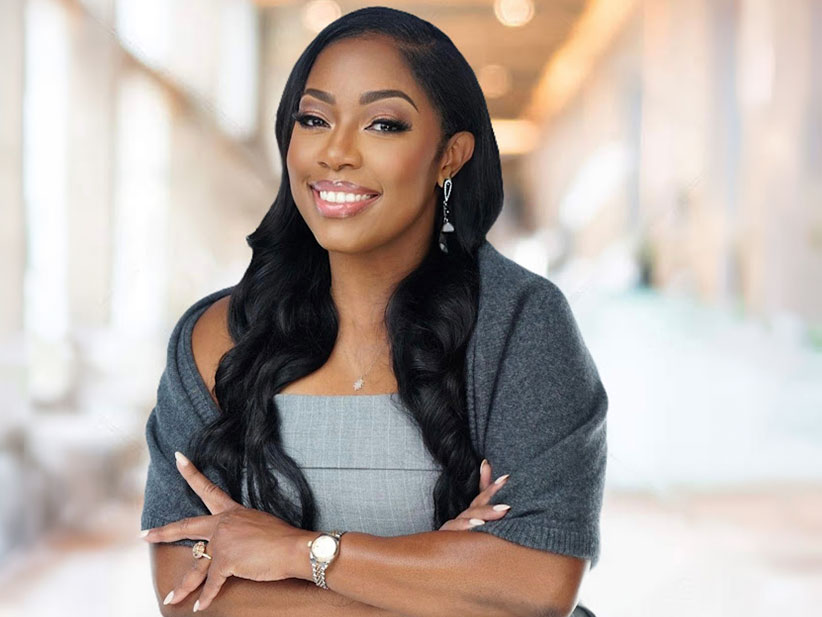 Nina Packer is a member of the FAMU freshman class of 1992. She is also responsible
for the training and placement of production assistants for the Rob & Shuan Hardy
Amazing Stories Foundation. (Photo special to FAMU)
Nina Packer is a member of the FAMU freshman class of 1992. She is also responsible
for the training and placement of production assistants for the Rob & Shuan Hardy
Amazing Stories Foundation. (Photo special to FAMU)
Fellow FAMU alumna Nina Packer is the foundation manager, who works with Hardy to train aspiring production professionals and help them find their place on set.
"The Amazing Stories Foundation's Film/TV Production Assistant Training and Creative Leadership Program is a gateway to success in the film industry that as of today has prepared 72 adults to enter and thrive in the film industry. Every year among our applications we are fortunate to find qualified FAMU Alumni seeking this opportunity and they always come through understanding the assignment," said Packer.
Hardy knows that a film set needs far more than directors and actors. He talks about production accounting, transportation, camera work and visual effects with the same conviction he brings to storytelling. Those jobs can become careers. Careers can support families. Watching young people find their place in the industry gives him a different kind of satisfaction from seeing his name in the credits.
He remembers the people who made room for him, including FAMU mentors Vivian Hobbs, Ph.D. and the late Ted Hemingway, Ph.D. Hobbs, he said, stood behind the students making “Chocolate City.” Hemingway taught him African American history and lessons that stayed with him long after class ended.
Now Hardy wants to be that kind of person for somebody else.
“When it’s all said and done, I want people to be able to feel like the Rob Hardy legacy was, he was the guy that was an A1 guy, straight-up guy who was creative, that loved his people, loved his family,” he said. “He helped put people on. And all he asked in return is that they put more people on.”
He expects to return to FAMU for Homecoming with others from the university’s incoming class of 1991. Rattlers mark the year they arrived on the Hill, Hardy explained, because everyone who started together remains part of that story, even if life took them down different roads.
“Maybe you don’t graduate, maybe you leave and go to another school, maybe it doesn’t
happen,” he said. “But you came in with us, so come on back.”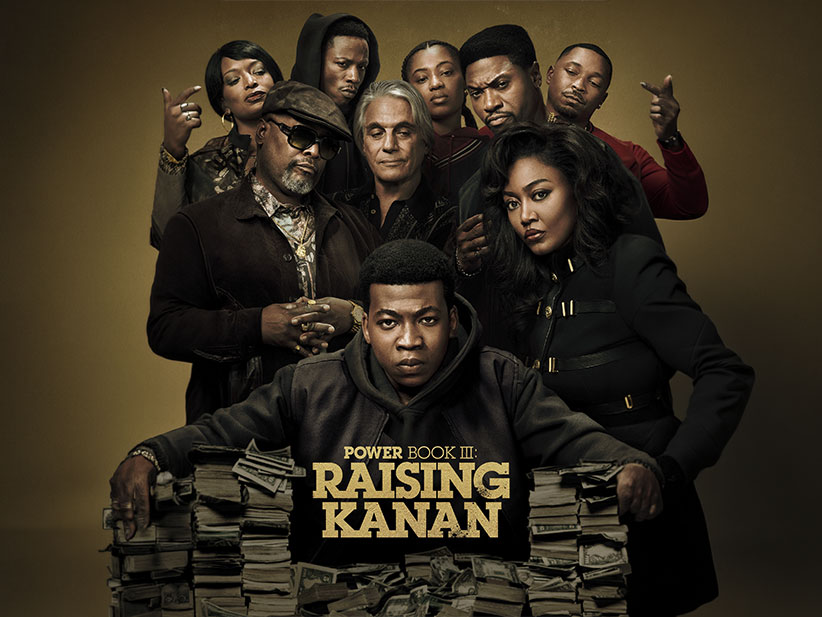
Media Contact
Rachel James-Terry
Senior Director of Strategic Communications
rachel.jamesterry@famu.edu