
Great FAMUAN Exhibition Celebrates Generations of Excellence at FAMU
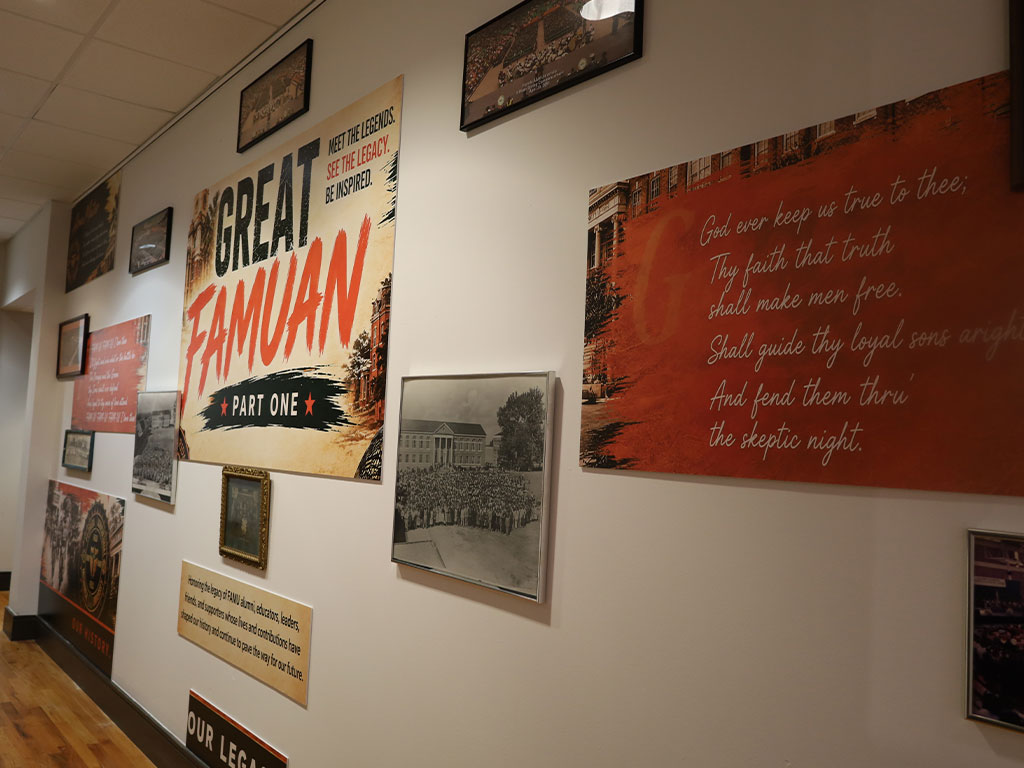
TALLAHASSEE, Fla. — Generations of Rattler excellence are on display at Florida A&M University's Meek-Eaton Black Archives Research Center and Museum in the "Great FAMUAN: Part One," an exhibition celebrating the individuals whose leadership, service and achievements helped shape the university's history.
The exhibition, which opened in September, introduces visitors to the stories of educators, former university presidents, athletes, activists, and community leaders whose contributions have helped establish FAMU's enduring legacy.
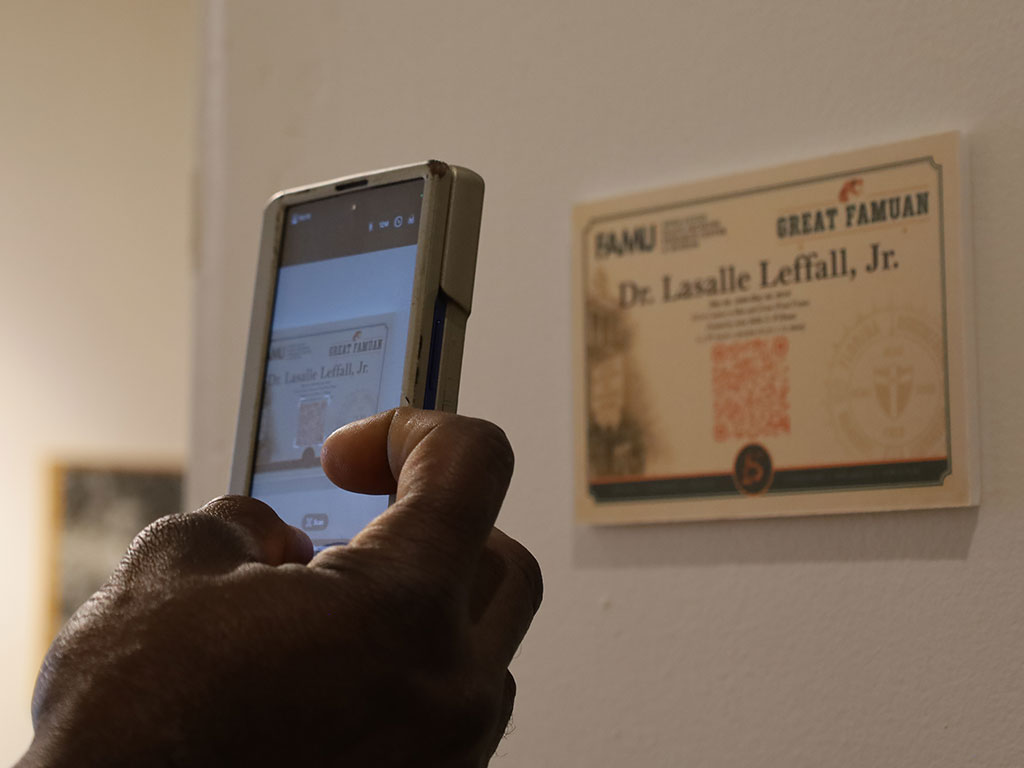 A visitor uses a smartphone to scan a QR code on a display honoring Dr. LaSalle Leffall
Jr. in the “Great FAMUAN: Part One” exhibition. (Photo by Jordan Jackson)
"We hope that it piques the interest of our new students, new famuans who come, that they realize that the legacy of this history is so important—they have to do more than what they think they have to do in order to succeed here at Florida A&M, because they're holding up a standard that far precedes them in time," said Timothy A. Barber, director of museum operations at Meek-Eaton.
Among the artifacts featured are track shoes worn by FAMU alumnus Robert "Bullet Bob"
Hayes, a two-time Olympic gold medalist and professional football player whose accomplishments
brought international recognition to the university.
Hayes competed in track and football at FAMU from 1961 to 1964 before winning gold medals in the 100-meter dash and 4x100-meter relay at the 1964 Olympic Games in Tokyo. He later helped the Dallas Cowboys win Super Bowl VI and was inducted into the Pro Football Hall of Fame in 2009. Hayes returned to FAMU to complete his bachelor's degree in elementary education in 1994.
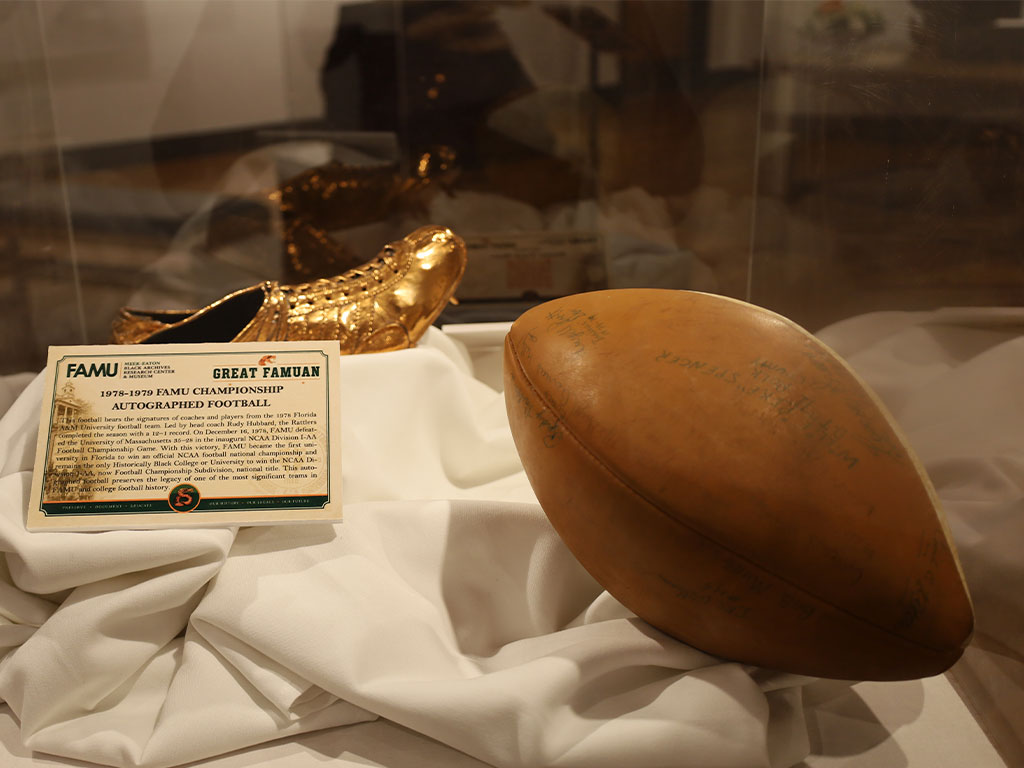 An autographed football from FAMU’s 1978–79 championship era and gold shoes belonging
to Olympic champion Robert “Bullet Bob” Hayes are displayed in the “Great FAMUAN:
Part One” exhibition. (Photo by Jordan Jackson)
Visitors can also view a desk belonging to former FAMU President George W. Gore Jr., who led the institution from 1950 to 1968, including its transition from college to university status in 1953. His leadership also contributed to expanded academic programs, increased enrollment and the construction of new campus facilities. Today, the Gore Education Complex stands as a tribute to his lasting contributions to the university.
The exhibition incorporates modern technology through QR codes positioned beneath select portraits and artifacts. The codes provide access to interactive content; biographies, videos and additional multimedia content, creating an experience that connects the past with the present.
For Sean O. Acceus, a fourth-year computer science student, the exhibition provides a deeper understanding of the individuals whose contributions helped shape the university.
"When you learn about what figures like Jake Gaither did for the school, you realize how integral they were to athletics and history. Coming here, you finally see the faces behind the names you always hear about," he said. "It's a way for students and out-of-towners to understand what this campus truly means and the deep impact it has on our community."
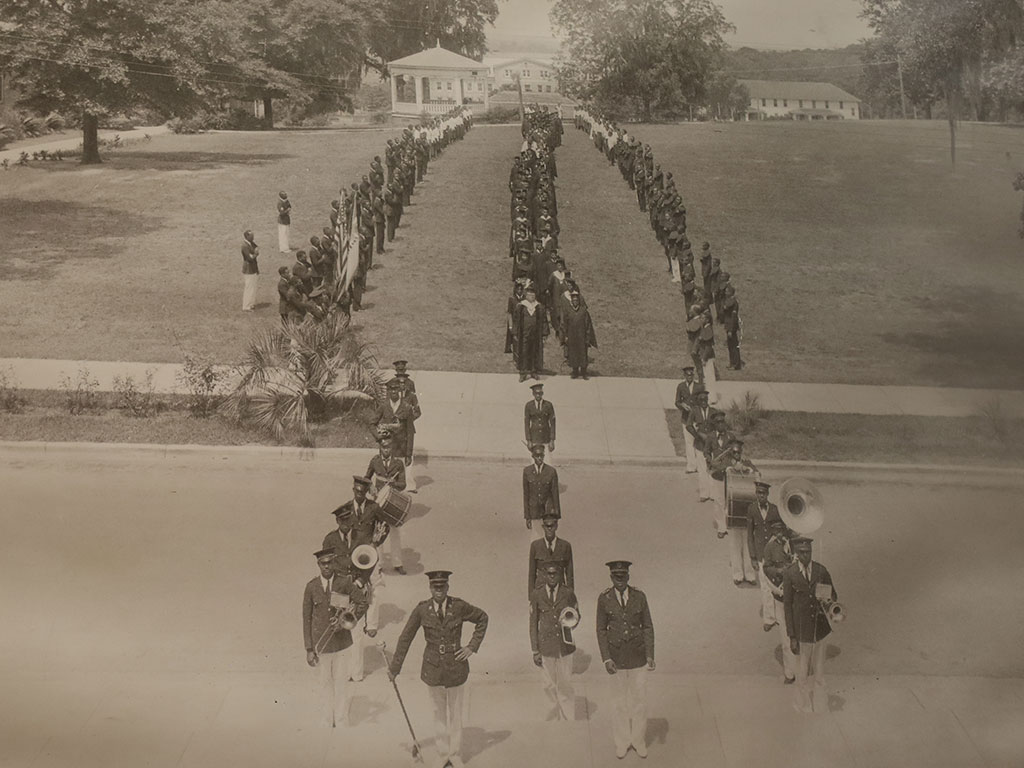 A historic photograph displayed in the “Great FAMUAN: Part One” exhibition shows a
campus procession led by uniformed band members. (Photo by Jordan Jackson)
Acceus emphasized the importance of exploring the archives to gain a greater appreciation for FAMU's legacy.
While the Meek-Eaton Black Archives has previously displayed portions of these collections, "Great FAMUAN: Part One" brings them together to highlight the university's heritage of excellence. Researchers and archivists assembled the exhibition using some materials donated by families, alumni, organizations and university supporters.
Among those contributions is the academic regalia of former acting FAMU President Henry Manning Efferson
Efferson began his career at FAMU as a mathematics instructor and professor before serving in several academic and administrative leadership roles. In July 1949, he was appointed acting president of what was then Florida Agricultural and Mechanical College, providing stability during a period of institutional challenges.
His granddaughter, Claire Smith, donated his academic robe and other garments belonging to her late family members to Meek-Eaton to help preserve her family's contributions to the university's history.
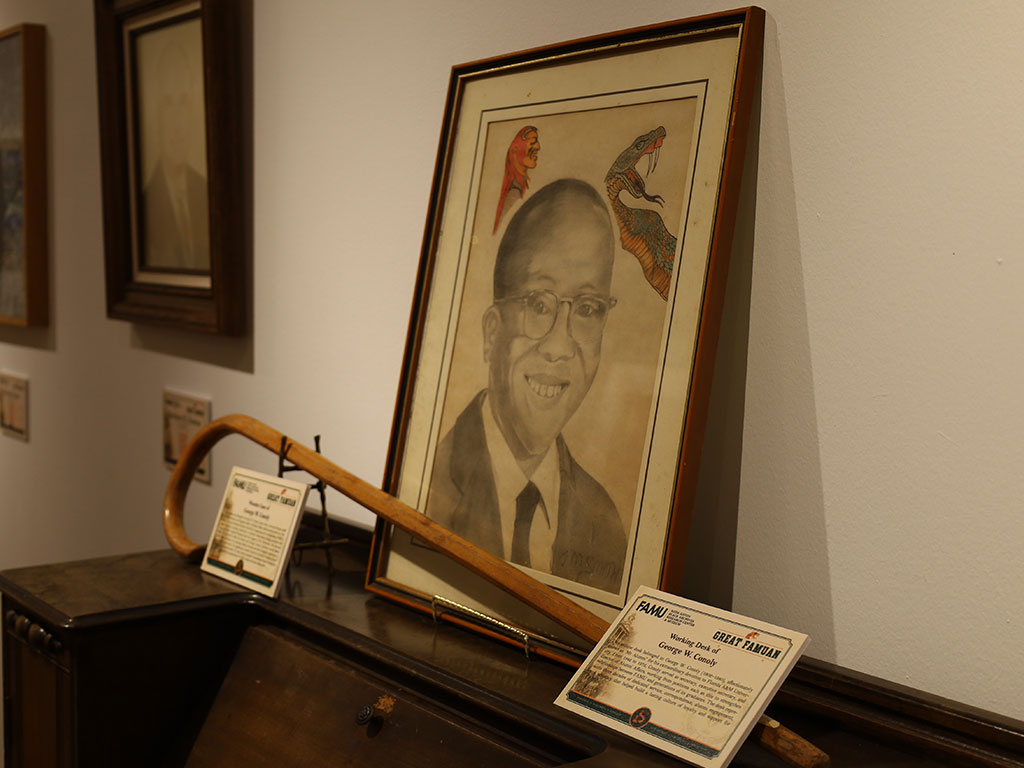 A portrait of former FAMU President George W. Gore Jr. is displayed above his writing
desk in the “Great FAMUAN: Part One” exhibition. (Photo by Jordan Jackson)
"We wanted to donate this robe in his honor, in hopes that alumni, current students and faculty of FAMU will get to know and understand his legacy and contributions to FAMU, ensuring the continuation of FAMU during a particularly turbulent time and throughout the years," Smith said.
The exhibition also provides an opportunity for visitors to connect familiar names across FAMU's campus with the individuals behind them. While buildings and institutional landmarks honor distinguished figures, many students may be unfamiliar with their personal stories and contributions to the university.
Among those represented is Jackson Davis, an educator and General Education Board field agent who helped secure funding for Florida A&M College’s building program during the 1920s and 1930s. The exhibition also recognizes contemporary FAMUans, including alumnus Keon Hardemon, who was elected to the Miami City Commission in 2013 at age 30.
"For me, this is one of the exhibition's most compelling interpretive dimensions: honoring our past while paying homage to our present," Barber said.
Together, the items in the collection offer a visual representation of what it means to be a Rattler, honoring the resilience, leadership and accomplishments of those who helped build the university while encouraging future generations to carry its legacy forward.
"Great FAMUAN: Part One" will remain on display through January 2027.
The Meek-Eaton Black Archives Research Center and Museum is open Tuesday through Friday from 10 a.m. to 3 p.m., with last admission at 2 p.m. Saturday tours are available by appointment, subject to staff availability. Admission is free.
Media Contact:
Ashley Flete
Senior Communications Specialist
ashley1.flete@famu.edu