
USDA Assistant Secretary Devon Westhill Visits FAMU Brooksville Campus
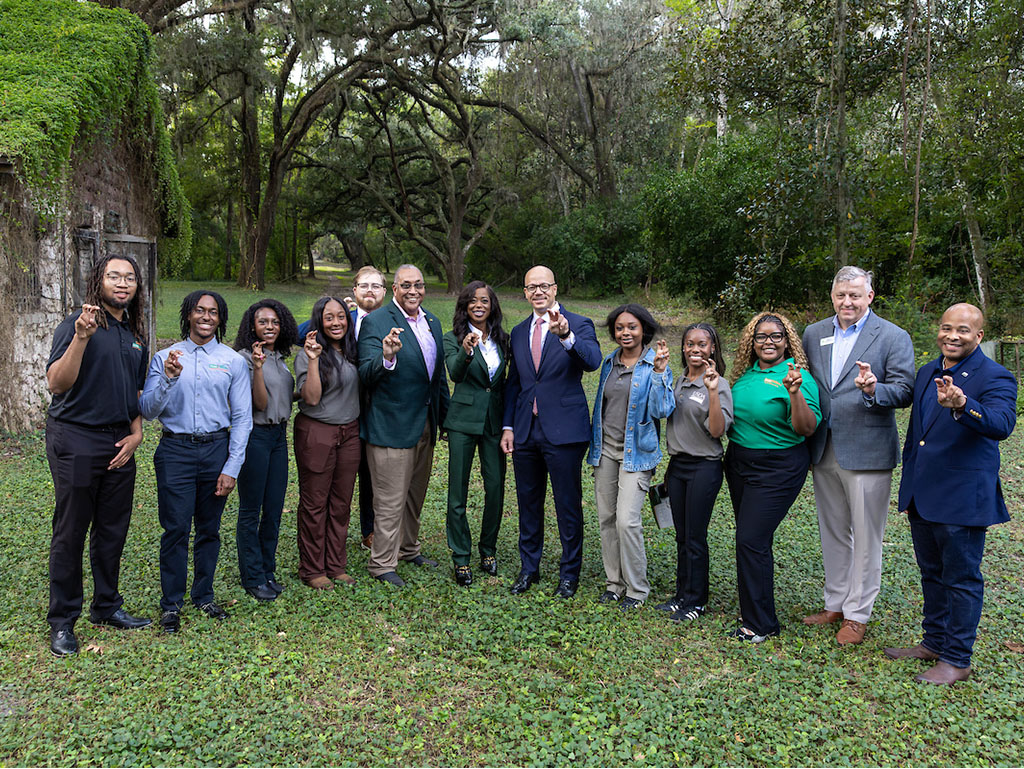
BROOKSVILLE, Fla. – Florida A&M University (FAMU) President Marva B. Johnson, J.D. welcomed U.S. Department of Agriculture (USDA) Assistant Secretary for Civil Rights Devon Westhill to its Brooksville Agricultural and Environmental Research Station (BAERS) on Thursday. Johnson underscored the university's commitment to its land-grant mission and its longstanding partnership with USDA. Watch the video recap here.
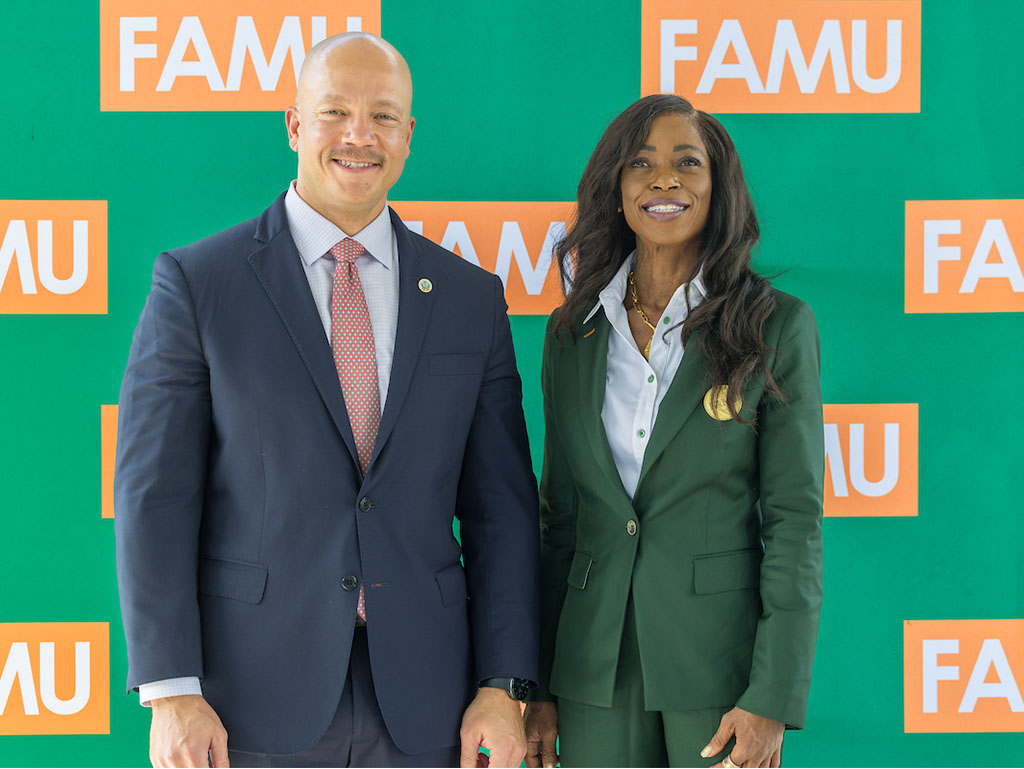 Florida A&M University (FAMU) President Marva B. Johnson, J.D. welcomed U.S. Department of Agriculture (USDA) Assistant Secretary for Civil Rights Devon Westhill to its Brooksville Agricultural and Environmental Research Station (BAERS) on October
29.
"As Florida's 1890 land-grant university, Florida A&M University has a distinct mandate to put research to work where Floridians live, farm and build," Johnson said. "That mission does not end at the edge of our campus. It reaches into the communities we serve, the industries we strengthen and the economies we help grow. Our partnership with the U.S. Department of Agriculture is how we keep that promise, and Brooksville is where that promise takes root."
Westhill's visit included a tour of the 3,800-acre research property, an overview of the university's agricultural research and workforce development initiatives, and conversations with graduate students conducting research at the facility. The visit provided an opportunity to showcase FAMU's contributions to agricultural innovation, scientific discovery and the economic vitality of Florida and the nation.
Westhill recognized the importance of state investment in 1890 land-grant institutions, highlighting the statutory requirement for states to provide matching funds for USDA investments.
Assistant Secretary Westhill delivered spoken remarks, saying, “Statutorily, the monies that go toward our 1890 institutions from USDA is supposed to be matched by the state. There should be, and statutorily, there's required to be a one-to-one match on funds that are going to our 1890s institutions. It doubles the investment and doubles the return on the investment that 1890s institutions provide to our farming economy, and to our country and to our world.”
Further, Westhill emphasized the importance of strengthening the federal government's relationship with 1890 land-grant institutions and ensuring their contributions receive the attention and investment they warrant.
“The return that I've seen today and touring this BAERS facility, and making the relationships and talking with the students, the faculty, the staff, and administration at FAMU is very, very clear that return is substantial and we need to continue to invest in these really uniquely American institutions,” Westhill said.
College of Agriculture and Food Sciences Dean G. Dale Wesson, Ph.D., noted that USDA transferred 3,800 acres to FAMU in 2015, one of the largest federal land transfers of its kind, creating an extraordinary opportunity for the university to expand its research capacity, advance innovation and strengthen Florida's agricultural workforce.
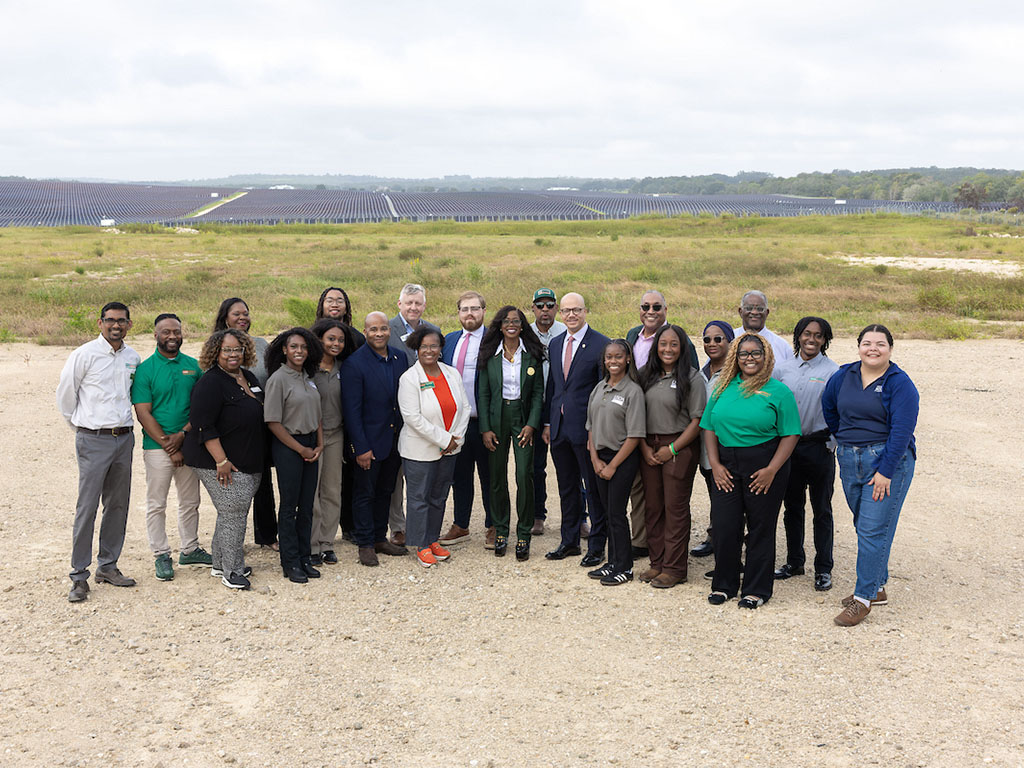 During the visit, Assistant Secretary Westhill and guests toured the FAMU Solar Farm.
“Hosting Assistant Secretary Westhill at our Brooksville campus was an important opportunity to showcase how Florida A&M University is fulfilling its 1890 land-grant mission through teaching, research and Extension,” said Wesson. “BAERS was especially appropriate for this visit because all three pillars of that mission come together here: teaching through our partnership with Pasco-Hernando State College and pathways to FAMU’s four-year degree programs; research through our expanding livestock improvement programs and work on emerging crops for Florida agriculture; and Extension through 4-H, community health initiatives and partnerships with local ranchers.”
Today, BAERS serves as a working research and educational campus, supporting initiatives in rangeland management, livestock and forage systems, soil and water research, and workforce training for Central Florida. These efforts demonstrate the practical application of FAMU's land-grant mission and the university's commitment to addressing challenges affecting agriculture, natural resources and rural communities.
"The work taking place here is a small sample of the value and impact a land-grant institution is designed to deliver," Johnson said. "These are the types of partnerships and opportunities that move FAMU closer to our goal of achieving Carnegie R1 research university classification while ensuring that our research makes a meaningful difference in the lives of the people we serve."
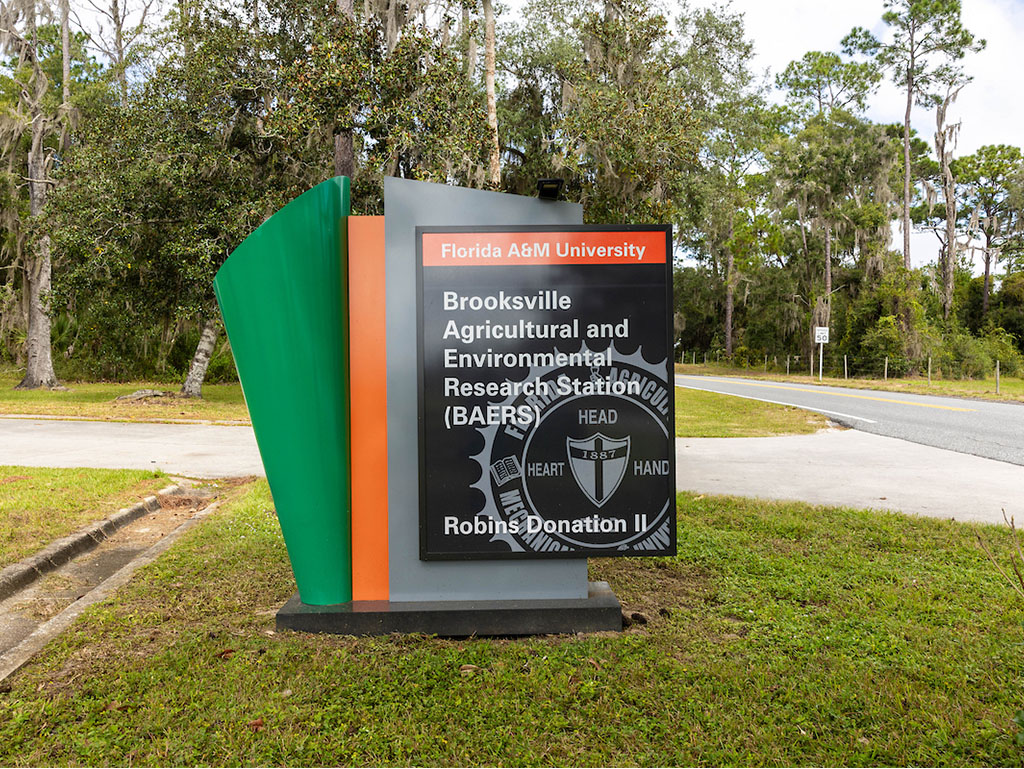 FAMU BAERS Sign
Westhill also acknowledged the development of the Brooksville property since its transfer to FAMU, crediting the university's leadership, faculty and administration for advancing its potential.
For FAMU, the visit reinforces the importance of the 1890 land-grant partnership and the university's role in translating federal investment into research, innovation, educational opportunities and economic impact.
"To whom much is given, much is expected," Johnson said. "We are committed to honoring the responsibility that comes with this land and continuing to deliver on the promise of our 1890 land-grant mission."
The university looks forward to building on the conversations initiated during Westhill's visit and continuing to strengthen its partnership with USDA in support of agricultural research, student development and the communities it serves.
“Brooksville demonstrates what the land-grant mission looks like in action, translating education and research into practical benefits for Florida’s farmers, ranchers and communities. We are proud of the momentum at BAERS and look forward to strengthening our partnership with USDA as we advance the future of agriculture,” said Wesson.
About Florida A&M University
Founded October 3 1887, Florida Agricultural and Mechanical University (FAMU) is the nation’s highest-ranked public historically Black university and an 1890 land-grant, doctoral research institution committed to student success, academic excellence, research, and public service. Through innovative teaching, scholarship, and community engagement, FAMU empowers students to transform their lives and communities while advancing solutions to society’s most pressing challenges.
Back to Stories